
A managed VoIP phone system in San Antonio costs $22.99 to $42.99 per user per month at Uprite, so a 10-person office pays about $280 to $410 a month, with number porting included.
The rates below come from the rate card on our VoIP and business phone systems in San Antonio page. We multiplied them out for 4 office sizes. We also looked up the fees that can be added and what San Antonio labor costs, so you can check any quote against real numbers.
The rate runs from $22.99 to $42.99 per user a month, and it gets lower as the team grows. A 5-person office pays $150 to $215. At 25 people the bill is $625 to $950. Call recording and queues begin on PRO, which costs $7 more a seat than CORE. Porting is included and handsets are optional. Tax and regulatory lines can be added to the bill, so get those in writing.
How much does a business phone system cost in San Antonio?
Uprite sets the price per user, and the rate falls as headcount rises. There are 3 plans, CORE, PRO, and COMPLETE. There are also 4 size bands.
The table multiplies each band’s rate by one sample team size. The card reads as if the band rate covers every seat, so we figured it that way. A written quote will confirm it.
| Team size | Rate band | CORE per month | PRO per month | COMPLETE per month |
|---|---|---|---|---|
| 5 users | 1 to 5 users | $150 | $185 | $215 |
| 10 users | 6 to 19 users | $280 | $350 | $410 |
| 25 users | 20 to 49 users | $625 | $800 | $950 |
| 60 users | 50 or more users | $1,379 | $1,799 | $2,159 |
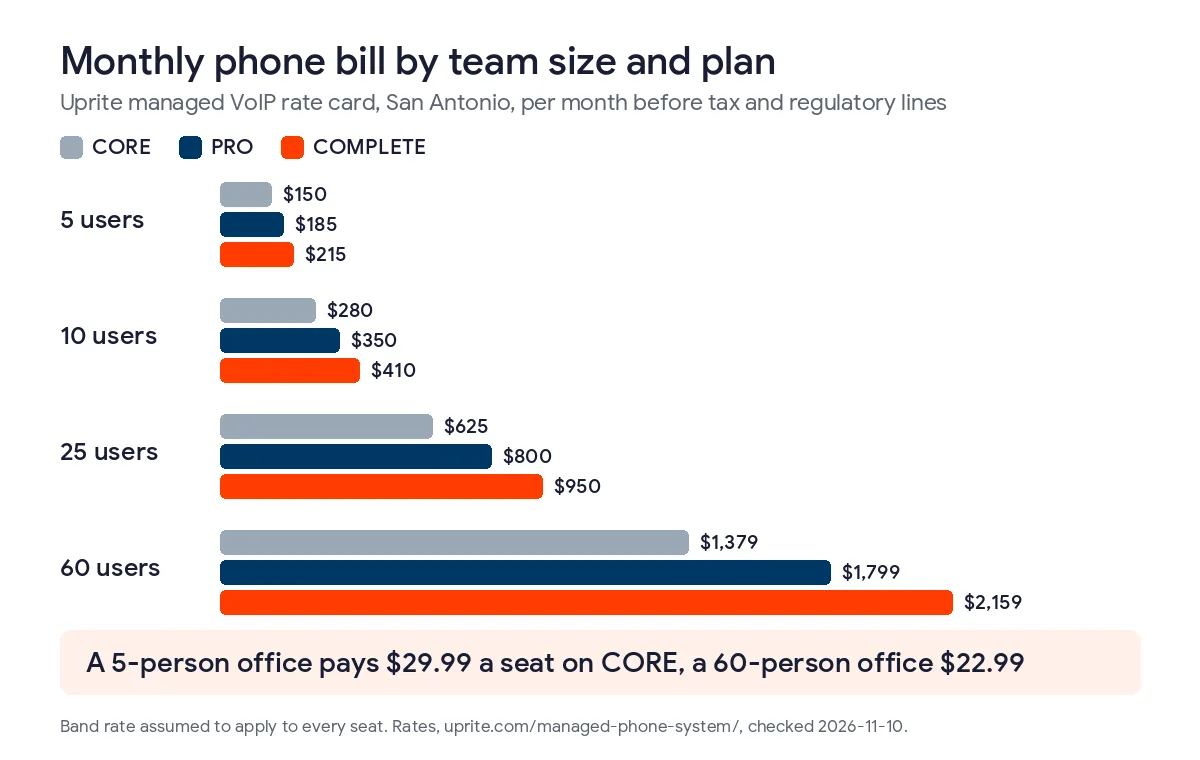
The small-office penalty surprised us a little. A 5-person office pays $29.99 a seat for CORE. At 60 people the seat costs $22.99. The smaller team pays 30% more per seat, so a price quoted to a bigger company won’t carry over to yours.
What do the CORE, PRO, and COMPLETE plans include?
CORE is the base plan. PRO adds call-handling tools, and COMPLETE adds Microsoft Teams and skill-based routing. The steps are flat. PRO costs $7 more per seat than CORE in every band, and COMPLETE costs $13 more.
| Plan | Added per seat over CORE | Features that start on this plan |
|---|---|---|
| CORE | Base rate | Call parking and pickup, intercom and paging, voicemail to email, auto attendant, incoming fax, Windows, web, iOS, and Android apps, video conferencing, call logging, click-to-call, and unlimited onsite phone system support |
| PRO | $7 | Voicemail transcription, Microsoft 365 and CRM integrations, WhatsApp integration, SMS texting, call queues, call recording, call reporting, barge-in and whisper, and a call flow designer |
| COMPLETE | $13 | Microsoft Teams integration, skill-based routing, start and stop call recording, and a custom logo on IP phones |
We think most small offices can start on CORE. Voicemail to email, a front desk, and a handful of extensions all come with it. PRO is the one worth paying for if you record calls or run a queue, and a dispatcher or a busy front desk will usually want one of those. COMPLETE costs $6 more than PRO. It pays off if your staff live in Teams or you route calls by skill.
What charges can sit on top of the per-user rate?
Four things can sit on top of the per-user rate.
| Item | What the source says | What to ask |
|---|---|---|
| Federal universal service fee | The FCC proposed a 42.0% contribution factor for the fourth quarter of 2026, and carriers may recover it through a line item on interstate charges | Is it inside the quoted rate or added? Which share of the bill counts as interstate? |
| Texas 9-1-1 fees | Texas Health and Safety Code 771.071 caps the 9-1-1 emergency service fee at 50 cents a month per local exchange access line | Is it itemized, and how does the provider apply it to VoIP lines? |
| Handsets | Uprite handsets are optional, and the apps run on computers and phones | Price per phone, who owns it, and who replaces it |
| Number porting | Included in Uprite plans | Any porting fee or minimum term elsewhere |
The federal universal service factor looks scary. The FCC’s September 2026 public notice proposes 42.0% for the fourth quarter. That figure applies to the interstate and international end-user revenue that carriers report. It isn’t 42% of your bill. Under 47 CFR 54.712, though, a provider can pass the cost on to you as a separate line.
The Texas piece is much smaller. Chapter 771 of the Health and Safety Code caps the 9-1-1 fee at 50 cents a month per line. For 25 lines that’s $12.50 at most, and only if it applied to every seat. Uprite’s guarantees include a 12-month rate lock and no surprise fees. With any provider, we’d still get the fee lines in writing.
How does the monthly bill compare with on-site labor?
BLS lists 660 telecommunications equipment installers and repairers in the San Antonio-New Braunfels metro in its May 2025 wage data. Their mean wage was $30.87 an hour. It lists 2,340 network and computer systems administrators at a mean of $46.81.
Benefits add about 43% on top. BLS’s Employer Costs for Employee Compensation report $46.89 an hour in total pay and benefits against $32.82 in wages for June 2026, a ratio of 1.43. That puts an installer hour at $44.14 and an administrator hour at $66.94.
Now turn a phone bill into hours. Take a 25-person office on PRO. It pays about $800 a month, which is 12 hours of administrator time. At 60 people the bill is about $1,800, which is 27 hours.
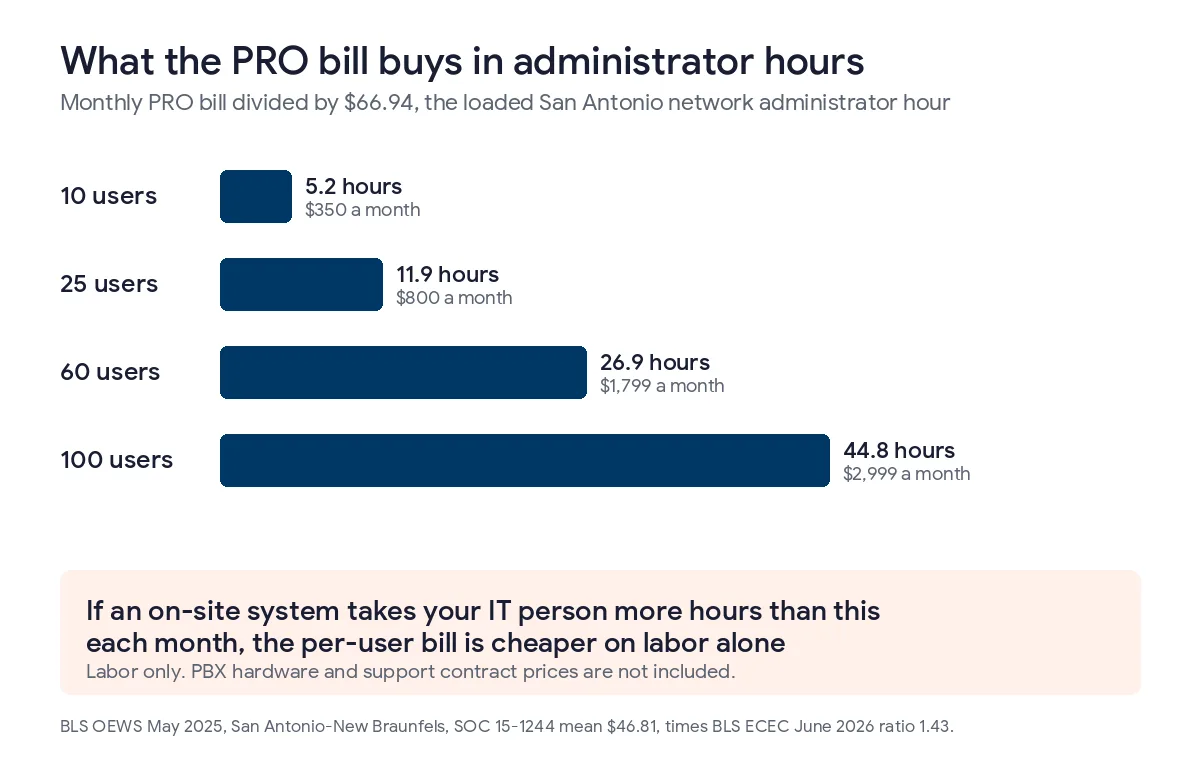
This covers labor only. We couldn’t find current prices for PBX hardware or support contracts, so it isn’t the full cost of an on-site system. Treat it as a yardstick. If your on-site system takes more admin hours than the number above, the per-user bill is cheaper on labor alone. If it takes fewer, hardware age and remote work decide it. One more number. One 4-hour installer visit for a move or an add runs about $177 at the loaded rate.
Our guide to VoIP versus traditional phone systems covers the technical side of that choice. Another page explains what managed VoIP services include. Two San Antonio pages cover the rest. VoIP vs landline for San Antonio offices shows what changes and what breaks, and how to switch business phone systems without missing calls walks through the cutover.
What does the 911 rule add to the cost question?
Federal 911 rules apply to business phone systems. 47 CFR 9.16 says a multi-line system installed after February 16, 2020 must allow direct 911 dialing with no prefix. It must also notify someone on site when a 911 call goes out, and it calls for location information to reach the dispatcher.
Price comes in through location. A desk phone sits at a known address. Laptops and phone apps don’t. We’d ask each provider how it tracks those users and whether that work is in the rate.
How do you compare 2 phone system quotes?
Line the quotes up item by item before you compare totals.
- Seats in 12 months, because the headcount band sets the rate
- Plan features you’ll use, starting with call recording, queues, and Teams
- Regulatory, tax, and 911 lines in writing
- Handset price and who owns the phones
- Term, rate lock, and exit terms, where Uprite locks the rate for 12 months and offers a 120-day satisfaction window
Any quote with only a per-user figure and a total is probably missing something from that list.
What does moving to a new phone system involve?
The cutover is the part that surprises people. Uprite ports your numbers at no charge, so the lines you’ve published keep working. Before anything changes, a tech reviews your current setup and writes a phone implementation roadmap. Staff get training after the switch.

The same plans are listed on our managed phone system page for businesses across Texas.
How does Uprite price phone service in San Antonio?
We quote per user from the card above. Before that, we go through your current phone bills and run a telecom spending analysis, so the estimate starts from what you pay today. Phone support runs 24/7, and onsite phone system support comes with CORE.
Our managed IT cost guide for San Antonio and our pricing page cover the managed IT plans, in case you want the whole IT budget in one conversation.
What San Antonio owners ask about phone system pricing
How much does a business phone system cost per user in San Antonio?
Uprite’s managed VoIP plans run $22.99 to $42.99 per user per month, depending on the plan and the size of the team. That puts a 10-person office at about $280 to $410 a month before any tax or regulatory lines.
Are desk phones included in the monthly price?
Handsets are optional on Uprite plans, and the rate card doesn’t list a handset price, so ask for one in writing. Every plan also includes Windows, web, iOS, and Android apps, which some staff use instead of a desk phone.
Does the price include number porting?
Yes. Uprite includes number porting, so your published lines stay the same when you switch. Other providers may charge for it or tie it to a minimum term, which is worth asking about.
Which plan do we need for call recording?
Call recording starts on PRO, which adds $7 per user over CORE. COMPLETE adds start and stop recording, so staff control when a recording runs. CORE doesn’t record calls.
Can the price go up after we sign?
Not in the first year. Uprite locks your rate for 12 months and backs it with a 120-day satisfaction window. After that, ask when rates reset and how much notice you’ll get.
Why does a small office pay more per user than a bigger one?
The rate card is banded by headcount. CORE costs $29.99 a seat for a team of 1 to 5 and $22.99 at 50 or more, so the smaller team pays 30% more per seat. If you add staff, ask how the next band applies to your existing seats.
Send us your headcount, the features you need, and a recent phone bill. We’ll return a written San Antonio estimate with the per-user rate, the fee lines, and the handset price, and you can keep it whether or not you switch.
Get a phone estimate