Managed VoIP services are business phone systems that run over the internet and are fully set up, secured, and supported by an outside provider. You get the calling features and the cloud phone system, while the provider owns the configuration, the monitoring, and the day-to-day upkeep.
Managed VoIP means your calls travel over your internet connection instead of old copper lines, and a provider handles the whole system for you, from setup and call routing to security and updates. It is the supported version of a cloud phone system. Most small and midsize businesses pick it to cut phone costs, add features like mobile apps and smart call routing, and stop babysitting phone hardware.
What are managed VoIP services?
Managed VoIP services combine two things. First is VoIP, or voice over internet protocol, which carries your calls as data over your network rather than a dedicated phone line. Second is the management layer, where a provider like Uprite designs the system, connects your numbers, secures it, and keeps it running so your team never has to touch the back end.
The difference from buying a VoIP app off a website comes down to who does the work. With a raw subscription, your team sets up extensions, tunes call quality, and troubleshoots outages. With a managed service, that job moves to specialists who monitor the system and pick up the phone when something sounds off. For businesses running managed phone services in Houston or anywhere else, that hands-off model is the entire point.
How does VoIP actually work?
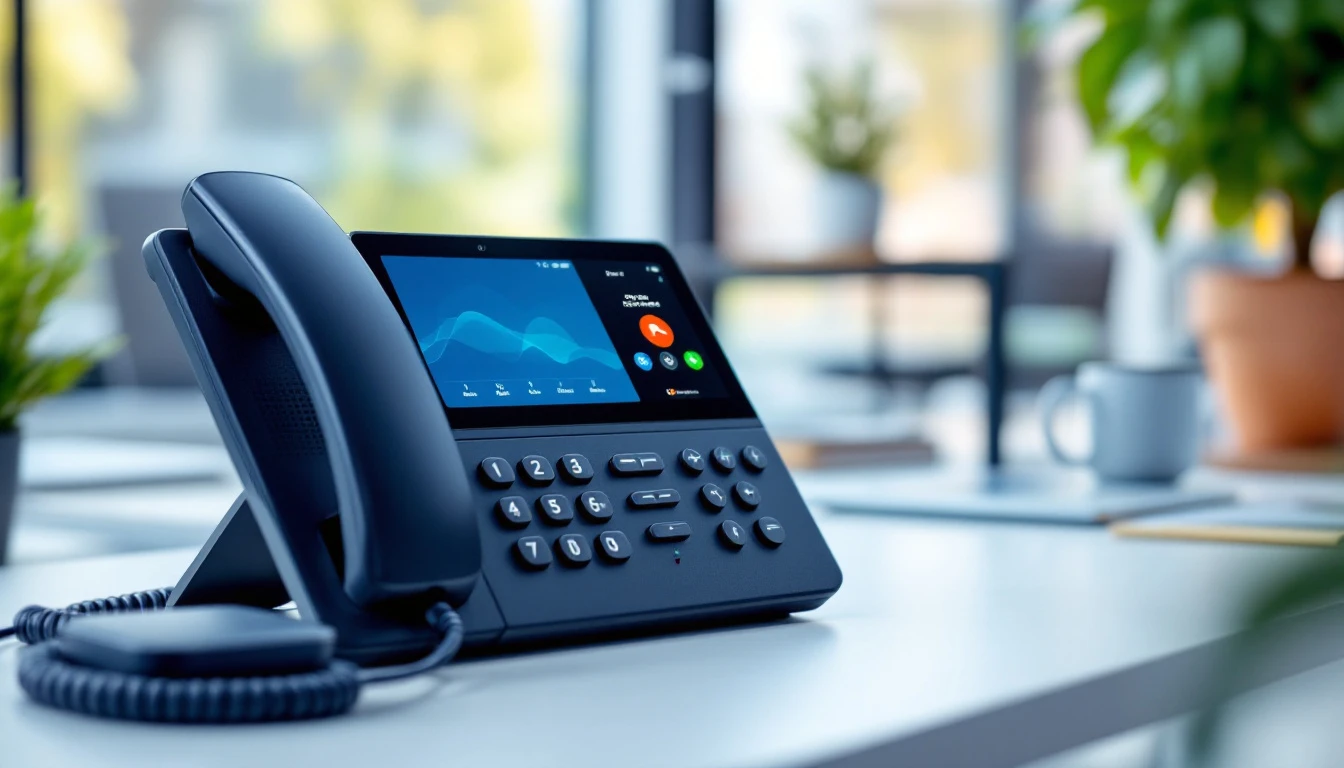
When you talk on a VoIP phone, your voice gets chopped into small digital packets, sent across the internet, and reassembled on the other end in milliseconds. A signaling protocol called SIP, short for session initiation protocol, starts and ends each call, while a cloud PBX handles the routing, voicemail, and auto attendants that used to live in a metal box in your closet.
That shift is what makes VoIP so flexible. The same system can ring a desk phone, a laptop softphone, and a mobile app at once, so a call to your main line reaches whoever is available wherever they are. Nothing physical has to change when you add a person or open a new location. You add a seat in software and you are done.
Managed VoIP vs. DIY VoIP, what is the difference?
Both run on the same underlying technology. The gap is in who carries the day-to-day burden, and that gap gets real the first time a call drops during a client meeting. Here is how the two stack up on the things owners actually ask about.
| What you care about | DIY VoIP | Managed VoIP |
|---|---|---|
| Setup and number porting | You configure it and move your own numbers | Provider designs it and ports numbers for you |
| Call quality tuning | Your team adjusts the network | Provider monitors and optimizes quality of service |
| Support when it breaks | Web ticket, wait in a queue | A named team that already knows your setup |
| Security and updates | On you to patch and watch | Handled and monitored continuously |
| 911 compliance | Your job to configure and maintain | Built in and kept current for you |
| Best fit | Very small teams with in-house tech skill | Businesses that want to focus on work, not phones |
There is an honest middle ground worth naming. Plenty of large VoIP brands sell a self-service portal and call it a business phone system. It can work well if you have someone in-house who enjoys the wiring. Most owners we meet would rather that time go back into running the business.
What is included in a managed VoIP service?
Packages vary, but a real managed VoIP service usually covers the whole lifecycle of your phone system, not just the dial tone.
- Design and onboarding. Mapping call flows, setting up auto attendants, and porting your existing numbers with no lost calls.
- Cloud phone features. Voicemail to email, smart call routing, mobile and desktop apps, business texting, and video meetings under one login.
- Network and call quality. Quality of service tuning so voice traffic gets priority over everything else fighting for your connection.
- Security and compliance. Encryption, fraud monitoring, and 911 location rules kept current as the regulations change.
- Ongoing support. A help desk that answers, plus proactive monitoring that often catches an issue before you even notice it.
- A service level agreement. A written uptime commitment, usually around 99.9 percent, with defined response times.
That last line matters more than it looks. A good managed phone system comes with a service level agreement that puts real numbers behind the promise, so uptime and response time become commitments rather than hopes.
What does managed VoIP cost, and where do the savings come from?

Managed VoIP is usually billed per user per month, often somewhere between $20 and $50 a seat depending on the features and the level of support. That predictability is part of the appeal. You are not guessing what the phone bill will be after the next surprise repair.
The savings show up in a few places. There is no PBX hardware to buy or maintain, long distance and multi-site calling stop costing extra, and adding or removing users becomes a software change instead of a service call. Many businesses also fold their phone system into broader managed IT services, which trims the number of vendors and bills to keep track of. The whole market is heading this direction. Industry forecasts have cloud communications spending more than doubling by 2030, according to Nextiva.
Will the call quality actually hold up?

This is the question almost everyone asks, usually after a bad experience with a cheap consumer app. The honest answer is that VoIP quality is excellent when the network is set up for it, and rough when it is not. Voice is unforgiving of delay, so the setup is exactly where a managed provider earns the fee.
The technical bar is not high, it just has to be respected. A single call needs only about 100 kbps in each direction, so raw bandwidth is rarely the issue. Timing is. The ITU-T G.114 standard puts the ceiling for one-way delay at 150 milliseconds before people start talking over each other. A managed setup enforces quality of service rules that give voice packets priority, often on their own network lane, so a large file upload never steps on a customer call.
Is VoIP secure, and what about 911?

VoIP is secure when it is managed and exposed when it is left open. Because calls ride the internet, the same setup that gives you flexibility also gives attackers a door if no one is watching it.
The biggest financial risk is toll fraud, where a criminal breaks into an unsecured phone system and runs up expensive international calls overnight. The Communications Fraud Control Association estimates telecom fraud costs the industry more than $6.69 billion a year. A managed provider defends against it with encryption, call monitoring, geographic and rate limits, and the STIR/SHAKEN caller ID authentication the FCC now requires to fight spoofing. This is also where phone systems and cybersecurity stop being separate conversations.
Then there is 911, which is not optional. Under the FCC Kari’s Law and RAY BAUM’S Act, a business phone system has to let anyone dial 911 directly, alert someone on site when they do, and send a dispatchable location so responders reach the right floor or suite. You can read the specifics in the FCC MLTS 911 requirements. Getting this wrong carries real penalties, and it is exactly the kind of detail a managed service tracks so you do not have to.
Signs it is time to switch, and how the move works
A few patterns tend to push a business toward managed VoIP.
- Your phone bill keeps climbing and nobody can quite explain why.
- Your team works from more than one place and the desk phones do not follow them.
- Your current system needs a technician on site for changes that should take a minute.
- The vendor behind your hardware has stopped supporting it.
- You are already weighing unified communications and want voice, chat, and video in one place. A quick primer on that choice lives in our guide to VoIP versus unified communications.
The move itself is less disruptive than most people fear. Number porting, the process of bringing your existing numbers over to the new system, usually runs about one to two weeks for landline numbers, and the actual cutover gets scheduled for a quiet window. The rule that keeps it clean is simple. You never cancel the old service until the new one is confirmed live, and a good provider runs both in parallel so no call gets dropped in the gap. If your team is spread out, our notes on business VoIP for remote work cover the handoff in more detail.
How Uprite delivers managed VoIP

We treat the phone system as part of your technology, not a separate island. The people who manage your network and the people who run your voice service are the same team, so a call quality problem never turns into a finger pointing match between an internet vendor and a phone vendor.
For businesses across Texas, we design the call flows, port the numbers, tune the network, handle 911 and security, and answer the phone when you need us. You can see how that fits a specific market on our pages for managed phone services in Houston and VoIP services in San Antonio. If you would rather start with the full picture, our managed phone system overview lays out the whole offering.
Thinking about moving your business phone system to VoIP?
We will look at your current setup, your locations, and your call volume, then tell you honestly whether managed VoIP is the right move. No pressure, no jargon. Call (866) 570-3065 or request a quick consultation.
Common questions about managed VoIP services
What is the difference between VoIP and managed VoIP?
VoIP is the technology that carries calls over the internet. Managed VoIP is that technology delivered as a service, where a provider sets it up, secures it, and supports it for you. With plain VoIP you run the system yourself. With managed VoIP, a team runs it while you simply use it.
Do managed VoIP services still work if my internet goes down?
Calls need an active internet connection, so an outage does affect the desk phones. The upside is that a managed system reroutes automatically. Calls can fail over to mobile apps or forward to cell phones within seconds, which is far harder to arrange with an old landline setup.
How much do managed VoIP services cost?
Most managed VoIP is priced per user per month, commonly $20 to $50 a seat depending on features and the depth of support. The bigger savings come from dropping PBX hardware, free multi-site and long distance calling, and adding users in software instead of paying for a service visit.
Is managed VoIP secure enough for a small business?
Yes, when it is actually managed. A good provider adds encryption, fraud monitoring, and caller ID authentication, and keeps your 911 settings current. The real risk with VoIP is not the technology, it is leaving the system unmonitored, which is the exact gap a managed service closes.
Can I keep my existing phone numbers?
Almost always. Number porting moves your current numbers to the new system, and it typically takes one to two weeks for landline numbers. Your provider should run the old and new systems in parallel until the port confirms, so you never miss a call during the switch.
Should my phone vendor or my IT provider manage my VoIP?
Ideally the same team handles both. When one partner owns your network and your voice service, call quality problems get solved instead of passed around. That is why many businesses fold VoIP into their broader managed IT relationship rather than juggling separate vendors.