Dentrix, Eaglesoft and Open Dental each need a different server build, and not one of them runs on Microsoft SQL Server. Dentrix uses FairCom c-treeACE. Eaglesoft uses Sybase SQL Anywhere. Open Dental uses MySQL or MariaDB. Three engines. Three backup methods. One server closet. That mismatch is the most common failure we inherit in dental IT support.
Short version. Texas dental offices run 3 practice management platforms, and those 3 platforms publish server requirements that contradict each other on virtualization, storage and wireless. Patterson forbids virtual machines. Henry Schein One tests on them. Standardize 1 server build across a dental portfolio and you’ll break somebody. Backup is worse. An ordinary image-based job captures a locked file on all 3 platforms, then reports success.
Most managed IT providers meet dental practice management software after the contract is signed. That’s the wrong order. These aren’t ordinary line of business applications with a SQL back end and a VSS writer, and the assumptions that work fine in an accounting firm or a law office fail here in ways that stay invisible until somebody actually needs a restore. Nobody notices. Then somebody does.
What follows comes from current vendor documents rather than forum lore. Henry Schein One published the Dentrix System Requirements 2026 in April 2026. Patterson Dental’s Eaglesoft and CAESY hardware requirements carry revision 035, dated 27 March 2026. Both are current. Both are public. And they disagree with each other on the fundamentals, which is the actual story here.
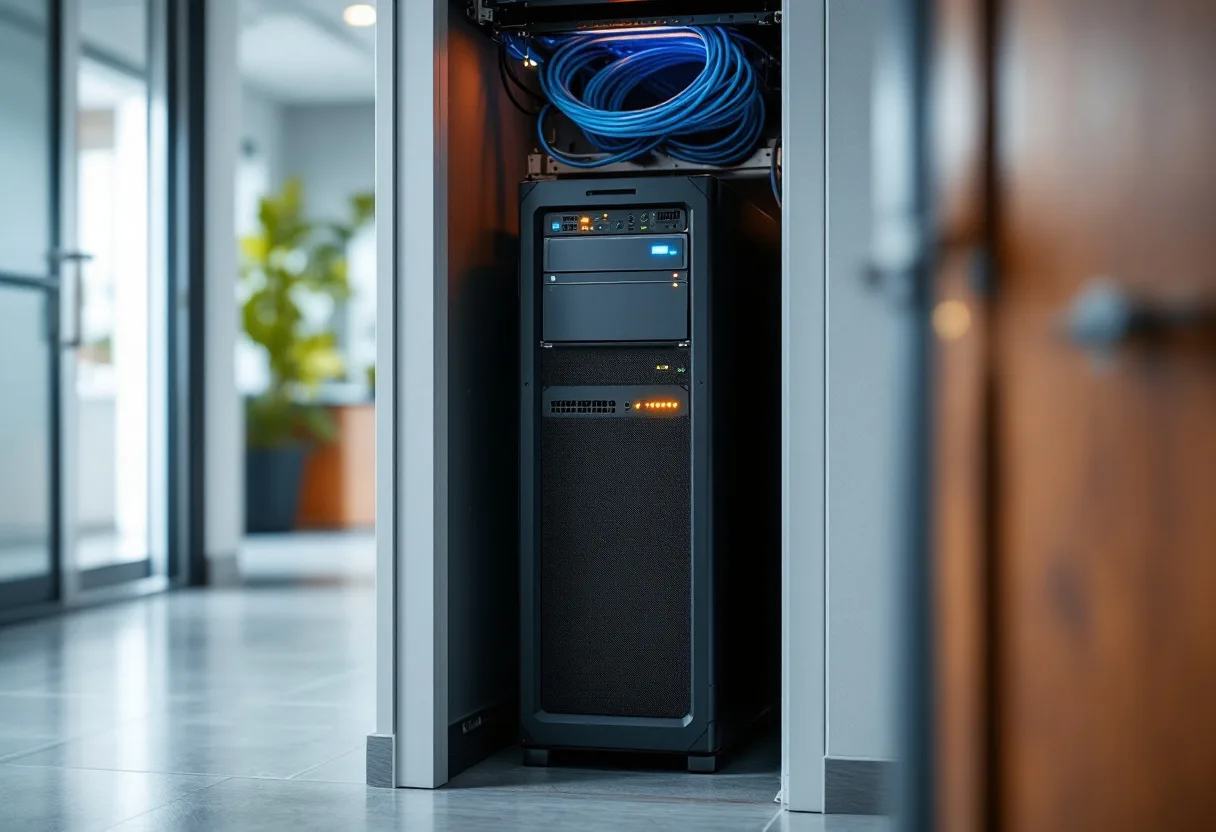
What Are the Server Requirements for Dentrix, Eaglesoft and Open Dental?
Dental practice management server requirements are the vendor-published minimum specifications for the machine holding the patient database, covering operating system, memory, processor, storage and network. Each of the 3 major platforms publishes its own. They aren’t interchangeable. A build that satisfies one can be explicitly unsupported on another.
Here’s the whole comparison in one place, pulled from the current vendor documents.
| Requirement | Dentrix (Apr 2026) | Eaglesoft (Rev 035, Mar 2026) | Open Dental |
|---|---|---|---|
| Server OS | Windows Server 2016, 2019, 2022, 2025 | Windows Server 2016 to 2025 Standard, or Windows 11 Pro | Windows 11, Windows Server 2016 to 2025, or Linux, or macOS |
| Server RAM | 16 GB, more above 10 workstations | 16 GB at any size | 4 GB to 8 GB, 8 GB for optimum performance |
| Server CPU | 4 or more cores at 2.4 GHz, i7 9700 or Ryzen 2700 class | i5 Gen 8 or better under 10 workstations, Xeon Gen 6 or higher at 10 and above | No published floor, newer and faster is better |
| Storage | 60 GB free on SSD or NVMe | 1 TB 7200 RPM drive, RAID 1 or RAID 5 | 1 GB to 2 GB plus the database and the A to Z folder |
| Network | 1 Gbps | Gigabit, Cat 5e cabling or better, no hubs | High speed connection treated as a requirement |
| Virtual machines | Tested on Hyper-V and VMware | Not supported at all | Supported, with dedicated drives and core pinning advised |
| Server Essentials or SBS | Not supported, port conflicts with backups | Not supported on any Small Business Server | No restriction published |
| Domain controller | No published restriction | Not supported on a domain controller | No restriction published |
| Terminal Services or Citrix | Not supported | Not addressed as thin client | No restriction published |
| Wireless | At your own risk, X-ray interference cited | Server must be wired | No restriction published |
Compiled from the Dentrix System Requirements 2026, the Patterson Eaglesoft and CAESY hardware requirements revision 035, and the Open Dental computer requirements page. Figures are vendor minimums, not our build recommendations.
Read the virtual machine row again. One vendor tests on hypervisors and says so in print. Another says the use of a virtual machine to run any Patterson Companies software is not supported, and offers no qualification at all. Run a dental portfolio, quietly standardize on a virtualized host because that’s how every other vertical works, and you now have an unsupported production system sitting in at least one practice. You find out during an outage. Never before one. That’s how it goes.
None of These Platforms Runs on Microsoft SQL Server
This is the single fact that breaks the most managed IT playbooks. Your standard toolkit assumes a Microsoft SQL Server instance, a VSS writer and a backup agent that knows how to quiesce it. Dental software gives you none of that. Not one piece.
| Platform | Database engine | What runs it | Where the data lives | Network port |
|---|---|---|---|---|
| Dentrix | FairCom c-treeACE | DentrixACEServer service, always running | The Dentrix Common directory on the database server | 6600 UDP and 6602 to 6605 TCP |
| Eaglesoft | SAP Sybase SQL Anywhere | SQL Anywhere PattersonDBServer service | The Eaglesoft data folder on the server | Per the Patterson firewall exceptions list |
| Open Dental | MySQL or MariaDB, myISAM engine | The MySQL or MariaDB service | The MySQL data directory plus the A to Z image folder | 3306 |
| Planmeca Romexis (imaging) | Microsoft SQL Server, or Firebird on macOS | SQL Server 2012 SP4, 2016, 2019 or 2022 | The Romexis image database | SQL Server default |
Dentrix ports are the firewall and antivirus exclusions listed in the Dentrix backup recommendations. Open Dental port and engine per the Open Dental MariaDB page. Romexis database support per Planmeca system requirements.
That last row is the part people miss. A practice running Planmeca Romexis for imaging genuinely does have a Microsoft SQL Server instance on the network, which means the SQL-aware backup agent your provider installed is probably working perfectly. It’s protecting the radiographs. Meanwhile the patient record, the ledger, the treatment plans and the perio charting all sit in a different engine the agent doesn’t understand at all. Wrong database. Right agent.
Open Dental adds a wrinkle worth naming. It needs the myISAM storage engine rather than InnoDB, and Open Dental states plainly that MariaDB must be installed using the myISAM default engine. myISAM carries no transaction log and no crash-safe recovery, so a copy taken while the service runs isn’t a consistent copy at all. It’s a set of files caught mid-write. Nothing warns you. MySQL’s own manual is direct about it, noting that with myisamchk you must make sure that the server does not use the tables at the same time.
Where the Published Requirements Contradict Each Other
These aren’t edge cases. Each one is a design decision a competent provider makes once, applies to every client, and then discovers doesn’t survive contact with a dental office.
| Design decision | What most MSPs default to | What the dental vendors publish | Who breaks |
|---|---|---|---|
| Virtualize the server | Hyper-V host, several guests, easy snapshots | Patterson does not support virtual machines for any of its software. Henry Schein One has tested Dentrix on Hyper-V and VMware | Eaglesoft practices |
| Put the database on the DC | One box does Active Directory and files in a 6 person office | Eaglesoft is not supported on a domain controller | Eaglesoft practices |
| Buy the cheap bulk storage | A 1 TB spinning disk is fine for a small office | Dentrix requires 60 GB free on SSD or NVMe. Eaglesoft still specifies a 7200 RPM drive in RAID 1 | Dentrix practices |
| Publish apps over RDS or Citrix | Thin clients, central patching, simple offboarding | Thin client setups such as Terminal Services and Citrix are currently not supported with Dentrix | Dentrix practices |
| Wireless in the operatories | Modern Wi-Fi 6 is faster than the old cabling | The Eaglesoft server must be wired. Dentrix flags X-ray machine interference and puts wireless at your own risk | Both |
| Link 2 offices over a VPN | One database, one site to site tunnel | Eaglesoft is not supported with any WAN solution | Eaglesoft practices |
| Standard AV and firewall stack | Whatever the provider resells everywhere else | Patterson lists McAfee as incompatible and does not recommend AVG Free, Webroot or Avast. Windows Defender is supported | Eaglesoft practices |
That WAN line deserves a moment. A 2 location practice wanting one shared schedule is the most ordinary request in dental IT, and the Eaglesoft documentation tells you to call a Patterson software technology specialist rather than build it yourself. We disagree with that position on the engineering. We follow it anyway. Being right about the architecture is worth very little when the vendor declines to support the practice at 7am on a Monday.

Why Your Dental Backup Is Probably Backing Up Nothing
Here’s where the money is. Every one of these platforms holds its database open, and every one of them defeats a naive file-level or image-level backup in a different way. The job still runs. It still reports success. Restoring is the part that fails.
Henry Schein One says it plainly in the Dentrix backup recommendations. Their database server locks its database even when Dentrix isn’t open on any computer on the network, because the DentrixACEServer service is always running. So a usable copy needs a scheduled export through the Dentrix Server Administration Utility, which writes into a folder called DBCopyForBackup. Your backup software points at that folder. Never at the live database.
| Platform | What a plain image backup captures | What actually produces a restorable copy | How to verify it in 5 minutes |
|---|---|---|---|
| Dentrix | A locked live database plus whatever is sitting in DBCopyForBackup, which may be months old | A scheduled export from the Dentrix Server Administration Utility, then a backup of the DBCopyForBackup folder and the DentrixSQL subfolders | Check the file modification date inside DBCopyForBackup. If it is not from last night, your backup is stale |
| Eaglesoft | An open Sybase database with no VSS writer to quiesce it | Stop the SQL Anywhere PattersonDBServer engine, back up the data folder, start it again, which Patterson documents as a Task Scheduler job | Confirm a stop and start pair exists in Task Scheduler and that both ran last night |
| Open Dental | myISAM tables mid-write, which restore as corrupt and need repair | A mysqldump while the service runs, or a file copy with the MySQL service stopped, plus the A to Z image folder separately | Confirm the dump file grew last night and that the A to Z folder is inside the job, not excluded as user data |
| Romexis imaging | Usually fine, because it is genuinely SQL Server | Standard SQL Server aware backup, sized for 9 MB per 2D image and up to 1 GB per 3D volume | Check that the imaging volume is in the job at all. It is frequently excluded for size |
Eaglesoft engine stop and start procedure per the Patterson support article on the database server engine. Open Dental method per the Open Dental manual backup instructions, which state that manual backups should only be done on myISAM databases.
That Dentrix failure mode is the nastiest of the 3, and it deserves spelling out. If the scheduled export gets disabled, or the utility quietly stops running after an upgrade, your backup software keeps copying the DBCopyForBackup folder every single night without complaint. Green dashboard. Successful job. Correct file size. Contents never change. A practice can sit on an 8 month old copy of its patient database for as long as nobody tries to restore it.
The 1 test that settles it. Ask your provider to restore last night’s backup into a scratch environment and open the practice management software against it. Not a file listing. Not a screenshot of a backup console. Open the software, load a patient, check that yesterday’s appointments are there. Under 45 CFR 164.308(a)(7)(ii)(A) a data backup plan is a required implementation specification, and the wording is procedures to create and maintain retrievable exact copies of electronic protected health information. Retrievable is doing a lot of work in that sentence.
Retention makes the stakes worse in Texas than most people realize. Under Texas Administrative Code Title 22, Section 108.8, a dentist keeps a patient record for at least 5 years from the last treatment, and for a patient who was a minor at that visit the clock runs until they turn 21 or 5 years pass, whichever is longer. Do the arithmetic. A 4 year old seen today produces a record you’re still responsible for in 2043. No server you buy this year will still be running then, which is the whole argument for treating dental backup as a data lifecycle problem rather than a nightly job. Our data backup services page covers how that gets structured.
The Antivirus, Firewall and Port Conflicts Nobody Warns You About
Every managed IT provider ships a standard security stack. In dental, that standard stack is where the tickets come from, because 2 of the 3 vendors publish explicit exclusions and 1 of them names products by brand, which is unusual enough in vendor documentation that it tells you how often the conflict has come up.
- McAfee VirusScan is listed as not compatible with Eaglesoft. Patterson also does not recommend AVG Free, Webroot or Avast, and states that Windows Defender is supported.
- Patterson does not recommend third-party firewall software and points to Windows Defender Firewall instead.
- Dentrix needs 6600 UDP and 6602 through 6605 TCP excluded from the firewall and antivirus configuration, and the Dentrix program directory excluded from scanning.
- Open Dental needs port 3306 open between workstations and the server for MySQL or MariaDB.
- Windows 10 and Windows 11 cap file share connections at 20 simultaneous sessions, which Open Dental documents as a real ceiling on peer to peer setups.
- Dentrix asks you to disable power management on the network interface cards to avoid disconnect errors on machines left idle.
None of that is exotic. All of it gets missed. Usually the person building the server has never opened the vendor requirements document, and is working from a template that served 40 other clients perfectly well and will keep doing so everywhere except here. A dental office is where the template stops working.
There’s a scheduling trap sitting on top of all this. Patterson notes that on Windows Server 2019, 2022 and 2025, scheduled tasks fail to start and stop the Eaglesoft database. That’s precisely the mechanism the documented backup procedure depends on, so a modern operating system and the documented backup method end up in tension on the same page of the same document. Somebody has to test that the pair actually fires. Don’t assume.

Two Deadlines Already on the Clock
Both of these sit in the vendor and platform documentation right now. Both carry budget consequences for a practice running aging hardware.
| Deadline | Date | What it means | Who it hits |
|---|---|---|---|
| Dentrix stops supporting Windows 10 installs | 30 June 2026 | Henry Schein One will no longer support installing Dentrix on a Windows 10 workstation. Microsoft support for Windows 10 already ended in October 2025 | Any practice with Windows 10 chairside machines |
| Windows Server 2016 leaves extended support | 12 January 2027 | No further security updates without paid Extended Security Updates. Dentrix, Eaglesoft and Open Dental all still list 2016 as a supported server OS, which makes it easy to leave in place | Any practice on a 2016 era server |
Windows 10 install cutoff per the Dentrix System Requirements 2026. Server 2016 dates per the Microsoft lifecycle policy.
That second one is sneakier. Every vendor here still lists Windows Server 2016 as supported, so a practice reading the requirements document concludes it’s fine. Their software vendor is telling the truth. Microsoft is the one turning off the security updates, and after 12 January 2027 a HIPAA risk analysis that finds an unpatched server holding the patient database isn’t going to end well for anybody.
What to Ask Before Anyone Touches the Server
Give this list to whoever supports you now. Their answers tell you more than a proposal will.
- Which database engine does our practice management software use, and is it Microsoft SQL Server? If the answer is yes for Dentrix, Eaglesoft or Open Dental, stop there.
- Show me the vendor requirements document you built this server from, and its revision date.
- Is our server virtualized, and does our software vendor support that in writing?
- What exact mechanism produces a consistent copy of the database each night, and where does that copy land?
- When did you last restore that copy and open the practice management software against it?
- Which antivirus and firewall exclusions from the vendor documentation are actually in place on this server?
- Is the imaging database in the backup job, or was it excluded because of size?
Question 5 is the one that matters. Everything else is documentation. A restore somebody has actually performed is evidence, and in our experience the gap between practices that have tested a restore and practices that assume theirs works is the widest gap in dental IT. Watch how your provider reacts to question 5. Defensiveness is an answer.
One fair caveat on all of this. Cloud platforms change the shape of the problem rather than removing it. A practice on Curve Dental, which asks for 10 Mbps down and 5 Mbps up for an office of 1 to 10 users and doesn’t recommend satellite or wireless service, has no database server to back up and no engine to quiesce. It has also turned its internet circuit into a single point of failure for the whole schedule. That’s a better problem. It’s still a problem. Buy the second circuit.
Server Questions Dental Practices Ask Us
Can I run Dentrix and Eaglesoft on the same virtual host?
No. Patterson doesn’t support running any of its software on a virtual machine, so an Eaglesoft guest on a hypervisor is unsupported regardless of how well it performs.
Dentrix is a different story. Henry Schein One states that Dentrix has been tested on properly configured Hyper-V and VMware machines, while noting that its support team won’t troubleshoot problems caused by the hypervisor itself. So a Dentrix practice can virtualize with vendor blessing and an Eaglesoft practice cannot. Support both and you need 2 standard builds. One template won’t cover you.
Does Dentrix need Microsoft SQL Server installed?
Dentrix doesn’t need it. Dentrix runs on the FairCom c-treeACE engine through the DentrixACEServer service, which installs with the product.
Confusion here is understandable, because Dentrix names a folder DentrixSQL and its own backup document refers to the nature of an SQL database. Neither means Microsoft SQL Server. Practically this matters for 1 reason above all others. A backup agent advertising SQL Server support won’t quiesce the Dentrix database, won’t know it’s locked, and will happily copy nothing useful every night while reporting a clean job.
How much RAM does a dental server actually need?
16 GB is the published floor for both Dentrix and Eaglesoft. Open Dental asks for far less, recommending 4 GB to 8 GB.
Treat 16 GB as a starting point rather than a target. Dentrix adds that more memory may be required above 10 workstations, and if imaging shares the box the numbers move again. Planmeca asks for 16 GB on the server side once 3D imaging is in play, against 6 GB for 2D only. So a 10 operatory practice with a cone beam unit and a single shared server is not a 16 GB machine. Not in any honest reading of those documents.
Is a spinning hard drive still acceptable in a dental server?
For Dentrix, no. Its 2026 requirements ask for 60 GB of free space on SSD or NVMe and drop mechanical drives from the specification entirely.
Eaglesoft is the odd one here. Its March 2026 document still calls for a 1 TB 7200 RPM drive in RAID 1, a specification that reads like it was written several years ago and carried forward since. We build solid state for both. Meeting a vendor minimum written for older hardware isn’t the same as building something that feels fast in an operatory at 8am with 6 people logging in at once.
Our backup says it succeeds every night. Is that enough?
A successful job is weak evidence on these platforms. All 3 engines hold their database files open, so a backup can complete perfectly while capturing something unusable.
Dentrix produces the version of this we find most often. Its backup design depends on a scheduled export writing a fresh copy into DBCopyForBackup before the backup window opens, and if that export quietly stops, the backup keeps archiving the same stale copy indefinitely. Nothing in the backup software tells you. Only a restore settles it, and that restore has to end with the practice management software open and yesterday’s schedule visible.
What happens to our server when Windows Server 2016 support ends?
Your software keeps running. Security updates stop on 12 January 2027 unless you buy Extended Security Updates from Microsoft.
That gap is what a risk analysis will find, and it’s a poor position for a covered entity holding records with a retention clock measured in decades. Plan the replacement rather than the extension. Budget for it a year out. A dental server swap touches imaging bridges, sensor drivers and every chairside machine, so it isn’t an evening of work no matter what anybody tells you.
Have a Dental IT Expert Check Your Server
Send us your practice management platform, your server operating system and a screenshot of last night’s backup job. We’ll tell you whether the build matches what your software vendor publishes, whether the backup captures a restorable copy, and what it would cost to close the gap. Often the answer is that your setup is fine and needs 2 changes. We’d rather say that than sell you a rebuild you don’t need.
For the wider picture, our IT support for dental practices in Houston page covers what a dental engagement includes, the per operatory cost breakdown shows what it costs from 3 chairs to 12, and our HIPAA compliant IT services page covers the compliance layer sitting on top. Still choosing a provider? We published a ranked comparison of Houston dental IT providers that names the dental-only firms worth a call.