A Houston-based IT provider matters when a problem needs a person in your building or a storm hits the Gulf Coast, while a national MSP fits companies spread across many states. Offices decide most of it.
Choose a local MSP if your people work around Houston and you want on-site help, storm readiness, and an account team that knows your office. Choose a national MSP if you run offices in many states or have a very large headcount. A Houston address alone proves nothing, so ask where the engineers sit. Our managed IT services in Houston page shows our answers.
Search for a local vs national MSP in Houston and you’ll find both sides arguing from the same brochure. The national firms say scale. The local firms say service. Both are partly right, but neither side tells you the point where the answer flips for a company with your headcount, your offices, and your tolerance for a bad week.
I lead Uprite, a Houston-based managed services provider, so weigh everything here with that in mind. Fair warning. We’re a Texas company, in Houston since 1999, and we’re not the right fit for every buyer. The test is simple. If your staff and equipment sit in the Houston area, the local argument gets stronger. If they don’t, it fades fast.
What does a national MSP do better?
Scale. A national provider can staff a help desk around the clock across several time zones, keep specialists for niche platforms on the bench, and put one contract in front of every office you own. Run 30 locations in 18 states and a single agreement beats 18 local ones. That’s the strongest case for going national, and it’s a good one.
Process comes second, because big providers document everything from onboarding checklists to ticket categories to monthly reports, and a company with a corporate compliance team often wants exactly that sameness across every office it runs.
Some projects are simply large. A 2,000-seat rollout or a multi-country network needs more hands than a 42-person firm can field. We’d say so.
National has costs too. The account team may sit in another state, the help desk may rotate by shift, and nobody at the provider may have stood inside your building. For a 40-person office in Sugar Land, the gap is real. Distance matters.
Where does being in Houston change the work?
Some jobs need a body. Think of a dead switch in a closet, a new hire’s laptop that has to be set up at the desk, or a cabling run for an office move. Remote tools clear most tickets, but they don’t carry a ladder.
Weather is the Houston-specific part, and no national template covers it. Hurricane Beryl cut power to 2.7 million Texas customers in July 2024, and about 1 million were still dark 4 days later, according to the Public Utility Commission of Texas. Hurricane season runs June 1 to November 30, and the National Hurricane Center puts the peak at September 10. Our team has done restoration work after Harvey and Beryl, so we’ve seen what a week without power does to a small office, a server closet, and a payroll deadline. It’s a long week.
Backups matter most there. Once the building floods, a copy that lives next to the server isn’t a copy anymore. CISA’s small business guidance says to keep backups separate from your main systems and to test them. Ask where yours live. Then ask when somebody last restored from them. Test it.

The everyday stuff counts too. The engineer who picks up your ticket works for the same firm that signs your contract. No handoffs. Houston isn’t a template, and its economy runs on energy, healthcare, the port, and construction, each with its own software, insurers, and regulators, which means a provider that works in those industries every week has usually seen your setup before.
Texas law adds another layer. The state’s breach notification statute, Business and Commerce Code 521.053, sets deadlines for telling people and the Attorney General when personal data is exposed, and a Houston provider works under those rules constantly and doesn’t need a memo to explain them.
Does a Houston address mean Houston engineers?
Not automatically. An address is a mailing fact. Some providers with a Houston office answer tickets from a call center in another state, and some national firms staff real Houston desks. Neither is wrong. You just need to know which one you’re buying.
So the useful comparison isn’t local against national at all. NIST’s incident response guide, SP 800-61 Revision 3, says the split of duties with an outside provider belongs in the contract. Put it in writing. A short set of questions gets you there, and any provider should be able to answer each in a sentence or two. Ask them all.
- Where does the person who answers my first call sit?
- Who comes to my office when remote tools can’t fix it, and how soon?
- Who owns the contract, and who owns the relationship once it’s signed?
- What happens to my systems if the power is out for a week?
- How do you handle Texas breach notice deadlines?
- What’s your measured average first response, not the promised one?
Ours, for reference. Our technicians are Texas-employed, with 2 Houston offices on Westheimer Road and Space Center Boulevard. First response averages about 5 minutes, with a 10-minute triage target. The offices are open 7 a.m. to 6 p.m. on weekdays, and on Fully Managed IT an after-hours alert reaches a person instead of a voicemail box.
Be careful with that last question, though. An average and a contract guarantee aren’t the same thing, and plenty of agreements measure a clock you didn’t expect, which is why our guide to IT support response time in Houston walks through the three clocks a contract can use.
How do the two models compare side by side?

| What you’re weighing | Local Houston MSP | National MSP |
|---|---|---|
| On-site help | Engineers based in the metro, so a site visit is a short drive | Depends on the nearest office or a dispatched contractor |
| Offices in many states | Weaker, unless it also covers other cities | Strong, one contract across every location |
| Hurricane and Texas knowledge | Built in, since the team lives it | Varies by region and by who staffs your account |
| Specialist bench | Narrower, with some niches handled by partners | Deeper, especially for large or unusual platforms |
| Process and reporting | Often more flexible, sometimes less formal | Highly standardized and documented |
| Account continuity | Same small team tends to stay on your account | Account managers and desk staff may rotate |
| Best fit | Houston-area companies from roughly 10 to 300 users | Multi-state companies and very large user counts |
No row decides it alone. Weigh them by how your company actually works.
Which one fits your company?
Go local when your people and equipment sit in the Houston area, when you’ll need hands on site now and then, and when a hurricane would really hurt. Go national when you run many states, need identical process everywhere, or have thousands of users.
If your offices span 10 states and none of them is in Texas, we’re probably not your best match. National is the better call. Not everyone fits a box.
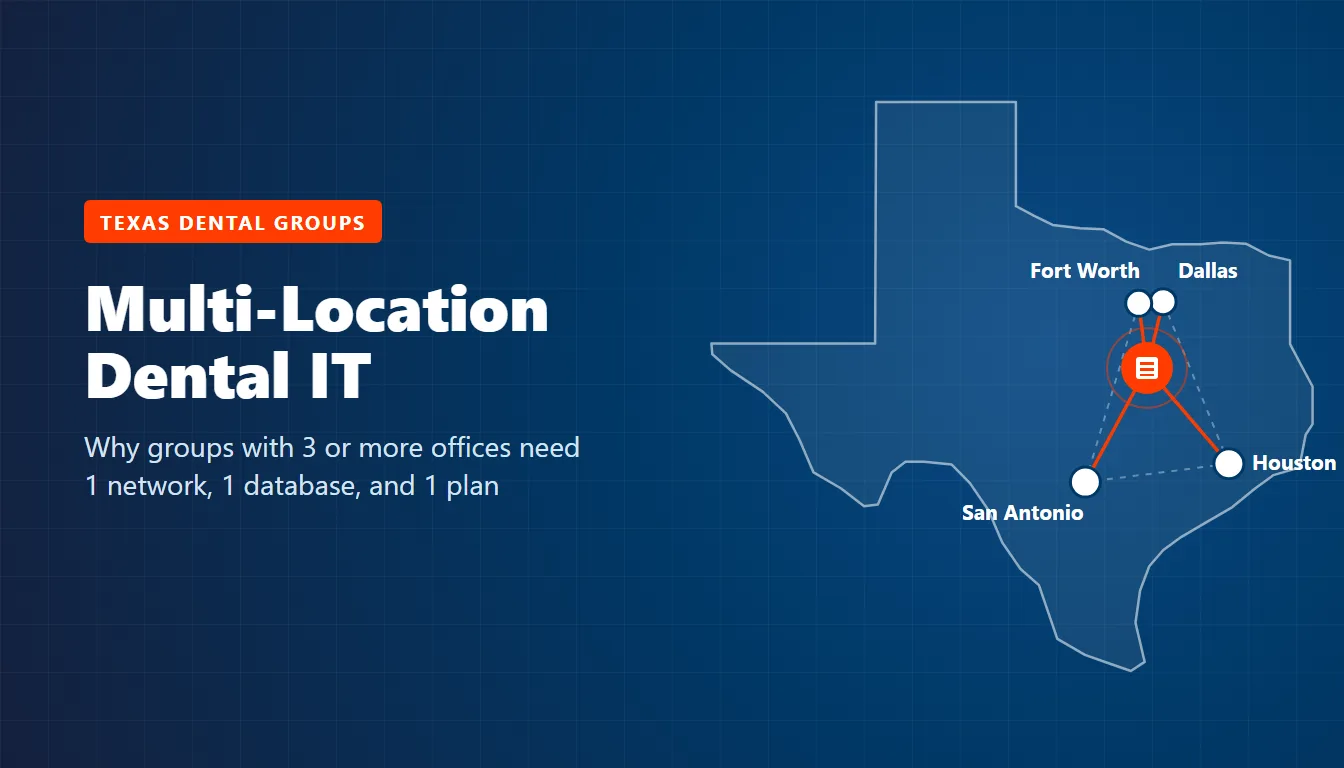
Plenty of companies land in the middle. Take a 60-person firm with a Houston office and a small branch in Dallas, which doesn’t need a national provider, because a Texas-based one can cover Houston, San Antonio, and Dallas. And if you already have an IT lead, a co-managed setup is another route. Our managed IT vs co-managed comparison breaks it down.

For reference, Uprite’s published Houston plans run $138 per user per month for Fully Managed IT, $100 for Co-Managed IT, and $40 for security-only cover. Microsoft licensing bills separately. Every plan carries a 120-day exit and a first-year rate lock.
Comparing Houston providers side by side? Our list of the top managed IT providers in Houston puts them in one place, and how to choose an IT company in Houston covers the questions to bring to every call.
Questions Houston buyers ask about local and national MSPs
Is a managed service provider based in Houston more expensive than a national one?
No, price follows the plan, the user count, and the exclusions rather than the headquarters. Compare per-user rates line by line, and check what’s excluded, such as after-hours work, on-site visits, and Microsoft licensing.
Can a national MSP still support a Houston office?
Yes, and plenty do it well. Three things decide how it goes, who answers the phone, how fast someone can reach your door, and whether the account team knows Houston. Get those in writing before you sign.
How do I find local IT companies near me that are actually local?
Look past the map pin. Check the office address named in the contract, where the help desk sits, and who comes on site. Ask for names of engineers instead of a brochure.
Do I need a Houston-based IT service provider if my company has under 25 people?
Not always, but small teams feel distance more. A small office usually has nobody in-house to swap a dead router or set up a new laptop, so on-site hands matter more there, not less.
What should an IT contract say about hurricanes?
It should name who contacts you before a storm, where your backups live, and how quickly restoration starts afterward. Vague promises about disaster recovery aren’t enough. Ask for the date of the last restore test and a named owner for the storm plan, and ask before June 1.
Is Uprite a Houston-based managed services provider or a national one?
Uprite is a Houston-based managed services provider and has been a Texas company since 1999. Headquarters sit in Houston, with 42 people across Texas and service in San Antonio and Dallas too. We aren’t a national MSP. We’d rather say so up front.
Tell us how many people and offices you have, and we’ll say whether a Houston team is the right fit, even when the answer is no.
Talk to a Houston team