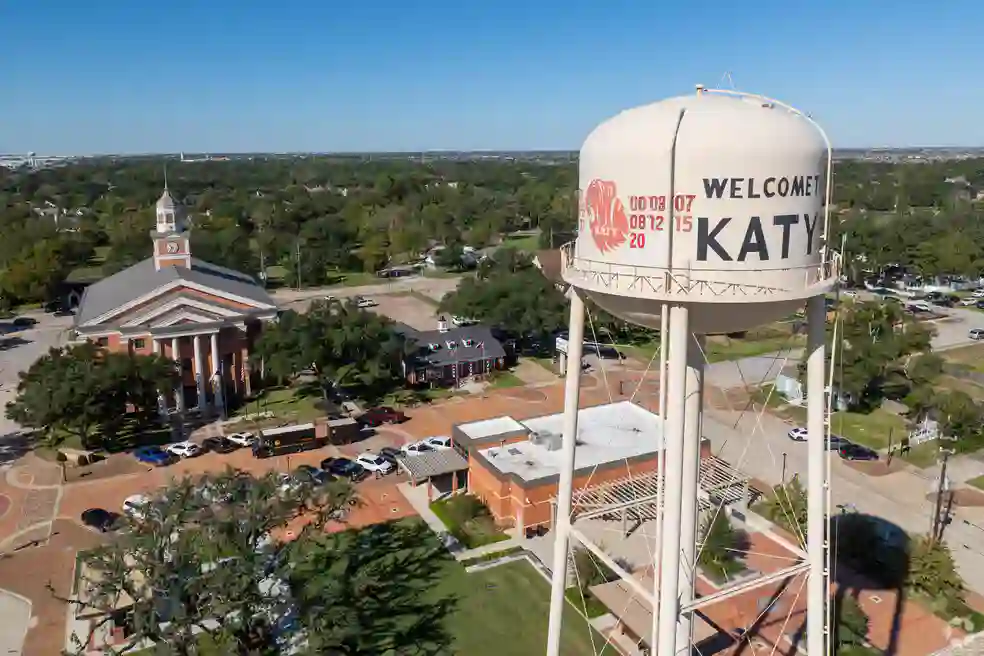
IT Services for Nonprofits in Houston
IT services for nonprofits in Houston cover help desk support for staff and volunteers, donor database and payment security, Microsoft 365 on nonprofit licensing, grant-ready security records, and backup planned around hurricane season. Uprite runs them from 2 Houston offices as part of our managed IT services for nonprofits across Texas, with fully managed IT published at $138 per user per month.
Managed IT for Houston charities, food banks, shelters, churches, clinics, and foundations, from Midtown to Pasadena. Planned so more of every gift reaches the mission.
Speak to a Nonprofit IT ExpertNo obligation. We map your licenses, donor data, and funder requirements before anything changes.In Texas Since 1999 | MSP 501 Winner 7 Years Running | SOC 2 Type 1 (2023) | 120-Day Satisfaction Guarantee
Speak to a Nonprofit IT Expert
Recognized Across Texas for Nonprofit and Mission-Driven IT








The Houston Nonprofit Sector
Houston Has Thousands of Nonprofits. Almost None Have an IT Department.
Start with a count most IT companies never run.
The IRS Exempt Organizations Business Master File, as of October 2026, lists at least 18,627 organizations recognized under 501(c)(3) with a Harris County ZIP code, and 29,556 across the 9-county Houston metro. Only 825 of the Harris County group report annual revenue of $1 million or more.
Most are small. Very small.
About 4 in 5 Harris County 501(c)(3)s show no revenue figure in that file, mostly because they file the e-Postcard for groups under $50,000 or are congregations that don’t have to file at all. Among the 3,659 that do report revenue, the median is $205,025 a year. That’s the whole budget, programs and payroll included.
Staff run just as lean. Federal payroll data from the BLS Quarterly Census of Employment and Wages puts the average Harris County social assistance office, the category that covers family services, food banks, shelters, and child care, at 8.7 people in 2025, earning an average of $34,022 a year, which is just over a third of the county’s private-sector average. Nobody in that office was hired to run IT. Somebody does it anyway.
The sector keeps getting newer, too. 7,846 of those Harris County 501(c)(3)s, or 42.1%, received IRS recognition in 2020 or later, so thousands of organizations are setting up their first donor database and their first Microsoft 365 tenant right now. Most are doing it alone.
Our managed IT services in Houston cover the basics every office needs. A nonprofit needs those basics plus donated licensing, donor and client confidentiality, constant volunteer turnover, and funder paperwork, and the rest of this page is about that gap.
Licenses, Donors, and Volunteers
Nonprofit IT Services in Houston Start With What You Qualify For
Plenty of Houston nonprofits we meet are paying full price for software they could get free.
Microsoft’s nonprofit offers give an eligible 501(c)(3) Microsoft 365 Business Basic free for up to 300 users, and they sell Business Premium, the plan with desktop Office and device security, for $5.50 per user per month paid yearly, which Microsoft describes as a 75% discount. There’s a $2,000 Azure credit every year on top of that. Worth claiming.
Google runs its own version. Google Workspace for Nonprofits costs nothing, and the paid Business Standard and Business Plus editions carry nonprofit discounts of 75% and 72% or more.
The catch is the upkeep. Microsoft’s eligibility terms say an outside IT provider can’t complete the registration for you, validation can take up to 7 business days, and granted licenses are expected to stay at least 85% in active use. Let a dozen seats sit idle after staff turnover and the free plan can put your next grant from Microsoft at risk. Microsoft does check.
Then there are the people. A typical program has staff, part-timers, interns, board members, and seasonal volunteers, all wanting email and a shared drive, and each group needs a different level of access to the donor and client records. Few of them stay put.
Here’s how we split the work. Your director or another staff member completes the registration, we prepare the documents they’ll need, and once validation clears we build the tenant, move the mailboxes, assign each person the right plan, and remove unused seats every quarter.
Funders ask about this side, too. When a foundation, a county program, or a state agency sends a security questionnaire along with a grant, we answer the IT questions in writing and attach Uprite’s 2023 SOC 2 Type 1 report, a point-in-time review of how our own controls were designed.
What That Looks Like Across Houston Nonprofits
Human Services and Shelters
Case files, intake laptops, and resident Wi-Fi kept apart from the staff network, with survivor records handled under federal confidentiality terms.
Food and Basic Needs
Warehouse scanners, distribution-site laptops, and volunteer sign-in stations that keep working through a Saturday pantry line.
Churches and Ministries
Online giving, livestream gear, and the church office on separate networks, with access that changes when volunteers rotate.
Health and Behavioral Clinics
Patient records under HIPAA, encrypted laptops for outreach staff, and access logs an auditor or a funder can actually read.
Arts, Culture, and Education
Ticketing, membership lists, and classroom devices kept running through season openings and summer camps.
Foundations and Associations
Grant management systems, board portals, and wire approvals locked down against the payment fraud aimed at small finance teams.
A common mistake is treating the donor database as a fundraising tool and Microsoft 365 as an IT tool, which leaves a former development director with admin rights to both because nobody owns the overlap. Closing that gap is usually the first change we make.
The Rules
What Rules Shape Nonprofit IT in Houston?
Ransomware makes the news, and our cybersecurity services in Houston handle that side of it. Most weeks, though, a nonprofit’s technology is shaped more by rules than by attackers.
Start with state law. When personal information leaks, Texas Business and Commerce Code 521.053 applies to any person doing business here, and Texas law counts an organization as a person, so our reading is that a charity owes the same 60-day notice to the people affected and a 30-day report to the Attorney General once 250 or more Texans are involved. The state’s consumer privacy law is different. The TDPSA exempts nonprofits, and people mix the two up constantly. Different laws, different duties.
Survivor services carry the strictest terms. Programs funded under the Violence Against Women Act can’t release personally identifying information about the people they serve, under 34 U.S.C. 12291(b)(2), even when it’s encrypted or hashed, and a Justice Department rule extends that to statewide and regional databases. HUD’s Continuum of Care rule lets those providers run a comparable database instead of entering clients into the shared homeless system. That’s a network design decision, not a policy memo. Mistakes here hurt people.
Then come the payments and the funders.
Online gifts bring in PCI DSS. Since March 2025, an organization taking donations through a provider’s hosted form or embedded payment frame has to confirm, under the updated SAQ A rules, that its own donation page isn’t open to malicious scripts. State contracts add clocks of their own. The Texas Health and Human Services data use agreement attached to its solicitations asks contractors to report a suspected breach within 24 hours of discovery, or within the first hour for federal-source data such as Medicaid records, and anyone with access to a state system has to finish certified cybersecurity training under Government Code 2063.104.
Card Data Kept With the Processor
Hosted donation forms and event readers set up so card numbers never sit on your network, plus the script check SAQ A now asks for.
Survivor Records Kept Apart
Comparable databases and separate networks for victim services, so personal details never reach a shared system by accident.
Grant Terms Mapped to Controls
Every security clause in a state contract or foundation agreement matched to a working control, with the evidence filed before anyone asks.
Breach Clocks Written Down Early
The one-hour, 24-hour, 30-day, and 60-day clocks that apply to your contracts and to Texas law, written down and rehearsed before a bad week.
Storms and Service
Hurricane Season Is When Houston Leans on Its Nonprofits
A storm turns half the nonprofits in this city into emergency responders overnight. Pantries extend hours. Shelters fill up. Churches open fellowship halls.
Beryl was the reminder. When it came ashore in July 2024, the Public Utility Commission’s review of the storm put the outages at roughly 2.7 million customers across the region. The programs that kept serving that week ran on generators, phone hotspots, and whichever records someone could still open from home, which for a lot of small offices meant almost none of them. That’s a hard week.
So we plan continuity in April, not inside the cone of uncertainty. Donor and client records reachable from outside the building. Laptops that work on a borrowed connection. A restart order that puts intake, payroll, and the phones ahead of everything else.

What We Support in Houston Nonprofit Offices
Donor Management
Raiser’s Edge NXT, Bloomerang, DonorPerfect, Neon CRM, and Salesforce Nonprofit Cloud, with export rights that follow job roles instead of seniority.
Online Giving and Events
Donation pages, gala ticketing, and card readers set up so card numbers stay with the payment processor and off your network.
Finance and Grant Tracking
QuickBooks Online, Sage Intacct, and Financial Edge NXT backed up and restore-tested, with a second approval on every wire and vendor bank change.
Programs and Case Records
Client intake and case management systems, including the separate databases victim service providers keep apart from shared community systems.
Microsoft 365 and Google Workspace
Tenants set up on nonprofit licensing, shared program mailboxes, and volunteer accounts that switch off when the season ends.
Storm-Season Continuity
Off-site copies, tested restores, and a work-from-anywhere plan in place before June 1, backed by our disaster recovery services in Houston.
Has Uprite actually done this for nonprofits?
3 published projects say yes. When a nonprofit client’s main server failed at the end of 2025, our team stood up a temporary environment and recovered more than 3TB of records for about 40 staff over a holiday stretch. A Texas women’s shelter got separate staff and resident networks, business fiber, and its servers moved to the cloud. And a national conservation nonprofit swapped a slow previous provider for managed support, multi-factor sign-in, security training, and Microsoft 365 planning across its chapters.
The storm can close the building. It shouldn’t close the food line.
What We Run
Donor Data, Payments, Licenses, and Client Records
Most managed IT contracts cover the help desk, patching, backup, and antivirus. That’s where they end.
None of it tells you who can export the donor list. Or whether last spring’s gala payments ever touched your Wi-Fi.
At a nonprofit, 5 things carry most of the risk. The donor database holds the relationships that pay for everything. Payment flows decide whether card rules reach you at all. Licensing decides what the budget quietly pays for every month, client records decide what you owe the people you serve, and volunteer access decides how many strangers can reach the other four.
What Each Line Covers
| Service line | What Uprite runs | Rule or requirement behind it |
|---|---|---|
| Licensing and donated software | Nonprofit eligibility kept current, seats matched to real staff, unused licenses reclaimed, and one renewal calendar for every subscription | Each vendor’s nonprofit program terms and the 501(c)(3) status they check |
| Donor database | Role-based access, multi-factor sign-in, export rights limited by job, and tested backups of the full donor history | Texas breach notice law, Business and Commerce Code 521.053, plus your donor privacy policy |
| Online giving and payments | Hosted donation pages, event card readers kept off staff and guest networks, and a yearly check of where card data actually flows | PCI DSS, through the self-assessment your payment processor asks for |
| Client and case records | Separate systems for confidential programs, encrypted laptops for outreach staff, and logged access a monitor can review | HIPAA for health programs, and federal confidentiality terms for survivor services |
| Volunteer and board access | Accounts that start on day one and expire on schedule, board files kept apart from operations, and no shared logins | Funder security questionnaires and grant agreement terms |
Licensing waste is usually the first thing we find. When a coordinator leaves and nobody removes the paid seat, the organization keeps paying for a mailbox that no one opens, sometimes for a year or more.
Donor data gets the most attention from boards, and for good reason. Export rights in a donor database tend to go to whoever asked for them first, so we often find a board member, a long-time volunteer, and 2 former development directors who can still download the full list.
Payment problems are harder to spot. If a card reader at a fundraiser is plugged into the guest network, card rules can suddenly apply to parts of the network that never needed them.
Client records carry the heaviest obligation. Shelters, clinics, and legal aid programs hold information that can put a person at risk if it leaks, and the rules for handling it come from funders and federal grant terms as much as from IT policy.
Volunteer access is the last piece. Volunteers need accounts on their first day and none after they leave, which is hard to manage when 150 people help with a spring build or a holiday drive.
That’s a lot for a staff of 6 to track. It’s also the main reason to hand it off.
By the Numbers
The Numbers Behind Nonprofit IT in Houston
Most of these come from the IRS, the BLS, and the Texas Attorney General. Two are Uprite’s own, published so you can hold us to them.
18,627
Organizations recognized under 501(c)(3) with a Harris County ZIP code in the IRS exempt organizations file, October 2026.
$205,025
Median annual revenue among the 3,659 Harris County 501(c)(3)s that report a revenue figure to the IRS.
8.7
Average people per Harris County social assistance office in 2025, per the BLS Quarterly Census of Employment and Wages.
14
Breach notices filed with the Texas Attorney General by clearly identified nonprofits from October 2025 to October 2026, covering 25,550 Texans.
$138
Uprite’s published monthly rate per user for fully managed IT in Houston, on-site help included.
| Metric | Data Point | Source |
|---|---|---|
| 501(c)(3) organizations, Harris County | 18,627 (29,556 across the 9-county metro) | IRS EO BMF, October 2026 |
| Harris 501(c)(3)s reporting $1 million or more in revenue | 825 | IRS EO BMF, October 2026 |
| Harris 501(c)(3)s with no revenue figure on file | 14,953, about 80% (e-Postcard filers, churches, non-filers) | IRS EO BMF, filing requirement codes |
| Median revenue among those that report it | $205,025 (3,659 organizations) | IRS EO BMF, October 2026 |
| Largest Harris categories | Religion 3,777, education 2,443, human services 2,245 | IRS EO BMF, NTEE major groups |
| Recognized by the IRS in 2020 or later | 7,846, or 42.1% of the Harris total | IRS EO BMF, ruling dates |
| Social assistance offices, Harris County | 4,511 offices, 39,091 jobs, 8.7 people each | BLS QCEW, NAICS 624, 2025 |
| Social assistance average annual pay | Harris $34,022, Texas $31,580 | BLS QCEW, NAICS 624, 2025 |
| Grantmaking, civic, and membership organizations | 882 offices, 12.2 people each, $65,097 average pay | BLS QCEW, NAICS 813, 2025 |
| Nonprofit breach notices to the Texas AG | 14 filings, 25,550 Texans, 3 from Greater Houston | Texas AG breach reports, Oct 2025 to Oct 2026 |
| Data most often exposed in charity breach notices | Social Security numbers in 18 of 24, medical information in 14 of 24 | Texas AG filings from nonprofits and IRS-listed charities |
| Customers without power after Beryl, 2024 | Roughly 2.7 million | Public Utility Commission of Texas, Project 56822 |
| Uprite Houston rates, per user per month | Fully managed $138, co-managed $100, MSSP security $40 | uprite.com/pricing |
| Uprite average first response | 5 minutes | Measured across all tickets and priorities |
Pricing
What Do IT Services Cost a Houston Nonprofit?
Fully managed IT for a Houston nonprofit starts at $138 per user per month with on-site help included, co-managed IT runs $100, and security-only coverage is $40.
Those rates are posted on our public pricing page, so your treasurer can check them without booking a call. Nothing is hidden.
| Plan | Per user, per month | Built for | What it includes |
|---|---|---|---|
| Fully Managed IT | From $138 | Nonprofits with no IT person on staff | On-site and remote help for staff and volunteers, around-the-clock availability, cloud and network management, the full security stack, vCIO planning, and quarterly backup tests |
| Co-Managed IT | From $100 | Organizations with a volunteer tech lead or IT coordinator | Shared support, compliance consulting, a technology roadmap, and clean handoffs with your own person |
| MSSP Security Focus | From $40 | Small teams that need protection first | Firewall management, SIEM and SOC monitoring, vulnerability scanning, incident response, and a security review every quarter |
| Remote-only IT Pro | From $110 | Teams of 12 or more outside Houston and San Antonio | Remote support and cloud management only, so we don’t quote it to Houston organizations |
Run it against an average Harris County social assistance office. 9 users on Fully Managed comes to $1,242 a month, about $14,900 a year, or roughly 5% of what an office that size spends on wages at the county’s average social assistance pay.
For an organization whose entire budget sits near the $205,025 median, that’s a real commitment, so plenty of small Houston charities start with security-only coverage at $40 a user plus tested backup and move up as grants allow. Sound budgeting for IT at a Houston nonprofit usually runs in that order, protection first and convenience later.
Software is the second invoice, and it’s where nonprofits have the most room. Microsoft 365 Business Premium costs an eligible nonprofit $5.50 per user per month, and Business Basic is free for up to 300 users. Any honest look at what IT costs a Houston nonprofit has to count the licensing you qualify for, not list price.
Our two remote-only plans, IT Pro at $110 and IT Essentials at $91, are meant for teams outside the Houston and San Antonio areas. We don’t use them to quote a Houston organization, and the Essentials cap of 8 support hours per user per month in business hours would run short the week of a gala or a storm.
Terms sit next to the prices. No hidden fees, the rate locked through year one, and a 120-day satisfaction guarantee if the work falls short.
Send us your staff count, your license list, and where your donor data lives.
We’ll send back a written map of what’s exposed and what you’re overpaying for, before you commit to anything.
Speak to a Nonprofit IT ExpertGetting Started
How Does Uprite Onboard a Houston Nonprofit?
Scheduled around your grant deadlines and event calendar. Nothing moves the week of the gala.
Step 1. Inventory Every License, Login, and Donor System
Laptops and servers first, then everything nobody wrote down. Which nonprofit offers you already use, who holds admin rights to the donor database, where volunteers sign in, and which shared passwords are still taped to a monitor. You keep the findings either way.
Step 2. Rank the Risks Against Your Grant and Event Calendar
The inventory becomes a plan ranked by what could cost you a grant, a donor, or a client’s safety, which usually puts open donor exports and untested backups at the top of the list.
Step 3. Lock Down Accounts, Donor Data, and Wire Approvals
Organization-owned accounts, multi-factor sign-in, role-based access to donor and client records, and a call-back rule on every payment change, with offboarding that reaches volunteers and board members too.
Step 4. Move Licensing, Records, and Backups Into Shape
Nonprofit licensing applied where you qualify, records moved off the closet server where it makes sense, and backup and disaster recovery for Houston offices proven with a real restore. The 120-day satisfaction guarantee covers the whole changeover.
Step 5. Run It Through Storm Season, Audits, and Renewals
24/7 monitoring and patching, a help desk a caseworker can call from a client’s kitchen in Aldine, scheduled restore tests, and current answers ready for the next funder questionnaire, audit, or insurance renewal.
Timing depends mostly on how scattered things are. An 8-person foundation on Microsoft 365 moves faster than a 70-person human services agency with a server in a closet, 3 program sites, and a donor database nobody has cleaned since 2016. Cleanup takes longer.
Who It Fits
Houston Nonprofits Uprite Mission℠ Is Built For
| Right fit |
|---|
| Greater Houston 501(c)(3) organizations with roughly 10 to 150 staff, from a single-office charity to a multi-site agency |
| Human services agencies, shelters, and clinics holding client records that carry federal or funder confidentiality terms |
| Food banks, pantries, and relief groups whose workload spikes when a storm or a freeze hits the region |
| Churches, ministries, and faith-based schools running online giving, a church office, and a rotating volunteer team |
| Foundations, associations, and arts groups with a small finance team approving wires and grant payments |
| Organizations with a program site in Pasadena, Katy, Spring, Baytown, or Fort Bend that still depends on the main office’s files |
Recognize your organization? A short call is enough to begin. Bring a rough staff count and the name of your donor database.
Before You Switch
What Holds Houston Nonprofits Back From Outsourcing IT?
4 concerns come up on almost every first call with a nonprofit.
“A board member’s nephew handles our IT.”
That works until it doesn’t, and the gap usually shows up as a missed patch or a former volunteer who can still open the donor database. Uprite Mission Assist℠ is co-managed IT for exactly this setup, so your volunteer or part-time tech person keeps the relationships while we take patching, security, backup, and the after-hours calls. Our page on co-managed IT in Houston shows how the work divides.
“Every dollar should go to programs.”
Agreed. That’s the argument for doing this carefully, not for skipping it. One diverted wire or one donor breach can cost more than a year of steady IT, and it costs trust on top of the money. We start with the controls that protect funds and donor records, apply every nonprofit discount you qualify for, and put the math in writing for the board.
“We’re a small church. This is overkill.”
Maybe. Religious organizations make up 3,777 of the Harris County 501(c)(3)s in the IRS file, and many run with a pastor, an administrator, and a lot of volunteers. A congregation that takes online gifts and keeps a member directory still has card data and personal information to protect. IT support for Houston churches can be as light as tested backup, multi-factor sign-in, and a locked-down giving page.
“We can’t switch in the middle of grant season.”
There’s always a grant due. We move one system at a time, schedule around reporting deadlines and big events, and keep the old access working until the new setup has carried a real week of work. Most staff notice the change only when sign-in starts asking for a code. Nobody loses a day.
Definition
What Are IT Services for Nonprofits in Houston?
3 Things That Set Uprite Apart for Houston Nonprofits
Uprite Mission℠, 4 Ways
Mission Complete is fully managed. Mission rComplete is remote IT for dispersed teams. Mission Assist is co-managed beside your volunteer tech lead or IT coordinator, and Mission Secure adds vCISO and compliance coverage for grant-funded and regulated programs. Choose by who you already have on staff.
Prices You Can Show the Board
$138 per user per month fully managed, $100 co-managed, and $40 for MSSP security augmentation, locked for the first year. Every figure sits on our pricing page, so the finance committee can check it before the first meeting. No sales call needed.
2 Houston Offices, Not a Call Center
5718 Westheimer Road near the Galleria and 16441 Space Center Boulevard in Clear Lake. When a program site’s network drops on a distribution day, a technician drives out. Nobody waits on a ticket queue in another state.
What Clients Say
What Houston Organizations Say About Uprite
Hector and Kareem are super helpful! They are always willing to take on my computer problems even if its small. I had my mouse disappear off my screen, it was an user issue but Hector didn't make me feel small or "dumb" for this error. We love uprite!
I had been having trouble with an IT matter that I didn't think would be fixed but Arvin Ebueng from Upright took his time with me and worked with me until we were able to resolve the issue. The issue was an internal issue with the way the program was written, but Arvin came up with a great work around so that I am now able to do what I need to do at my job. Long story short, he got me access to both things that I need access to simultaneously and daily. Thanks 😊 Arvin, you are much appreciated 👏 💐 🥳.
I'm am not a "tech" person, however the team at Uprite gets me through the technological side of computers and software so that I can function on a daily basis... but the most enduring quality is that they care. Special shoot out to Mary, Sergio, Eufemio, Hector, and Jeff just to name a few... I appreciate each of you and the help you give me.
Uprite has been one of the best services the company I work with has provided for us they help us with any issues we run into and are always easy to work with, and very patient with us and friendly.
We use this IT Service at Delta Fastener, they are always helpful and prompt with their responses. They solve our computer issues quickly and effectively. A knowledgeable staff is the most important asset to a company - Uprite fills that gap for us by being a partner in business for all of our IT issues. Outsource what you don't know and focus on what is really making you money!
FAQ
What Houston Nonprofits Ask First
Help desk support for staff and volunteers, Microsoft 365 or Google Workspace on nonprofit licensing, donor database and online giving security, email and wire-fraud protection, and backup with tested restores. Uprite covers all of it under one agreement, on site from 2 Houston offices and remotely for every program site. One invoice covers it.
$138 per user per month covers fully managed IT, with co-managed at $100 and security-only coverage at $40. A 9-person agency on Fully Managed pays $1,242 a month. Licenses are billed separately, and nonprofit discounts usually shrink that line. No hidden fees.
Yes, though Microsoft requires someone at your organization, not an outside IT provider, to complete the registration. We prepare it with you, then set up the tenant once validation clears, which can take up to 7 business days. Business Basic is free for up to 300 users and Business Premium runs $5.50 per user per month.
The breach notice law does, in our reading. Business and Commerce Code 521.053 covers any person doing business in Texas, and state law counts an organization as a person, so notices go to affected people within 60 days and to the Attorney General within 30 days once 250 or more Texans are involved. The TDPSA privacy law exempts nonprofits. Ask your counsel to confirm.
The safest approach keeps card numbers off your systems entirely. We set up hosted donation forms and event card readers that send payments straight to the processor, keep those readers off staff and guest Wi-Fi, and complete the SAQ A script check that took effect in March 2025. Your processor still decides which questionnaire you file.
They keep running if continuity was planned before June. We keep off-site copies of donor and client records, set up remote access for every staff member, and restart intake, payroll, and phones first. Beryl left roughly 2.7 million customers without power in 2024, so we plan for days without the building, not hours.
The main change is how the data is stored and shared. VAWA-funded programs can’t release survivors’ personally identifying information, even in encrypted form, and HUD lets victim service providers keep a comparable database instead of entering clients into the shared homeless system. We build that separation into networks, accounts, and backups, and keep shelter locations out of anything public.
Volunteers get their own accounts with only the apps their role needs, set to expire when the event or season ends, while donor and client systems stay limited to named staff. Shared logins are the first thing we retire.
Often that’s why the first call happens. We document the controls you already have, close the gaps a funder questionnaire or state contract asks about, including the 24-hour breach reporting term in HHSC agreements, and keep the answers current. Uprite’s 2023 SOC 2 Type 1 report is on hand when a funder asks about our own controls.
5 minutes is our average first response across every priority, a measured average rather than a contract promise. Fully Managed IT includes support around the clock. A donation page that stops taking gifts on the night of an event is treated as urgent and worked until it’s fixed. Galas don’t wait.
Start Here
Find Out What Your Mission Is Running On
Who can export your donor list today? Which licenses are you paying full price for when a nonprofit offer exists? If the office flooded tonight, could intake run tomorrow? Most Houston nonprofits can’t answer all three.
The assessment answers them. You get a written map of accounts, licenses, donor and client data, payments, and backups, ranked by what would hurt the mission first, and it’s yours to keep whether or not we work together. No strings attached.
Hurricane season starts June 1.
Your records should already be somewhere the water can’t reach.
Prefer to talk first? Call our Houston line at (281) 956-2280.