AI Enablement · Texas
AI Enablement Services for Texas Businesses
Buying licences is the easy part. Uprite runs the part that produces a return: picking the use cases, writing the guardrails, training the people who do the work, and reporting what actually changed.
70%
Of AI value is people and process
95%
Of GenAI pilots return nothing
Jan 2026
Texas AI law now in force

AI Readiness Assessment

Copilot Deployment

Adoption and Training

AI Governance and TRAIGA
Why AI Enablement
The Licences Are Not the Problem. Nobody Changed How the Work Gets Done.
AI enablement is the program that turns AI tools into measurable output: choosing real use cases, setting guardrails, redesigning the workflow, training the people who do the work, and reporting what actually changed.
Almost every Texas company we talk to has already bought something. Copilot seats. A ChatGPT team plan. A note-taker the sales team expensed. The tools are in the building.
What is missing is everything around them. The use case. The guardrail. The training.
MIT’s Project NANDA studied more than 300 enterprise AI deployments for its 2025 report, The GenAI Divide: State of AI in Business, alongside 52 case studies and 153 leadership surveys covering an estimated 30 to 40 billion dollars of enterprise generative AI spending. Ninety-five percent of the organizations it looked at got zero measurable return. Not a small return. Zero. The models were fine. The adoption was not.
BCG puts a ratio on the same problem. Roughly 10 percent of AI value comes from the algorithm, 20 percent from the technology and data, and 70 percent from people and process. Most budgets are spent in exactly the opposite proportion.
That 70 percent is what an enablement program is. It is not another licence. It is the use-case selection, the permissions cleanup, the written policy, the role-based training and the measurement that decide whether the licence you already bought does anything.
Get an Assessment
Beyond the Licence Count
What AI Enablement Actually Means
An enablement engagement starts from the work, not from the tool. We pick two or three processes your people repeat every week, measure how long they take now, apply AI to the specific step where it helps, and then check the number again ninety days later. Same process. Same clock. Same measure.
“Nobody gets a return on a licence. They get a return on a habit.” Stephen Sweeney, President and CEO, Uprite Services
That is a different job from running the platform. Managed AI services keep the tenant healthy: permissions, agent ownership, data classification, monitoring. Enablement is the human side that sits on top of it. Most Texas businesses need both, and most start with neither.
It is not a workshop. A day of training with no policy behind it and no measurement after it produces exactly the enthusiasm you would expect, for about three weeks. An enablement program is a sequence with owners, dates and a number attached to each stage. Owners by name. Dates on a calendar.
And it is not optional in Texas any more. The Texas Responsible Artificial Intelligence Governance Act took effect on January 1, 2026. If your staff are already using AI on customer data without a written policy, you have an adoption problem and a compliance problem at the same time. Both compound.
Uprite Services Is Recognized For Creating Positive Impact For Businesses Throughout Texas
Awards & Industry Recognition









The Uprite Way
Secure. Responsive. Proactive.
What Is Included
What an Uprite AI Enablement Program Covers
Nine workstreams. You do not need all of them on day one, and we will tell you which ones you can skip. Every engagement is scoped against what your environment and your regulator actually require. Nothing else gets billed.
Readiness and Exposure Assessment
A six-area audit of your Microsoft 365 tenant before anyone turns a tool on: SharePoint and OneDrive permissions, sensitivity labels, external and guest access, DLP policy, Teams and group sprawl, and Secure Score. You get a scorecard and a ranked remediation list. See the AI readiness assessment.
Shadow AI Discovery
An inventory of what your staff are already using. Personal ChatGPT accounts, browser extensions, meeting bots, vendor features switched on by default. You cannot govern a tool you have not found, and this is almost always the most uncomfortable slide in the readout.
Use-Case Selection and Baselining
We shortlist processes by volume, repetition and tolerance for error, then time the current state. A use case with no baseline cannot be proven later, so this step is the one that makes the ninety-day review meaningful instead of anecdotal.
Acceptable Use Policy
A written policy your staff can actually follow: what data may go into which tool, when a human has to review output, what gets logged, and what happens when someone gets it wrong. Start from our Texas AI acceptable use policy template.
Governance and TRAIGA Alignment
System inventory, risk classification, NIST AI RMF mapping, disclosure requirements and the documentation an attorney would ask for, including the dated evidence showing the program existed before any incident rather than being assembled after one. Built as a program you can defend, not a binder nobody opens. Details on AI governance and compliance.
Microsoft Copilot Deployment
Permissions remediation first, licences second, one department at a time. Grounding scoped on purpose, sensitivity labels that travel with the file, and an owner named for every agent. Covered in full on Microsoft Copilot deployment services.
Role-Based Training and Champions
Generic AI training does not change behavior. Estimators, controllers, schedulers and paralegals get different prompts, different guardrails and different examples. We train a champion inside each function so the capability stays after we leave.
Workflow Redesign
The step most programs skip. If the AI drafts the document but the approval chain is unchanged, the cycle time is unchanged. We rewrite the handoffs around the new capability, which is where the hours actually come back.
Quarterly Review and Reporting
Adoption by department, hours returned against the baseline, licence utilisation, policy exceptions and incidents. Delivered by a vCIO in the same review as the rest of your technology roadmap, not as a separate AI conversation.
Where to Start
Four Things to Own Before You Scale AI
In order. Each one is a standalone engagement, and each one is the prerequisite for the next. Most Texas companies that came to us mid-rollout had skipped straight to the third. Sometimes the fourth.
Know what Copilot would read on day one
The readiness assessment answers one question with evidence: if you licensed AI this afternoon, what could it surface to the wrong person? Two to three weeks, a scorecard, and a ranked remediation roadmap. Start with the AI readiness assessment.
Publish a policy before people need one
Staff are using AI now. A short, readable acceptable use policy, issued and acknowledged, converts shadow usage into governed usage without a fight. Our acceptable use policy template includes the TRAIGA checklist.
Stand up the governance program
Inventory every AI system, classify the risk, map to NIST AI RMF, and document the controls. This is the part that matters if the Attorney General ever sends a notice, and it takes longer than people expect. See AI governance and compliance for Texas businesses.
Deploy, then enable, one department at a time
Licences go to a pilot group with a named champion, a redesigned workflow and a baseline to beat. Then it repeats. Microsoft Copilot deployment is the usual first platform, and managed AI services keep it running afterwards. If you are still deciding who should run that first platform, we scored seven firms against a published model in the best Microsoft Copilot deployment partners in Texas.
Pricing and Expectations
AI Enablement Pricing: What Texas Businesses Should Expect
Two separate costs sit inside every AI program, and confusing them is how budgets go wrong. There is what Microsoft charges you for the tool, and there is what it costs to make the tool worth having. Only one is fixed.
What you are actually buying in 2026 (licence rates are Microsoft list price)
| Line item | What it costs | What drives it |
|---|---|---|
| Microsoft 365 Copilot (enterprise add-on) | $30 per user per month, annual commitment | Seat count. No cap, and it sits on top of a qualifying Microsoft 365 base licence. |
| Microsoft 365 Copilot Business (up to 300 users) | $21 per user per month standard, $18 on the promotion Microsoft has extended to September 30, 2026 | Business Standard or Business Premium tenants only. |
| Readiness assessment | Fixed scope, two to three weeks | Number of SharePoint sites, guest accounts and existing labels. |
| Permissions remediation | Scoped after the assessment | How much oversharing the assessment finds. This is the line that varies most. |
| Policy and governance program | Fixed scope | Whether you are regulated, and whether any system is high risk under TRAIGA. |
| Enablement and training | Per cohort, per department | Number of roles, not number of people. |
| Ongoing governance and review | Per user per month inside a managed agreement | Folded into managed IT or bought standalone. |
Run the arithmetic before the pilot, not after. It takes a minute. Fifty enterprise Copilot seats is $18,000 a year in licences alone, before a single person has been trained on them. Only about 22 of every 50 Texas jobs sit at a desk in the first place, which is the arithmetic behind which jobs actually get faster with AI. At the failure rate MIT measured, that is $18,000 a year buying nothing.
The enablement work is a fraction of that, and it is the part that decides which side of the ninety-five percent you land on. We would rather scope a small program that produces a defensible number than sell you a large one that produces a slide. Smaller is fine. Provable is not optional.
Every engagement is quoted in writing before it starts, with inclusions and exclusions listed line by line, so nobody discovers a permissions remediation charge halfway through a Copilot rollout they had been told was fixed price. Rates are locked for twelve months and the 120-day satisfaction guarantee applies here the same way it applies to everything else we sell.
Comparison
Three Ways Texas Companies Try to Adopt AI
All three appear in the same board deck. They fail, or work, for very different reasons. Only one of them scales.
How the three approaches compare
| Buy licences and hope | National AI consultancy | MSP-led enablement | |
|---|---|---|---|
| Who runs it | An internal champion, in the gaps between their real job | A project team that flies in, then flies out | The same team that already runs your tenant and your help desk |
| Starting point | The licence | A strategy deck | An audit of what the tool could already read |
| Permissions and oversharing | Discovered by an employee, usually by accident | Flagged as a finding, remediation quoted separately | Fixed before licences are assigned |
| Policy and TRAIGA | Written after something goes wrong | Delivered as a document | Delivered as a program with named owners and evidence |
| Training | A recorded webinar | A launch workshop | Role-based, per department, with a champion left behind |
| What happens in month six | Licence utilisation quietly drops | The deck is in a folder, nobody owns the next step | Quarterly review against the original baseline |
| Texas presence | None required | Remote, national | Offices in Houston, Dallas and San Antonio |
Who It Fits
Who AI Enablement Is Built For
Microsoft 365 organizations between 20 and 500 users, where Copilot is a realistic platform and the tenant has never been audited.
Companies that already bought AI licences and cannot show what changed. This is the most common call we get.
Regulated and data-sensitive operators: healthcare, financial services, legal, engineering and anyone holding client data under contract.
Any Texas business inside TRAIGA scope that has staff using AI without a written policy today.
Leadership teams that have to answer an AI question from a board, an insurer or a customer security questionnaire.
Firms with one to three internal IT people who need the program run alongside them, not taken away from them.
How We Do It
The Engagement, Start to Finish
Roughly ninety days from first call to the first measured review. Longer if the permissions work is heavy, and it usually is. Often much heavier.
Scope call and tenant access (week 0)
One hour with whoever owns the outcome. We agree what you are trying to change, get read access to the tenant, and confirm which departments are in the pilot. No deck.
Assess and baseline (weeks 1 to 3)
The six-area environment audit runs in parallel with the shadow AI inventory and the process timing. You get a scorecard, a risk-ranked findings list and a measured before-number for each candidate use case.
Remediate and govern (weeks 3 to 7)
Permissions cleanup, sensitivity labels, guest access, DLP. Alongside it, the acceptable use policy is drafted, reviewed and issued, and the governance program is documented against NIST AI RMF and TRAIGA.
Deploy and enable one department (weeks 6 to 10)
Licences are assigned to the pilot group. Role-based training, a named champion, a rewritten workflow and a support channel that goes to real engineers. Average ticket response across our service desk is 5.06 minutes.
Measure, then repeat (day 90 onward)
The quarterly review compares the new number against the baseline you agreed in week three. What worked is extended to the next department. What did not is retired, and the licences come back.
What Changes
What the First Ninety Days Actually Produce
A number you can take to the board
Hours returned per week in a named process, measured against a baseline you agreed before anything was switched on. Not a vendor case study. Your own before and after.
A tenant that will not embarrass you
The oversharing an assessment finds is usually years old and has nothing to do with AI. AI just makes it searchable. Fixing it is worth doing whether or not you ever deploy Copilot.
A defensible compliance position
A written policy with acknowledgements, an AI system inventory, a risk classification and a control set mapped to NIST AI RMF. The evidence exists before anyone asks for it.


Why Uprite
Why a Texas MSP and Not an AI Consultancy
Search for AI readiness help in Texas and the first page is national consultancies. They are good at strategy. Genuinely good. The problem is that almost every failure mode in an AI rollout is an infrastructure problem wearing a strategy costume.
Oversharing in SharePoint is an identity and permissions problem. Shadow AI is an endpoint and policy problem. Low adoption is a support and training problem. A consultancy will name all three correctly and then hand you a remediation quote from somebody else. Naming is not fixing.
We already run the tenant. We answer the help desk. Uprite has supported Texas businesses since 1999, we support 2,227 users and 444 servers today, and our team of 42 works out of Houston, Dallas and San Antonio. The permissions work and the training run through the same people who take the ticket at 7am.
Metro programs run out of Houston, Dallas and San Antonio. If you want the technology strategy conversation without the AI framing, that is IT consulting.
Reliable. Transparent. Committed to You.
The Uprite Guarantee
120-Day Satisfaction Guarantee
If you’re not satisfied within 120 days, you may get out of your contract.
Locked-In Pricing for 12 Months
Your service rate is guaranteed not to increase during your first year.
No Surprise Fees – Ever
No hidden charges. No unexpected invoices. Complete billing transparency.
Emergency Support Guarantee
Get critical issues resolved fast, emergency support is always available.
Client Testimonials
Hector and Kareem are super helpful! They are always willing to take on my computer problems even if its small. I had my mouse disappear off my screen, it was an user issue but Hector didn't make me feel small or "dumb" for this error. We love uprite!
Gerardo Sanchez was very helpful & professional. Uprite Services has great customer service and outstanding technicians. We have used them for several years and will continue our business with them.
I had been having trouble with an IT matter that I didn't think would be fixed but Arvin Ebueng from Upright took his time with me and worked with me until we were able to resolve the issue. The issue was an internal issue with the way the program was written, but Arvin came up with a great work around so that I am now able to do what I need to do at my job. Long story short, he got me access to both things that I need access to simultaneously and daily. Thanks 😊 Arvin, you are much appreciated 👏 💐 🥳.
I’ve been extremely satisfied with Uprite Services and would recommend them without hesitation. They consistently deliver reliable, high-quality work and truly feel like a true partner rather than just another vendor. A special thank you goes to Arvin Ebueng, he is always quick to respond to our needs and incredibly easy to communicate with. No matter how busy things get, Arvin makes sure we’re taken care of promptly and with a smile. His responsiveness and clear communication have made every interaction smooth and stress-free. Thank you, Arvin and the entire Uprite team, Peerless Equipment is a customer for life!
I'm am not a "tech" person, however the team at Uprite gets me through the technological side of computers and software so that I can function on a daily basis... but the most enduring quality is that they care. Special shoot out to Mary, Sergio, Eufemio, Hector, and Jeff just to name a few... I appreciate each of you and the help you give me.
Great service by Juan and Jacob. Always helping us out at Alamo City Trailer Sales. We have been using this company for over 10 years and always happy with the work they do.
5.06
min
Average Response Time
2227
Users Supported
444
Servers Managed
98.4
%
Client Satisfaction
42
Passionate Professionals
FAQ
AI Enablement FAQ
What is AI enablement?
AI enablement is the program that turns AI tools into measurable business output. It covers use-case selection, environment readiness, written policy, deployment, role-based training and quarterly measurement.
The distinction that matters is against the licence. A licence gives your staff access to a capability. Enablement decides which work that capability is pointed at, who is allowed to use it on what data, and how you will prove ninety days later that it changed anything.
How is AI enablement different from managed AI services?
Enablement is the people and process program. Managed AI services are the ongoing technical operation of the platform: tenant permissions, agent ownership, data classification, monitoring and support.
Most Texas companies buy them together, because each one fails without the other. Training people on a tenant that overshares creates a faster leak, and a perfectly governed tenant nobody uses returns nothing. Our managed AI services page covers the operational half.
Do we need a readiness assessment before we deploy AI?
Yes, and it is the single step we would refuse to skip. AI search inherits the permissions your users already have, so anything overshared becomes instantly findable by everyone who could technically already reach it.
The assessment audits SharePoint and OneDrive permissions, sensitivity labels, guest and external access, DLP, Teams sprawl and Secure Score, then hands you a scorecard and a ranked remediation list. It runs two to three weeks. Full detail is here.
Does TRAIGA apply to our business?
Probably. The Texas Responsible Artificial Intelligence Governance Act, House Bill 149, took effect January 1, 2026 and reaches any entity that develops or deploys an AI system in Texas, does business in the state, or offers products used by Texas residents.
Obligations are heavier for public entities and for high-risk systems, meaning AI that is a substantial factor in decisions about employment, healthcare, housing, insurance or financial services, which is the category most Texas employers land in the moment they let a tool help screen a resume. The Attorney General enforces it with a 60-day cure period, and penalties run from $10,000 per curable violation up to $200,000 for an uncurable one. We break it down on Texas AI law compliance.
We already bought Copilot licences and nobody uses them. Can that be fixed?
Usually, yes, and it is the most common engagement we run. Low utilisation almost always traces to three causes: no assigned use case, no role-based training, and an unchanged approval workflow that cancels out any time the tool saves.
We start by measuring actual utilisation per department, then rebuild the pilot around one process with a real baseline. Licences that still show no use after a measured quarter get reclaimed rather than renewed.
How long does an AI enablement engagement take?
About ninety days from scope call to first measured review, assuming one pilot department. That is the normal case.
The variable is remediation. If the readiness assessment finds heavy oversharing across dozens of SharePoint sites, the cleanup can add three to six weeks before licences are assigned. We would rather move that date than assign licences into a tenant that is not ready.
What if we are not on Microsoft 365?
The program still applies. The assessment, policy, governance, training and measurement stages are platform-independent.
What changes is the deployment stage. Google Workspace, a standalone ChatGPT Enterprise tenant, or vertical AI built into your line-of-business software each have their own permission model and their own controls, and we scope that stage to the platform you actually run.
Can you work alongside our internal IT team?
Yes. Most enablement clients have one to three internal IT staff and need the program run with them rather than around them.
Internal IT usually keeps tenant administration and first-line support. We take the assessment, the remediation plan, the governance documentation and the training cadence, then hand the running program back with the evidence trail intact.
How do you measure whether AI enablement worked?
Against the baseline recorded in week three, before anything was deployed. Hours per week in a named process, adoption rate by department, licence utilisation, policy exceptions and incidents.
Numbers, not impressions. Those five go into the same quarterly business review as the rest of your technology roadmap, presented by a vCIO. If a use case cannot show movement after two quarters, we recommend retiring it, which is a recommendation most vendors will not make.
Next Step
Find Out What Your Tenant Would Hand an AI Tool Today
The assessment is fixed scope and takes two to three weeks. You end it with a scorecard, a ranked list of what to fix, and a straight answer on whether you should be buying licences yet. Sometimes the answer is no, and that answer has saved clients more than the assessment cost them.
We run AI enablement programs for businesses across Houston, Dallas, San Antonio and the rest of Texas, with engineers in each metro.
Talk Through Your AI Program
Bring the questions you cannot get a straight answer to. Whether you should license AI yet, what TRAIGA actually requires of you, why your Copilot seats are idle. Book a call and we will tell you what we would do in your position. AI enablement sits inside our wider managed IT services across Texas, with local teams in Houston, San Antonio and Dallas.
Uprite News
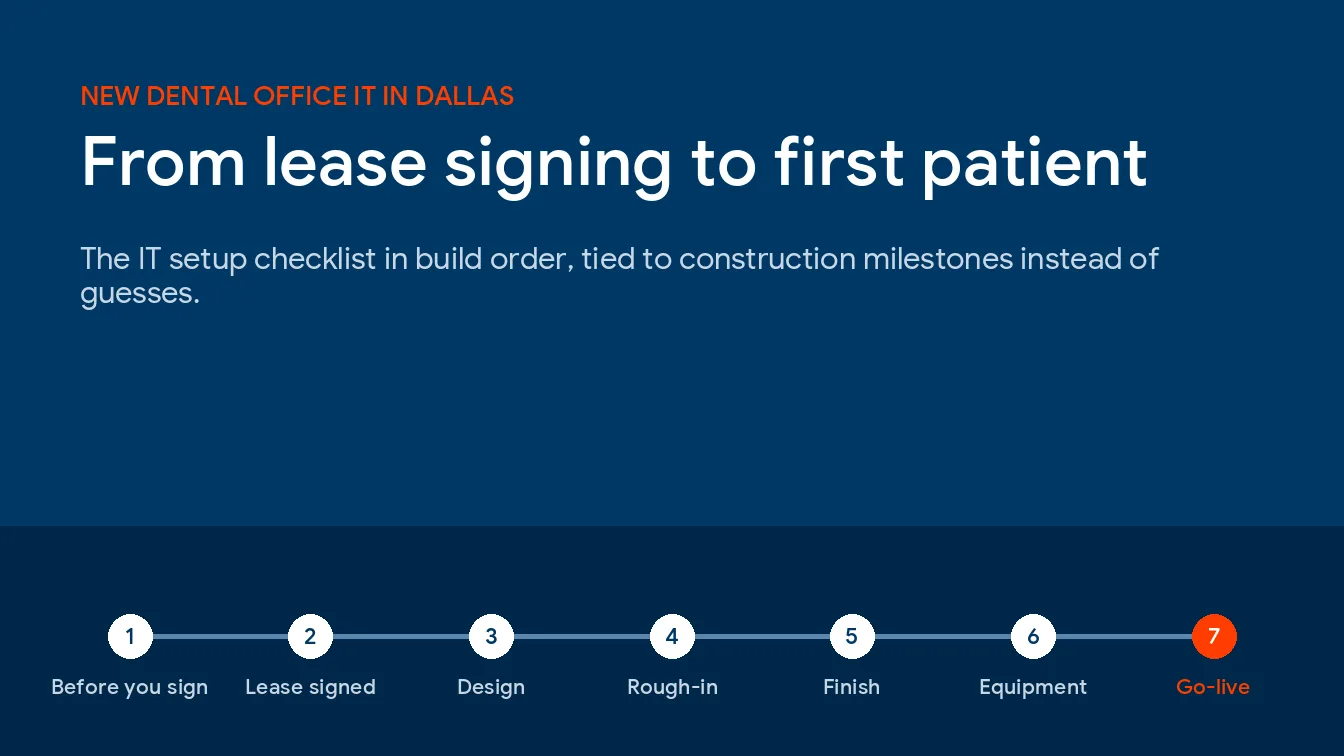
Opening a New Dental Office in Dallas: The IT Setup Checklist From Lease Signing to First Patient
New dental office IT setup in Dallas means picking software and ordering internet at lease
Learn More
Dental Office IT Downtime in Dallas: What a Down Imaging Server or Practice-Software Outage Costs a Chair-Day
A full day of IT downtime costs a typical Dallas dental office about $2,139 to
Learn More
What Dental Practices in Dallas Pay for Managed IT in 2026
A 7-person Dallas dental office pays roughly $640 to $1,750 a month for managed IT,
Learn More
Best IT Providers for Dallas Dental Practices (2026)
Uprite Services is our top pick among the best IT providers for Dallas dental practices
Learn More