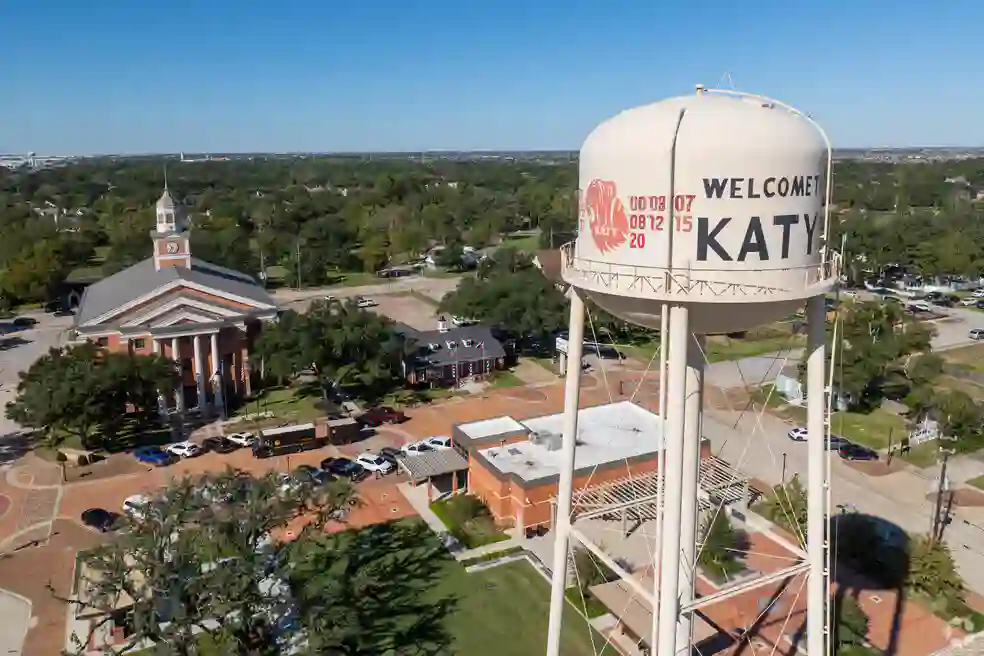
Managed Cloud Services Fort Worth, TX
Azure, Microsoft 365, and the on-premises systems that are never going to leave your plant floor. Designed together, run by one team, on a bill somebody actually reads.
Uprite provides managed cloud services in Fort Worth, TX: Azure infrastructure, Microsoft 365 tenant management, cloud backup with tested restores, hybrid networking, migration planning, and monthly cost governance. We are a Texas cloud service provider operating since 1999, and Tarrant County clients across aerospace and defense supply, freight and distribution, energy services, manufacturing, healthcare, and professional services.
In Fort Worth, the Cloud Decision Is Really About What Cannot Move
Most cloud marketing is written for a company whose entire operation is email, a file share, and one line-of-business application. Tarrant County has very few.
The businesses here build airframes and components, run intermodal and warehouse operations out of AllianceTexas, service Barnett Shale wells, fabricate and machine to spec, and keep production lines moving on a schedule somebody else set. Those operations are held together by systems that are genuinely difficult to relocate. Machine controllers with vendor-locked software. An ERP instance wired into shop scheduling and shipping. A PLM library full of multi-gigabyte assemblies. Warehouse management tied to handheld scanners and conveyor logic. Historians, badge readers, camera storage.
So the useful question is not whether to move to the cloud. It is which workloads move, what the ones that stay require in order to keep working, and who owns the seam between them on a Tuesday morning when both sides are involved in the same outage.
Almost nobody we meet in Fort Worth is starting from zero. The pattern is a company that already made a partial move. Microsoft 365 went in first. One server followed a hardware refresh into Azure. The file server stayed. Moving it looked risky. Backups ended up split across two products. Nobody reconciled the retention. Each decision was defensible on its own day, and the result is an environment nobody designed.
That is the state we most often get called into. It is fixable. What it needs is a picture of the whole environment, a decision about where each workload belongs, and one team accountable for the result instead of three vendors accountable for their own pieces.
See how cloud fits into full managed IT services for Fort Worth businesses →
What Managed Cloud Services in Fort Worth Actually Cover
A cloud environment that holds up needs five things running at the same time: infrastructure somebody designed rather than accumulated, identity and access that is centrally controlled, backups that have actually been restored, a network path that assumes the circuit will fail, and a monthly bill that a human reviews line by line. Most Fort Worth companies buy this alongside day-to-day IT support in Fort Worth rather than as a standalone contract.
The first three usually happen. The last two rarely do.
Redundancy gets skipped because it is a second invoice for something that has not broken yet. Cost review gets skipped because consumption billing is genuinely tedious to read and nobody was assigned to it. Both stay quiet. Until they fail. A cut fiber at a distribution yard stops order intake for a day. An unwatched subscription drifts up by a few hundred dollars a month for a year before anyone opens the invoice detail.
This market adds a sixth. If your company touches the defense supply chain, the question of where data is permitted to live comes before the question of what it costs to put it there. That constraint drives tenant design, and getting it wrong after the fact means migrating twice.
We scope against the environment you run today and the obligations you already carry, then say plainly which workloads belong in Azure, which belong in Microsoft 365, which stay on hardware in your building, and what each of those decisions costs per month.
The Four Pillars of Uprite’s Fort Worth Cloud Practice
Azure and Microsoft 365 Management
Virtual machines, virtual desktops, identity, mailboxes, SharePoint, and Teams governed as one environment with patching, monitoring, and change control that does not depend on anyone remembering.
Hybrid and On-Premises Integration
The half of your environment that stays in the building, connected properly: site-to-site links, directory sync, local caching for large engineering files, and one place to look when something breaks across the boundary.
Cloud Backup and Recovery Testing
Immutable copies of servers, endpoints, and Microsoft 365 data, with scheduled restore tests so recovery time is a measured number rather than an assumption written into a policy.
Cost and License Governance
Monthly review of consumption, reservations, license tiers, and orphaned resources, with the findings written in plain language and a recommendation attached to each one.
Where Tarrant County Cloud Projects Go Wrong
Four failures account for most of the cleanup work we take on in this market.
The migration that stopped halfway. Mail and documents went up, the file server and the application server stayed, and the two halves were never designed to work together. Permissions drift apart. Two backup products cover overlapping data with different retention. When something breaks, the cloud vendor points at the local network and the local provider points at the tenant, and a day disappears.
Latency nobody modeled. This one is local. A CAD assembly or a PLM revision that opened instantly across a local network behaves very differently over a shared internet circuit. Same file, same engineer, a workflow that now takes minutes instead of seconds. The fix is architectural, not a bigger pipe, and it needs to be decided before the data moves rather than after the complaints start.
The bill nobody approved. Consumption pricing punishes neglect. Virtual machines sized generously during a migration stay that size for three years. Disks outlive their servers. Data transfer charges appear on a line item nobody reads. License tiers get upgraded for one department and applied to everyone. None of it is dramatic month to month. That is why it compounds.
One circuit, whole company. Once the applications live somewhere else, your internet connection stops being a convenience and becomes the production line. Plenty of facilities across north Tarrant County and out toward Alliance have exactly one fiber path into the building. Cloud-first without a second route turns a contractor with a backhoe into a full stop.

All four are preventable. Design time is when they are cheap to stop. That is the entire argument for planning the environment before moving it, and it is why our first conversation is a review rather than a proposal.
What We Deploy and Manage
Azure Infrastructure and Virtual Desktops
Servers that have to keep running but no longer justify hardware in a closet belong in Azure. We size them against real usage instead of the specification of the box they replace, which is where most of the early savings come from, then apply reservations once the pattern is stable.
Virtual desktops solve a different problem, and one that comes up constantly in this metro. Azure Virtual Desktop puts the session next to the data instead of pulling the data to the user, which is what you want for engineering software, a shared ERP client, contractors on equipment you do not own, and a second site that should not need its own server rack. Estimating crews, field supervisors, and remote engineers get the same environment as the people at headquarters, and none of it lives on the laptop.
Build, patch, monitor. The responsibility stays ours. If a host is under pressure at 6am before first shift, that is our problem to have already noticed.
Microsoft 365 Tenant Design, Including GCC High
Most Microsoft 365 tenants in this region were stood up quickly to solve email and were never revisited. Sharing defaults are wide open, retention was never configured, guest access accumulated, and the licensing is a mix of tiers that no longer matches who does what. We rebuild the configuration around how your company actually works: what leaves the tenant, what is retained and for how long, who can invite outsiders, and which controls apply to the people handling drawings and contracts.
The tenant question gets sharper if you supply the defense industry. Controlled unclassified information carries residency and personnel requirements that the commercial service does not meet, which is why Microsoft operates GCC High and DoD environments separately. Deciding between commercial, GCC, and GCC High is a scoping exercise tied to NIST SP 800-171 and to what your prime contractor’s flow-down clause actually says. Getting it wrong is not a configuration change later. It is a second migration. Our CMMC compliance services for Texas companies cover the control side of that work, and the Microsoft 365 services page covers the platform in full.
Cloud Backup, Replication, and Restore Testing
Two assumptions cost companies more than any other in this category. The first is that Microsoft backs up your Microsoft 365 data. It maintains the service and provides limited retention windows, which is a different commitment from being able to recover a mailbox or a document library that was deleted eight months ago. The second is that a backup job reporting success means the data is recoverable.
We run immutable backups for servers, endpoints, and the Microsoft 365 tenant, keep an off-site copy, and schedule real restores rather than trusting the green checkmark. After a restore test you have an actual recovery time to plan against, which is the number your operations team needs and the number an insurer or a customer will ask for. If a full site loss is the scenario that worries you, our disaster recovery services for Texas businesses cover the rest of that plan.
Hybrid Networking and Circuit Design
Moving applications off site changes what your network has to guarantee. We design the connection to match: a second circuit on a different carrier where the business case supports it, automatic failover so a cut line is an inconvenience rather than an event, quality-of-service rules so a backup window does not throttle voice or the ERP, and site-to-site links between a plant, a yard, and an office that behave like one network.
Where large engineering files are involved we usually keep a local cache or a local copy of the working set and synchronize in the background. That preserves the speed people expect at their desk without leaving the only copy sitting on a machine in the building. It is the least glamorous part of a cloud project. Users notice it first.
Cloud Cost and License Governance
This is the service most providers leave out, because reducing your bill reduces theirs. We review consumption every month against Azure cost management data and report in plain language: what changed, why, and what we recommend doing about it.
The findings add up fast. Virtual machines running at a fraction of the size they were given. Disks and snapshots left behind by decommissioned servers. Reservations and hybrid licensing benefits available and unclaimed. Premium Microsoft 365 licenses assigned to people who need the standard tier and standard licenses assigned to people who need more. Non-production systems running overnight and on weekends for no reason. You get the list, the dollar figure attached to each item, and a decision to make rather than a surprise to absorb.
Migration Planning and Cutover

Migrations fail on dependencies, not on data transfer. The scheduled report that reads a network path nobody documented. The scanner at the shipping desk pointed at a server by IP address. The integration between the ERP and a customer portal that was configured by a contractor who left. Discovery is most of the work, and skipping it is how a weekend cutover becomes a Monday outage.
We map what talks to what, sequence the move so the pieces that depend on each other travel together, pilot with a group willing to report problems, and schedule cutover around your production calendar instead of ours. Rollback is planned, never improvised. For a detailed view of one of these projects end to end, our Microsoft 365 migration checklist for Texas businesses walks through the same method at the task level.
What You Are Signing Up For
Running Texas business technology, with cloud clients across the DFW metroplex, Houston, and San Antonio.
Typical window for a full environment. Mail and identity move faster when a deadline requires it.
Our management rate is fixed for the first year. What you sign is what you pay through month twelve.
Not satisfied inside 120 days? Walk away with no penalty, and your environment stays yours.
How a Fort Worth Cloud Engagement Runs
Environment and Dependency Mapping
A no-cost review of servers, applications, storage, identity, licensing, circuits, and backups, including the integrations and scheduled jobs that are not written down anywhere. We do not price anything until we know what is actually running.
Target Design and Cost Model
A written decision for every workload: cloud, on-premises, or hybrid, with the reason attached and a monthly cost estimate beside it. Data residency and contractual obligations get settled here rather than after a tenant exists.
Pilot and Proof
One department or one workload moves first, chosen because it will expose the problems that matter. Performance on large files gets measured against the current setup, not estimated, and the design changes if the numbers say it should.
Staged Migration and Cutover
The rest moves in dependency order, scheduled around production and shipping windows. Rollback steps are written before each stage, and engineers are on hand for the first business day after every cutover rather than reachable by ticket.
Managed Operations and Monthly Cost Review
Patching, monitoring, backup verification, restore tests, and a monthly review of consumption and licensing with recommendations attached. The environment gets smaller and cheaper over time instead of quietly larger.
Who This Works For
We will say the unhelpful thing when it is true. If you are a ten-person office with no servers, everything already in Microsoft 365, and no compliance obligation, a managed cloud contract is not the spend that will help you most this year. Say so and we will point you at what would.
If you employ IT staff and intend to keep them, the better structure is usually co-managed IT. We take the cloud platform, the migration work, and the after-hours coverage, and your team keeps the applications and the relationships they already know better than we will.
The Four Objections We Hear Most
All four are reasonable, and all four deserve a straight answer.
“We already have Microsoft 365, so we are already in the cloud.” You have a productivity suite, which is one workload. The questions that decide whether the environment is healthy sit elsewhere. Where do your line-of-business applications run, and who patches them? Has a restore of that tenant ever been tested? What happens to the business if the building loses internet for a day? If those answers are thin, the cloud project has not really started.
“Our ERP vendor says it has to stay on premises.” Frequently correct, and not a reason to stop. Hybrid exists precisely for this. The application stays where it must while identity, mail, files, backup, and disaster recovery move, and the local system gets connected properly instead of being quietly orphaned. Some machine controllers and production systems should never leave the plant, and we will tell you which ones fall in that category.
“Cloud costs more than the servers we already own.” Sometimes true, and worth comparing honestly. Owned hardware hides its cost in the refresh cycle, the power and cooling, the maintenance contract, the floor space, and the weekend somebody spends when a controller card dies. Consumption billing puts all of that on one visible invoice, which feels worse and is easier to manage. Where the arithmetic genuinely favors keeping a server, we will show you that in the cost model instead of arguing past it.
“We did a migration two years ago and it was painful.” Then you already know where it went wrong, which makes the second conversation much shorter. Painful migrations almost always trace back to discovery that was skipped and a cutover that was scheduled for the convenience of the provider. Ask any candidate to show you the dependency map and the rollback plan before you sign. No map, no plan? That is your answer.
Fort Worth Managed Cloud FAQ
What do managed cloud services in Fort Worth include?
They include Azure infrastructure and virtual desktops, Microsoft 365 tenant management, cloud backup with tested restores, hybrid networking, migration planning, and monthly cost and license governance. In Fort Worth they also usually include integration with on-premises systems that cannot move, such as ERP tied to shop scheduling or vendor-locked machine controllers.
Does Uprite have an office in Fort Worth?
No. Our DFW office is at 5757 Alpha Rd, Suite 530, Dallas, TX 75240, roughly 35 miles from downtown Fort Worth. Cloud work is delivered remotely, and engineers travel for onsite migration and cutover work across Tarrant and Parker County, including Arlington, Keller, Southlake, Grapevine, Colleyville, Mansfield, and North Richland Hills.
Can you move our ERP or shop floor systems to the cloud?
Sometimes, and sometimes you should not. ERP often moves well once dependencies and latency are modeled. Machine controllers, historians, and equipment with vendor-locked software usually stay on site. We map every dependency first, then recommend cloud, on-premises, or hybrid for each workload with the reason written down.
We handle controlled unclassified information. Where can our data live?
Not in a standard commercial tenant if your contract flows down CUI requirements. Microsoft operates GCC High and DoD environments with the residency and personnel controls those obligations require. We scope which systems hold covered information, map the requirement to NIST SP 800-171, and pick the tenant type before anything migrates, because changing it later means migrating twice.
How long does a Fort Worth cloud migration take?
A full environment typically takes 30 to 60 days from assessment to final cutover. Email and identity can move in one to two weeks when a deadline demands it. Server workloads, line-of-business applications, and anything with production dependencies take longer because they are sequenced around your shipping and manufacturing calendar.
Will our cloud bill go up or down?
It depends on what you run, and we model it before you commit rather than after. Companies coming from owned servers usually trade a large refresh every five years for a predictable monthly figure. Companies already in Azure with no governance usually see the bill fall, because right-sizing, reservations, and removing orphaned resources are the first things we do.
Is this separate from your managed IT services?
They are integrated but priced separately. Managed IT in Fort Worth covers helpdesk, endpoints, maintenance, and vendor coordination. Managed cloud adds platform architecture, migration work, backup and restore testing, hybrid networking, and cost governance. Most clients run both, and we are explicit about which service owns what.
What Our Texas Clients Say
Hector and Kareem are super helpful! They are always willing to take on my computer problems even if its small. I had my mouse disappear off my screen, it was an user issue but Hector didn't make me feel small or "dumb" for this error. We love uprite!
Gerardo Sanchez was very helpful & professional. Uprite Services has great customer service and outstanding technicians. We have used them for several years and will continue our business with them.
I had been having trouble with an IT matter that I didn't think would be fixed but Arvin Ebueng from Upright took his time with me and worked with me until we were able to resolve the issue. The issue was an internal issue with the way the program was written, but Arvin came up with a great work around so that I am now able to do what I need to do at my job. Long story short, he got me access to both things that I need access to simultaneously and daily. Thanks 😊 Arvin, you are much appreciated 👏 💐 🥳.
I’ve been extremely satisfied with Uprite Services and would recommend them without hesitation. They consistently deliver reliable, high-quality work and truly feel like a true partner rather than just another vendor. A special thank you goes to Arvin Ebueng, he is always quick to respond to our needs and incredibly easy to communicate with. No matter how busy things get, Arvin makes sure we’re taken care of promptly and with a smile. His responsiveness and clear communication have made every interaction smooth and stress-free. Thank you, Arvin and the entire Uprite team, Peerless Equipment is a customer for life!
I'm am not a "tech" person, however the team at Uprite gets me through the technological side of computers and software so that I can function on a daily basis... but the most enduring quality is that they care. Special shoot out to Mary, Sergio, Eufemio, Hector, and Jeff just to name a few... I appreciate each of you and the help you give me.
Great service by Juan and Jacob. Always helping us out at Alamo City Trailer Sales. We have been using this company for over 10 years and always happy with the work they do.
Awards & Industry Recognition











Start With a Cloud Readiness Review
Bring us a server refresh you are dreading, a bill you cannot explain, or a migration somebody started and left half done. We will map what you have, tell you what belongs where, and put a monthly number next to each option. No proposal before that.
Comparing options across the state? See how we handle cloud in Dallas, Houston, and San Antonio.
Or call our DFW office directly at (866) 570-3065.