Phishing is the most reported cybercrime in the country, and Texas sits near the top of the loss column. Uprite provides cybersecurity services for businesses across Texas. For Houston SMBs, the threat isn’t a clumsy email anymore. It’s a clean, AI-written message aimed at your payroll, your vendors, and your bank login. This guide covers how to spot one in 2026, what to do in the first 60 minutes after a click, and what to fix first.
Phishing attacks trick employees into clicking malicious links or approving fraudulent requests, and they’re the entry point for most small-business breaches. Houston SMBs spot them by checking the real sender address, treating any money or login request as suspect, and verifying it through a second channel before acting. Stopping them takes multi-factor authentication, ongoing training, and email filtering working together. No single tool does it alone.
In 2024, Texans reported losing more than $1.35 billion to internet crime, second only to California. Phishing and spoofing were among the top complaint types behind that number. For a Houston small business, that figure isn’t abstract. It’s a payroll file rerouted to a stranger. A vendor invoice paid to the wrong account. One login that quietly opens the whole company.
Here’s what most owners miss. Phishing isn’t a technology problem that happens to involve people. It’s a business problem that happens to arrive by email. The attacker isn’t breaking your firewall. They’re asking one tired employee to do something that looks routine. That’s why managed cybersecurity for Houston businesses works best when it treats your team as part of the defense, not the weak link to be scolded after the fact.
I’ve spent enough years around growing companies to know the pattern. The business moves fast, the inbox fills up, and the foundation gets quietly tested. Let’s walk through how to see these attacks coming and shut them down.
What is a phishing attack, and why are Houston SMBs such easy targets?
It’s a message designed to look trustworthy so you’ll click a link, open a file, hand over a password, or move money. It usually arrives by email, but it now comes by text, phone call, and QR code too.
Small businesses get hit harder than the headlines suggest. Phishing is the number one attack type behind SMB breaches, and the Verizon Data Breach Investigations Report found phishing involved in about 16% of breaches, with the median time to click a malicious link sitting at just 21 seconds. Twenty-one seconds. That’s about how long it takes to read this paragraph.
Why you, specifically? Houston runs on energy, healthcare, legal, construction, and logistics firms that handle sensitive data and can’t afford downtime. Attackers know a 30-person engineering shop wires real money and rarely has a security team watching the door. You’re profitable enough to be worth it and lean enough to be reachable. That’s the whole calculation. If you want the mechanics, here’s how phishing actually works from the attacker’s side.
How do you spot a phishing email in 2026 when the grammar is perfect?

You spot phishing by checking the sender’s real address, hovering links before clicking, and treating urgency around money or passwords as a warning sign rather than a reason to hurry. The old advice about typos is dead.
CISA now says it plainly. A common giveaway used to be poor grammar or misspelling, but in the AI era many phishing emails have perfect spelling. Attackers feed a prompt into a chatbot and out comes a flawless note in your CFO’s tone. One analysis found AI-written phishing earned roughly a 54% click rate against 12% for human-written attempts. The tells moved. Here’s where they live now.
| Red flag | What it looks like | What to do |
|---|---|---|
| Mismatched sender | Display name says “Chase,” the address is a random Gmail or a near-miss domain | Read the full email address, not the name |
| Manufactured urgency | “Approve this wire before 4pm or we lose the vendor” | Slow down. Urgency is the point |
| Spoofed links | Hover text shows a URL that doesn’t match the words | Hover first, never click to “check” |
| Off-channel request | “I’m locked out, emailing from my personal account” | Verify through a known number |
| Unexpected attachment | An SVG, an invoice, a shared file you didn’t expect | Confirm before opening |
One rule covers most of it. If a message wants money, credentials, or speed, stop and verify it another way. That single habit defuses the majority of what hits a Houston inbox.
What are the phishing types hitting Houston businesses right now?
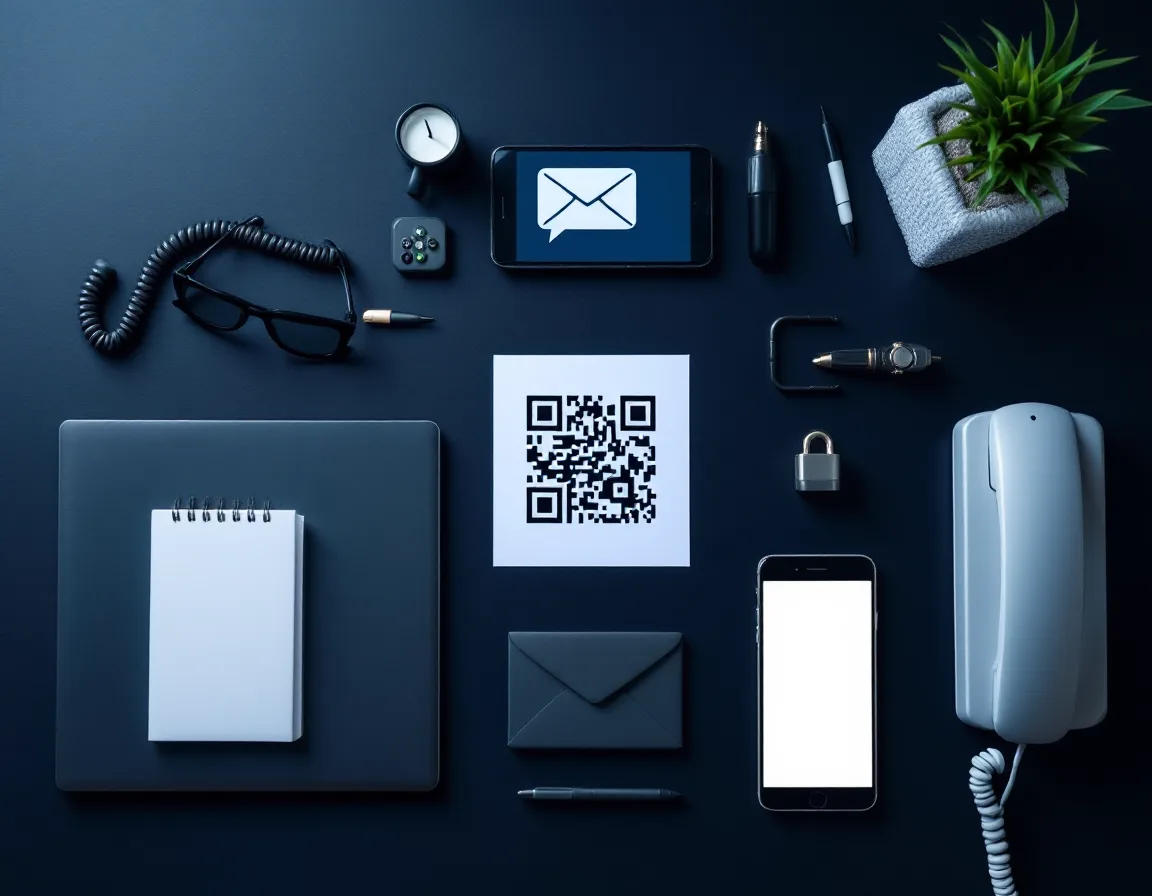
Phishing isn’t one thing. It’s a family of tricks, and your team should recognize each by name.
- Email phishing. The wide net. High volume, spoofed login pages, malicious links aimed at anyone who’ll bite.
- Spear phishing and BEC. Targeted. The attacker studies your org chart on LinkedIn and impersonates a specific executive or vendor.
- Smishing. Text-message phishing. Smaller screen, hidden URL, more implied trust. It slips past email filters entirely.
- Vishing and deepfakes. A phone call, sometimes with an AI-cloned voice of your IT lead, talking an employee into reading out an MFA code.
- Quishing. A QR code in an email or a parking-lot flyer that routes a phone browser to a fake login.
The mix is shifting toward the channels you watch least. Microsoft’s 2025 research found business email compromise now showing up more often than ransomware in investigated incidents. Identity is the front door. Email is just the doorbell.
Business email compromise. The attack that drains the bank account
Texas businesses lost $293.5 million to BEC in 2024 alone. Nationally, it ran to $2.77 billion, and the three-year total hit nearly $8.5 billion. That’s not spread evenly across the Fortune 500. A lot of it lands on companies that look exactly like yours.
BEC targets your payment process directly, usually by impersonating an executive or vendor to trigger a wire transfer, a banking-detail change, or a payroll redirect. It rarely involves malware. It involves trust and a little distraction. Real estate is the clearest example, and we broke down the sequence in our guide to real estate IT security in Houston.
Picture a Houston engineering firm in the Energy Corridor. A vendor they pay every month emails new banking details ahead of an invoice. The note matches the project name, references a real contact, reads clean. Accounting updates the record and pays the next invoice as normal. The vendor never sent it. The money’s gone before anyone notices, because nothing looked broken.
The fix is boring and it works. Build a non-negotiable rule. Any wire, any vendor banking change, any payroll modification gets verified by a phone call to a number you already had, never the number in the email. One callback would have stopped that engineering firm cold.
What should you do in the first 60 minutes after someone clicks?

Move fast and stay calm. The goal in the first hour is to contain the damage, not to assign blame. Here’s the sequence.
- Tell IT immediately. Speed beats embarrassment. Note the email subject, the timestamp, what was clicked, and whether any login was entered.
- Isolate the device. Pull it off Wi-Fi and ethernet. If a payload ran, isolation stops it from spreading to other machines. Don’t power it off unless told to. Memory can help the investigation.
- Reset exposed credentials and turn on MFA. If anything was typed into a fake login page, treat those credentials as compromised. Reset them and anything that shared the password.
- Check for mail-forwarding rules. Attackers who grab a Microsoft 365 or Google Workspace password often set up a hidden forwarding rule for quiet, ongoing access. Look before you assume it’s over.
- Watch the money. Monitor bank and payment accounts for anything odd. Alert the bank if financial details were entered anywhere.
- Report it. File with the FBI’s Internet Crime Complaint Center, and check whether breach-notification rules apply if customer data was exposed.
Assume more than one person got the same email. Phishing comes in waves. And remember a phishing click can end in ransomware if the attacker uses that foothold to encrypt your files, so containment in the first hour is the difference between an incident and a closure event.
How do you stop phishing, and what should you fix first on a small budget?
You stop phishing with layers, because no single control catches everything. The four that matter most are multi-factor authentication, employee training, email authentication, and monitored detection. If you can only start with one, start with MFA. After that, work through the 8 Microsoft 365 security settings most Texas SMBs miss.
Why MFA first? Microsoft reports that modern MFA blocks more than 99.2% of account-compromise attacks. It’s cheap, it’s fast, and it turns a stolen password into a dead end. If you haven’t already, turn on multi-factor authentication across every account this week. Not next quarter. This week.
Here’s the priority order I’d give any Houston owner working with a real budget.
| Priority | Control | Why it earns the spot | Best for |
|---|---|---|---|
| 1 | Multi-factor authentication | Blocks 99%+ of account takeover, low cost | Every business, no exceptions |
| 2 | Security awareness training | Highest-ROI human control, builds reporting habits | Teams where one click reaches the bank |
| 3 | Email authentication (SPF, DKIM, DMARC) | Stops attackers spoofing your own domain | Firms whose name gets impersonated |
| 4 | Monitored detection (EDR plus SOC) | Catches the click that slips through, 24/7 | Growing firms with sensitive data |
Training deserves a word, because the numbers are striking. KnowBe4’s 2025 benchmark put the baseline phish-prone rate at 33.1%, dropping to 4.1% after a year of ongoing training, a 40% improvement in the first 90 days. Smaller firms start lower, around 24.6%, but the gains hold. A short quarterly drill beats an annual slideshow nobody remembers. That’s why ongoing security awareness training belongs in your stack, not in a binder.
One honest note. Standard text and app-based MFA can be defeated by real-time phishing kits that now sell on Telegram for as little as $200 to $300. MFA is still the best single move you can make. It just isn’t a force field. For high-value accounts, phishing-resistant methods like hardware keys are the next upgrade.
The honest part. Tools won’t save you if the culture punishes mistakes
I’ll say something that doesn’t help our sales pitch. You can buy every product on that table and still get breached if your people are afraid to raise their hand.
Less than 10% of employees report the phishing emails they encounter, often because they fear getting blamed. Think about what that means. Your fastest detection system, the human who just clicked, stays silent because the culture taught them to. CISA’s own guidance is that once-a-year training isn’t enough and that reporting has to be easy and expected.
This is where I land after years of watching it play out. Vendors sell tools. Partners help you build the habit. The human firewall isn’t a thing you assume your team has. It’s a thing you build, reinforce, and reward. An employee who says “I think I clicked something” within two minutes is worth more than any filter. Treat them that way and they’ll keep doing it.
Where Houston SMBs go from here
Three things to take with you. First, the bad-grammar tell is gone, so train your team to verify money and login requests through a second channel every time. Second, the first 60 minutes after a click decide how bad it gets, so have the response sequence written down before you need it. Third, MFA and ongoing training give you the most protection per dollar, so start there if you start anywhere.
Phishing isn’t going away, and the AI version is more convincing every month. The businesses that come through it aren’t the ones with the biggest budgets. They’re the ones that prepared the basics and built a team that speaks up. To check whether your IT provider has those basics covered, work through our cybersecurity checklist for Houston small businesses. If you want to know where your gaps are before an attacker finds them, get an assessment of your phishing and email risk. It’s the same starting point we use with every managed IT support in Houston engagement, and it tells you exactly what to fix first.
What Houston business owners actually ask
How can I tell if an email is really from my bank or a scammer?
Read the full sender address, not the display name. Banks won’t ask you to confirm a password or move money through a link in an email. If anything feels off, don’t use the number or link in the message. Look up the bank’s number yourself and call. Two minutes of friction beats a drained account.
We’re a 15-person shop. Are we really a target?
More than you’d think. Attackers go after small firms precisely because the defenses are thinner, and employees at small businesses face social engineering at several times the rate of enterprise staff. Smaller teams start with a lower baseline click rate, around 24.6% in KnowBe4’s data, but it only takes one click to reach the bank account.
Someone on my team already clicked. Is it too late?
Not if you move now. Clicking a link isn’t the end of the story. The first step is to tell your IT team or provider immediately, then isolate the device from the network so nothing can spread. Reset any credentials that were entered, and have someone check Microsoft 365 or Google Workspace for hidden mail-forwarding rules. Attackers set those up quietly, and they’ll keep collecting data for weeks if nobody looks. The damage compounds in minutes, not days.
Does multi-factor authentication actually stop phishing, or is that oversold?
It stops most of it. Microsoft data shows MFA blocking over 99% of account-compromise attempts, which makes it the single highest-impact control for the money. The caveat in 2026 is real though. Commercial phishing kits can defeat basic MFA in real time, so for your most sensitive accounts, move to phishing-resistant options like hardware keys. MFA is the floor, not the ceiling.
How often should we run phishing tests on staff?
Quarterly, at minimum. A once-a-year session fades fast, and CISA specifically warns that annual training isn’t enough against threats that change monthly. Short, regular simulations paired with quick coaching when someone slips drove click rates down by 40% in 90 days in the benchmark data. Frequency beats intensity here.
What’s the single highest-value thing to fix first?
Multi-factor authentication on every account. It’s fast, it’s affordable, and it turns a stolen password into a wall. After that, build a second-channel verification rule for any payment or banking change. Those two moves, done properly, neutralize the attacks that cause the most expensive losses for Houston SMBs.