IT downtime cost in Texas starts at roughly $810 to $930 per hour in idle payroll alone for a 25-person office, and Texas outages run far longer than the national norm. Texas customers averaged 26.9 hours without power in 2024, against 11 hours nationally, per the US Energy Information Administration. Duration is the number you control, and that is the job of disaster recovery services in Texas.
A Texas outage costs more because it lasts longer, not because the hourly rate is unusual, and federal wage data puts a loaded hour of labor at $46 to $53 across San Antonio, Houston, and Dallas-Fort Worth. The Dallas Fed found that firms shut down by Winter Storm Uri stayed closed for 4.6 days on average. Price your hour once, then spend your budget on shortening the outage.
I run service delivery at Uprite. When a regional event hits Texas, my team doesn’t get 1 ticket. We get all of them at once. Every phone rings.
That changes how I think about downtime math, since most articles on this topic argue about the hourly rate even though we’ve already published the full formula in our guide to the cost of IT downtime. I won’t repeat it here. This piece supplies the 2 inputs that are different in Texas, which are what an idle hour of Texas payroll costs and how long a Texas outage really lasts.
Every number below comes from a federal or state source. No vendor surveys. No guesswork either. Where the data can’t answer a question, I’ll say so. Simple as that.
What is IT downtime cost in Texas?
IT downtime cost in Texas is the money a Texas business loses while its systems are unavailable, calculated as an hourly rate multiplied by the length of the outage, and that hourly rate looks like any other state’s. The length doesn’t, because grid failures, Gulf storms, and ransomware routinely stretch Texas outages from hours into days.
Rate times duration. That’s the whole model. Nothing fancier than that. Owners tend to obsess over the first number because it feels like the one worth arguing about. I’d rather you spend 10 minutes on it and move on.
Why? Your hourly rate barely moves from year to year. Your outage length can swing from 40 minutes to 5 days depending on what failed and what you built beforehand, and in Texas, that second number carries most of the bill.
How long do Texas outages actually last?
Longer than almost anywhere else, at least in the bad years. Utilities report a reliability measure called SAIDI to the federal government, which is the total time the average customer spent without power that year. EIA’s state reliability table lets you set Texas next to the national average.
| Year | Texas, average hours without power | US, average hours without power | Texas vs US |
|---|---|---|---|
| 2021 | 24.9 | 7.9 | 3.1x |
| 2022 | 3.4 | 5.6 | 0.6x |
| 2023 | 9.7 | 6.1 | 1.6x |
| 2024 | 26.9 | 11.0 | 2.4x |
Look at 2022. Texas beat the national average comfortably that year, and once you strip out major events, the 2024 Texas figure also drops to 2.6 hours, which is ordinary, so the grid isn’t actually bad on a normal Tuesday.
It’s the tail that hurts. In 2 of the last 4 years, the average Texas customer lost more than a full day of power, and an average hides the businesses that sat dark for a week. NOAA counts 190 billion-dollar weather disasters affecting Texas from 1980 through 2024, and the pace over the most recent 5 years was 13.6 events a year against a long-run average of 4.2.
Plan for the tail. Budget for it too. Do it now.
What did Winter Storm Uri and Hurricane Beryl cost Texas businesses?
We don’t have to guess. The Federal Reserve Bank of Dallas surveyed Texas executives after both events, and the results are the best Texas-specific downtime data I know of. Almost nobody quotes them.
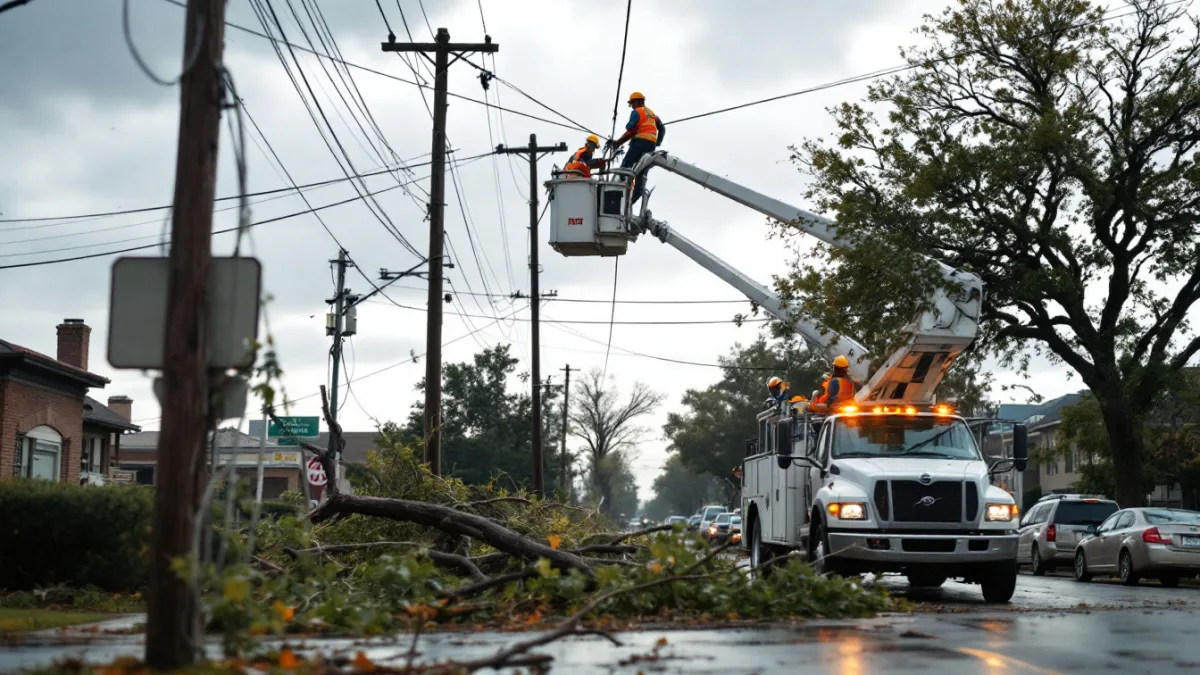
Start with Uri. Federal regulators reported that ERCOT ordered 20,000 MW of rolling blackouts in February 2021, the largest manually controlled load shed in US history, and that more than 4.5 million people in Texas lost power, some for as long as 4 days. The Dallas Fed later put the economic damage at $80 billion to $130 billion.
Then the bank asked 385 Texas executives what happened inside their own walls. Their answers are blunt.
- 61.1% lost power, for 3.2 days on average.
- 37.3% lost water, for 3.4 days on average.
- 51.9% shut down completely, for 4.6 days on average.
- 51.3% ran at reduced capacity, for 5 more days on average.
- Only 10.6% reported no disruption at all.
Firms lost 13.6% of their February revenue on average, and here’s the part that matters for your math. Among the firms that lost revenue, 46.1% expected to win back less than 25% of it in the following weeks, and only 21.6% expected to recover more than 75% of what the storm cost them.
That kills a comfortable myth. People assume storm revenue is only delayed. For nearly half of those Texas firms, most of it was simply gone. Gone for good.
Beryl tells the same story on a smaller map. EIA says the hurricane left 2.6 million Texas customers without power in July 2024, 2 months after a Houston derecho that CenterPoint Energy says cost roughly $450 million in emergency repairs and took more than 7,700 workers to clean up. When the Dallas Fed surveyed 341 executives that August, 25.8% statewide said recent storms had hurt their firm. Of those, 56.1% reported reduced revenue in July, 48.8% reported extended loss of power, and 48.8% reported workforce disruption.
One respondent wrote, “We are a virtual team, so power and Wi-Fi disruption hit half of our team, which slowed down our productivity.” Remember that line. Remote work moves your outage risk into 30 living rooms. It doesn’t remove it.
| Texas event | When | Scale | What it did to operations |
|---|---|---|---|
| Winter Storm Uri | February 2021 | More than 4.5 million people lost power | 51.9% of surveyed firms shut down, for 4.6 days on average |
| Houston derecho | May 2024 | About $450 million in utility emergency repairs | 18.3% of storm-affected firms reported extended power loss that month |
| Hurricane Beryl | July 2024 | 2.6 million customers lost power | 48.8% of storm-affected firms reported extended power loss |
| Coordinated ransomware attack | August 2019 | More than 20 Texas local governments hit at once | 7 days to restore business-critical services |
What does an idle hour cost in Houston, DFW, and San Antonio?
Less than the internet says. More than most owners guess.
I used the Bureau of Labor Statistics rather than a survey. BLS publishes average hourly earnings for private-sector employees by state and metro, and its national compensation series shows that wages were $32.82 of a $46.89 total hourly cost in the second quarter of 2026. Benefits and payroll taxes add about 43% on top of the paycheck, and once you multiply the 2 together, you get the loaded cost per idle hour that actually matters when you’re pricing a metro.
| Area | Average hourly earnings, June 2026 | Loaded cost per hour | 25-person office, 70% of work blocked |
|---|---|---|---|
| Texas statewide | $35.60 | $50.86 | $890 per hour |
| Dallas-Fort Worth | $37.26 | $53.23 | $932 per hour |
| Houston | $36.04 | $51.49 | $901 per hour |
| San Antonio | $32.39 | $46.28 | $810 per hour |
The last column assumes 25 people with 70% of their work blocked, the same dependency assumption we used in the worked example in the formula guide, and notice how tight the spread actually is. Dallas-Fort Worth runs 15% above San Antonio, and that’s the entire metro effect.
A caution. These are all-industry averages, and an engineering firm in Houston or a law office in Dallas pays far more per hour than this, while a 25-person warehouse crew may pay quite a bit less. Use your own payroll if you can. It takes 5 minutes.
Idle payroll is also only 1 bucket, and lost gross profit usually matches it or beats it, since the formula guide walks through all 6 buckets in a lot more detail than fits in this piece. I’m isolating payroll here because it’s the input federal data can price by metro, and because it’s the floor. Your real number is higher. Houston owners can see the local version in the true cost of IT downtime for Houston businesses, and clinics should read EMR downtime costs for Texas medical groups.

What does a Texas-length outage add up to?
Now multiply. Same 25-person office, statewide average, $890 an hour in idle payroll and nothing else.
| Scenario | Hours lost | Where the duration comes from | Idle payroll alone |
|---|---|---|---|
| Ordinary year with no major events | 2.6 | EIA, Texas 2024 without major event days | $2,314 |
| Average Texas customer in 2024 | 26.9 | EIA, Texas 2024 with all events | $23,942 |
| Uri-length shutdown | 36.8 | Dallas Fed, 4.6 days at 8 hours a day | $32,754 |
| Week-long ransomware recovery | 40 | Texas DIR, August 2019 attack | $35,602 |
Now the honest part. Here goes. I’ve watched people misuse tables like this one, so let me argue against my own numbers.
Power hours aren’t working hours. Some of those 26.9 hours landed at 3 AM on a Sunday, when nobody was billing anyway. Hourly staff sent home during a closure may not be paid at all, which moves the cost from your ledger to theirs. One Dallas Fed respondent wrote after Beryl, “We opted to pay all employees who were unable to work.” Plenty of Texas employers do the same. It’s the right call. It’s still a choice.
And a dark building isn’t an IT outage. If CenterPoint or Oncor can’t deliver power, no managed IT provider on earth fixes that, including us, and IT owns a narrower question instead. Can your people work from somewhere else while the office is dark, and how fast do systems come back once the power does?
That’s where the money is. A firm whose email, files, and phones run in Microsoft 365 and whose staff carry laptops turns a 4.6-day shutdown into a rough week of reduced capacity. A firm with a single server in a closet turns it into 4.6 days of nothing, then a nervous morning hoping the server boots.
Where the IT bill starts after the lights come back
Regional events follow the same pattern on our service desk. It stays quiet while the power is out. Then the grid comes back, and everyone calls at once.
Here’s what we check first, in this order, because these are the failures that turn a utility outage into an IT outage.
- Battery backups. A UPS buys minutes, not days. Once it drains, servers drop hard, and a hard drop is how databases and disk arrays get damaged.
- The internet circuit. Carrier equipment down the street has its own batteries and its own repair queue, so the circuit often returns well after the power does.
- Firewalls and switches. Power rarely comes back clean. Surges during restoration kill network gear that survived the storm itself.
- Backup jobs. Several nights of backups were skipped while everything was off. Confirm the chain is intact before anyone starts changing files.
- Line-of-business applications. Accounting, practice management, and ERP systems need a clean database check before users pile back in.
- Remote access. Half the staff is still working from home, so VPN capacity and multifactor prompts become the new bottleneck.
None of that is exotic, and all of it goes faster with a written runbook and somebody who actually answers the phone. Our average response time is just over 5 minutes, and we monitor client environments around the clock, which matters most on the 1 morning every client needs us simultaneously. If you want to pressure-test a provider on this, our guide to after-hours coverage SLAs lists the clauses to look for. Gulf Coast offices should also keep the hurricane IT prep checklist for Houston handy.

Does a Texas outage start a legal clock?
Only if data left the building. A power failure or a dead server doesn’t trigger any notice duty. Ransomware often does, because modern crews steal data before they encrypt it.
Texas law is specific. Under Business and Commerce Code Chapter 521, a business must notify affected individuals without unreasonable delay and no later than the 60th day after it determines a breach occurred. If at least 250 Texas residents are involved, the Attorney General must be notified within 30 days. Violations carry civil penalties of $2,000 to $50,000 each. Failing to notify individuals adds up to $100 per person per day, capped at $250,000 per breach.
So a ransomware outage has 2 meters running. One counts idle hours, and the other counts calendar days, and it keeps counting after your systems are already back up and running fine. I’m not a lawyer. Call one on day 1.
Texas has seen this at scale. In August 2019 a single coordinated attack hit more than 20 local governments at once, and the Department of Information Resources reported that it took a week to restore business-critical services, with no ransom paid that the agency knew of. We cover the response sequence in ransomware recovery in Texas, and the Dallas City Hall attack gets its own breakdown in ransomware protection for Dallas businesses.
How do you shrink the duration side of the bill?
Match the fix to the cause, because Texas outages come from 5 different places, and each one has a different cheapest answer once you actually name it.
| Cause | Typical length | What shortens it most | Best fit |
|---|---|---|---|
| Grid or storm outage | Hours to days | Cloud-hosted email, files, and phones, plus laptops and a written work-from-anywhere plan | Every Texas office |
| Carrier or fiber cut | Hours to days | A second circuit from a different carrier with automatic failover, or a 5G backup link | Offices with on-site servers or VoIP phones |
| Ransomware | Days to weeks | Immutable backups with tested restores, multifactor authentication, and endpoint detection | Any firm holding client or patient data |
| Server or hardware failure | Hours to days | Monitoring that catches the failing part early, plus image-based backup | Firms still running a server closet |
| Vendor or SaaS outage | Minutes to hours | A manual fallback procedure and a status-page alert | Firms built on 1 critical cloud application |
Generators come up in every one of these conversations. My honest take is that most offices under 50 people shouldn’t buy one, because a generator keeps a building alive while what you actually need is for the work to survive without the building at all. Spend that money on getting the last server out of the closet instead. Exceptions exist. Clinics with refrigerated medication, manufacturers with a production line, and anyone whose work is physically on site should price one anyway.
Backups deserve the same skepticism. A backup you’ve never restored is a guess. Ask for a restore test with a stopwatch on it, because restore time is your outage length in a ransomware event. Our data backup services are built around that test, and these 8 backup questions work on any provider, including us. Fuzzy on how the 2 plans differ? Read business continuity vs disaster recovery first.
Texas downtime cost questions we hear most
How much does IT downtime cost a Texas small business per hour?
For a 25-person Texas office, idle payroll alone runs about $810 to $930 per hour depending on metro, based on June 2026 federal wage data. Add lost gross profit and most small firms land well above $1,500 an hour. Your own payroll and margin will give you a better figure than any average, and the math takes about 30 minutes.
Is downtime more expensive in Texas than in other states?
Per hour, no. Texas average hourly earnings of $35.60 sit slightly below the national $37.59, so an idle hour costs a little less here. Texas loses on duration. EIA data shows the average Texas customer spent 26.9 hours without power in 2024 against 11 nationally, and 2021 looked much the same.
How long were Texas businesses down during Winter Storm Uri?
About a work week. A Dallas Fed survey of 385 Texas executives found that 51.9% of firms shut down completely for an average of 4.6 days, and 51.3% ran at reduced capacity for an average of 5 more days.
Does a power outage count as IT downtime?
Not by itself. If the utility can’t deliver power, that’s a facilities problem and no IT provider can fix it. It becomes IT downtime when staff can’t work from another location, or when systems fail to come back cleanly after power returns. Both of those are preventable.
Do I have to report an outage to the Texas Attorney General?
Only when the outage involves a breach of sensitive personal information affecting at least 250 Texas residents, in which case notice is due within 30 days. Plain outages carry no reporting duty. Ransomware frequently qualifies because attackers copy data before encrypting it, so treat every ransomware event as a possible breach until forensics says otherwise.
What’s the cheapest way to cut downtime cost in Texas?
Move email, files, and phones to the cloud and give people laptops. That single change lets work continue when the building is dark, which is the most common Texas failure. After that, test a restore from backup and add a second internet circuit from a different carrier.
Put a Texas number on your own outage
Here’s the 3-step version. Price your idle hour with your own payroll, then pick the Texas scenario from the table above that worries you most, and multiply the two together to get a real number. Then ask what it would cost to cut that duration in half.
That last answer is usually smaller than the outage. We’ve supported Texas businesses since 1999, we’re a 7-time Channel Futures MSP 501 honoree, and every agreement carries a 120-day satisfaction guarantee. If you’d like a second set of eyes on the math, our managed IT services team will run it with you and show you where the duration comes out.
Want your Texas downtime number and a plan to shrink it? Talk with an Uprite engineer about your last outage and what would have shortened it.
Speak to an IT Expert