Incident Response Services in Houston
Incident response services in Houston give a company a team that contains a cyberattack, preserves the evidence, restores systems from clean backups, and works the notification deadlines. Uprite includes that response in its cybersecurity services in Houston, which start at $40 per user per month for security-only coverage.
Monitoring, containment, evidence, and recovery from one Houston team, from the Energy Corridor to Clear Lake. So a bad night doesn’t turn into a bad quarter.
Speak to a Response ExpertNo obligation. We check your backups, admin accounts, and emergency contacts before anything happens.In Texas Since 1999 | MSP 501 Winner 7 Years Running | SOC 2 Type 1 (2023) | 120-Day Satisfaction Guarantee
Speak to an Incident Response Expert
Recognized Across Texas for Managed Security and Response











The Houston Picture
Houston Companies Find Out Late, Then Take Longer Still to Tell Anyone
Start with a number most security vendors never calculate.
The Texas Attorney General’s Data Security Breach Reports page, which lists every notice filed under Business and Commerce Code 521.053, shows 682 entries for the 12 months ending October 28, 2026. Seventy-six of them (11%) came from companies in Houston, Sugar Land, The Woodlands, Katy, Pasadena, Conroe and other Houston-area cities, and those 76 notices reached 2,133,664 Texans, 970,891 of them in one filing.
Dates are self-reported. Treat them loosely.
Even so, the 62 Houston-area filers that gave both a start date and a discovery date had a median gap of 62 days between the two, and only 16 found the problem inside a week. From the discovery date a company reported to the day its notice went up on the Attorney General’s site, the median was 40 days, with 50 of the 76 notices posting more than 30 days out. Those are medians.
A long gap isn’t lateness. The statute’s 30-day clock starts when the company determines a breach occurred, which usually falls after first discovery, and scoping the damage, hiring counsel and counting affected people all happen in between.
Of the 76, 28 involved fewer than 1,000 Texans. 65 included Social Security numbers. Size isn’t the filter.
Our managed IT services in Houston cover the day-to-day work of running an office. Incident response is different work, with its own clocks.
What Response Covers
Incident Response Services in Houston Start Before the Incident
Incident response is usually pictured as an outside team that arrives after the damage is done.
In practice the outcome is decided earlier, by whether anyone sees the attack start, whether the infected machine is cut off within minutes, and whether last night’s backup still restores.
Take a 60-person Houston distributor on a Tuesday night. An employee approves a sign-in prompt at 11:40 p.m. that she never started. With monitoring on the account, an alert reaches a person within minutes, and without it the attacker has weeks to look around before a ransom note appears on a Monday. Same attack, different outcome.
Who is watching?
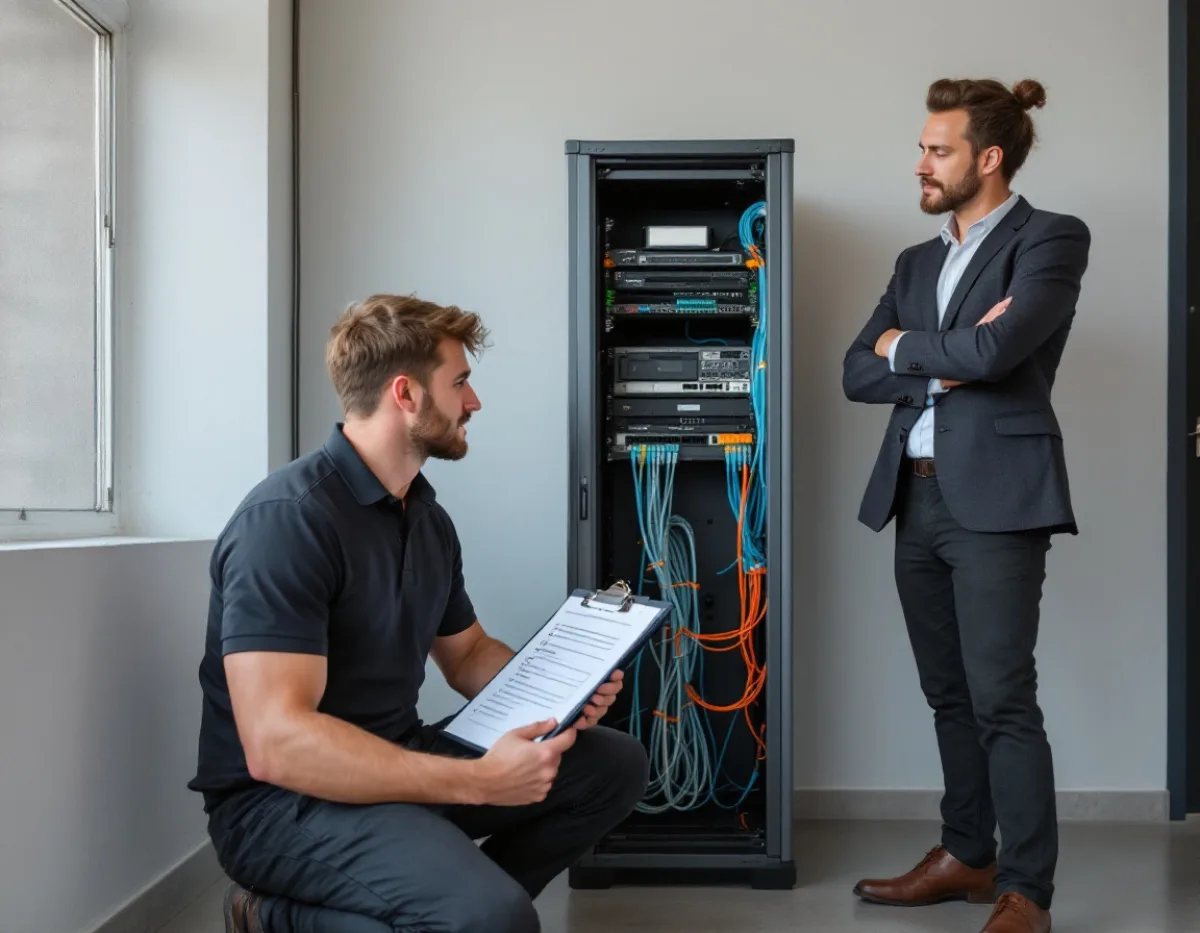
Uprite’s managed security services in Houston include 24/7 monitoring and endpoint detection and response (EDR) that can isolate a machine automatically, and incident response builds on that. The team isolates the device, disables the accounts involved, keeps the logs intact, and rebuilds from backups that were tested before the incident. Response is the next layer.
Uprite isn’t a law firm or a certified forensic examiner. Counsel decides whether a breach is notifiable, and the cyber insurer often names the forensic firm, so the job is to hand both a clean set of evidence. It works beside both. Our data breach response plan for Texas businesses lays out who decides what.
NIST’s SP 800-61 Revision 3, published in April 2025, takes the same view by folding incident response into everyday cybersecurity risk management under the Cybersecurity Framework 2.0 instead of treating it as a separate emergency project.
What Response Looks Like, Piece by Piece
Detection
24/7 monitoring of sign-ins, endpoints, and email, so an unusual login at midnight reaches a person instead of an unread inbox.
Containment
Endpoint detection isolates the affected machine, and the accounts involved are disabled before the attacker reaches the next server.
Evidence
Logs are kept intact and affected machines are left untouched, so the insurer’s forensic firm starts from the original data.
Eradication
Persistence mechanisms are found and removed, exposed remote access is closed, and credentials are reset only after the environment is clean.
Recovery
Restores come from immutable backups that are tested on a schedule, in the order the business needs, with payroll and billing ahead of the archive.
Notification Support
A written timeline of what was touched and when, ready for counsel, the insurer, and the Attorney General’s online form.
One mistake shows up in a lot of plans. The backup report is green every morning, nobody has ever restored from it, and the password to the backup console sits in the same directory the attacker just took over. Test the restore. Keep those credentials separate.
The Clocks
What Deadlines Start Running After a Houston Cyber Incident?
Once an incident has happened, the calendar matters as much as the malware. A missed deadline adds a second problem to the first.
Texas law comes first. Business and Commerce Code 521.053 requires notice to affected individuals without unreasonable delay and no later than the 60th day after the company determines a breach occurred. If at least 250 Texas residents are involved, the Attorney General must also be notified through an online form no later than the 30th day, and a law enforcement request can delay individual notice while an investigation runs.
Health data adds a federal clock. Under 45 CFR 164.404, a covered entity notifies affected people without unreasonable delay and within 60 days of discovery, which a Houston clinic or dental office should treat as the outer limit instead of the target.
Contracts add their own clocks.
Public companies, including Houston’s listed energy firms, report a material incident on Form 8-K Item 1.05 within four business days of deciding it’s material, under the SEC’s 2023 cybersecurity disclosure rule. Defense contractors have a 72-hour reporting term in DFARS 252.204-7012. Cyber insurance policies and customer contracts set windows of their own. Read yours now. A longer write-up is coming as ransomware reporting rules for Houston companies.
Clocks Written Down
The 72-hour, 30-day, and 60-day deadlines that apply to the company’s contracts and Texas law, written on one page.
Insurer Number on the Plan
The carrier’s reporting line and panel vendors, since the policy often decides which forensic firm can be hired.
Counsel in the Loop
A named attorney who decides what counts as a notifiable breach, so IT doesn’t have to guess at a legal question.
Timeline Kept Live
A running record of what was found, when, and what was done, so the notice to the Attorney General is accurate the first time.
The First Hour
What Should a Houston Company Do in the First Hour of an Attack?
Most of what a company can still save in an attack is decided in the first hour.
CISA’s #StopRansomware Guide gives the order. Determine which systems are affected and isolate them immediately, taking the network offline at the switch if several subnets look hit. Power a device down only if it can’t be disconnected, because shutting down erases memory a forensic team may want, and coordinate by phone instead of email so the attacker doesn’t learn they’ve been spotted.
Pause scheduled backup jobs next, since a job running against an encrypted source can overwrite the last clean copy. Call the insurer. Disable the compromised accounts. Write down each action with its time. The checklist for the first hour of a ransomware attack in Houston goes minute by minute.

The First 60 Minutes, Step by Step
Minutes 0 to 10
Isolate affected machines at the switch or with endpoint isolation, and power off only when disconnecting isn’t possible.
Minutes 10 to 20
Disable compromised accounts, close remote access, and change shared admin passwords from a clean device.
Minutes 20 to 30
Pause scheduled jobs and check the backup consoles, so the last clean copy isn’t overwritten.
Minutes 30 to 45
Call the insurer, the attorney, and the response team by phone, since the email system may not be safe.
Minutes 45 to 60
Save the logs, leave affected machines alone, and keep a timestamped note of every action so far.
Then Rebuild
Systems restored in business order from tested backups, backed by our disaster recovery services in Houston.
Has Uprite actually done this?
The closest published case is a server failure, not a ransomware attack. When a nonprofit client’s main server failed at the end of 2025, Uprite built a temporary environment and recovered more than 3TB of records for about 40 staff over a holiday stretch. Different failure, same muscle. Our guide to ransomware recovery in Texas covers the first 72 hours of a ransomware case and what recovery takes.
The first hour is cheap to plan and expensive to improvise.
What We Run
Monitoring, Containment, Backups, and the Evidence Trail
A standard IT contract covers the help desk, patching, and antivirus. It usually stops there.
It doesn’t say who is awake when an alert fires at 1 a.m., whether anyone has restored a file from backup this year, or whether the backup console password sits anywhere an attacker with admin rights could reach.
Response depends on 5 systems. Monitoring sets how early an attack is seen, endpoint containment sets how far it spreads, identity controls set what the attacker can reach, backups set whether recovery is possible without paying, and logs set whether anyone can reconstruct what happened.
What Each Line Covers
| Service line | What Uprite runs | Rule or guidance behind it |
|---|---|---|
| 24/7 monitoring | A SOC watching endpoints, sign-ins, and email, with alerts routed to a responder who can act on them | NIST SP 800-61 Revision 3 and the Detect and Respond functions of CSF 2.0 |
| Endpoint containment | Endpoint detection and response with isolation of affected machines before the attacker spreads | CISA #StopRansomware Guide, isolate affected systems immediately |
| Identity and access | Multi-factor sign-in, admin accounts kept apart from daily accounts, and fast account disablement | Verizon 2026 DBIR, credential abuse behind 13% of breaches |
| Backup and recovery | Immutable backups with scheduled restore tests, rebuilt in business-priority order | CISA guide, restore from offline, encrypted backups |
| Evidence and notification support | Preserved logs, a running timeline, and a clean handoff to your counsel and the insurer’s forensic firm | Texas Business and Commerce Code 521.053, 60-day and 30-day notices |
Uprite’s SOC watches endpoints, sign-ins, and email around the clock, and an alert goes to a responder who can act on it instead of a dashboard nobody opens.
With EDR installed, an infected laptop can be isolated before the file shares behind it are touched. Minutes count here.
Verizon’s 2026 Data Breach Investigations Report found exploited vulnerabilities starting 31% of breaches and credential abuse another 13%, so patching and sign-in controls do real work before any response begins.
Backups are kept immutable so an attacker can’t encrypt them, and restores run on a schedule so recovery time is a measured number. The same Verizon report found 69% of ransomware victims didn’t pay.
The logs are kept and affected machines are left untouched so the forensic firm has a clean starting point, and the timeline feeds the detailed account of the breach that the Attorney General’s form asks for.
That’s a lot. It’s also the main reason to hand it off to a team instead of one IT generalist.
By the Numbers
The Numbers Behind Incident Response in Houston
Most of these figures come from the Texas Attorney General’s public breach list and from federal reports, and the method for the Texas counts is in the table below. Two figures are Uprite’s own.
76
Breach notices from Houston-area companies posted by the Texas Attorney General in the 12 months ending October 28, 2026.
62
Median days between the start of a breach and its discovery, across the 62 Houston-area filers that reported both dates.
40
Median days from the discovery date a Houston-area company reported to the posting of its notice.
65
Of the 76 Houston-area filings that involved Social Security numbers.
$40
Uprite’s published monthly rate per user for security-only coverage, with incident response included.
| Metric | Data Point | Source |
|---|---|---|
| Houston-area breach filings, 12 months to Oct 28, 2026 | 76 of 682 statewide | Texas AG breach reports, filers in Houston and its suburbs |
| Texans affected by those filings | 2,133,664, including one filing of 970,891 | Texas AG breach reports |
| Filings affecting fewer than 1,000 Texans | 28 of 76 | Texas AG breach reports |
| Filings involving Social Security numbers | 65 of 76 | Texas AG breach reports |
| Houston-area filer types | Retail and merchants 23, healthcare 19, other 16, financial services 9, education 4, nonprofits 3 | Texas AG, self-reported entity type |
| Median days from breach start to discovery | 62 Houston-area (62 filers), 68 statewide (568 filers) | Texas AG, self-reported dates |
| Houston-area breaches found within 7 days of starting | 16 of 62 | Texas AG, self-reported dates |
| Median days from reported discovery to AG posting | 40 Houston-area, 40 statewide | Texas AG breach reports |
| Houston-area notices posted over 30 days after reported discovery | 50 of 76 | Texas AG breach reports |
| Texas notice deadlines | 60 days to individuals, 30 days to the AG at 250 or more residents | Tex. Bus. & Com. Code 521.053 |
| Ransomware complaints to the FBI | 3,611 in 2025, up from 3,156 in 2024 | FBI IC3 2025 Internet Crime Report |
| Ransomware in breaches | 48% of breaches, and 69% of victims did not pay | Verizon 2026 DBIR |
| Global average cost of a breach | $4.99 million, 247 days to identify and contain | IBM Cost of a Data Breach 2026 |
| Uprite rates, per user per month | MSSP security $40, co-managed $100, fully managed $138 | uprite.com/pricing |
| Uprite average first response | 5 minutes | Measured across all tickets and priorities |
Pricing
What Does Incident Response Cost in Houston?
Incident response is included in Uprite’s managed security plans, which start at $40 per user per month on MSSP Security Focus, and fully managed IT with the security stack built in starts at $138.
Those rates are posted on our public pricing page, so your CFO can check them without booking a call.
| Plan | Per user, per month | Built for | What it includes |
|---|---|---|---|
| MSSP Security Focus | From $40 | Companies with their own IT staff that need a 24/7 security team behind them | Firewall management, SIEM and SOC monitoring, threat intelligence, vulnerability scanning, and incident response added on top of your team |
| Co-Managed IT | From $100 | Companies with an in-house IT lead | Shared support beside your IT lead. We map which response duties sit with each side before you sign. |
| Fully Managed IT | From $138 | Companies with no IT department | Help desk, on-site and remote support, cloud management, and the full security stack with response built in |
For 25 users, MSSP Security Focus comes to $1,000 a month, or $12,000 a year. IBM’s 2026 report puts the global average breach at $4.99 million, a figure that skews toward large companies, and that gap is why many Houston owners buy the cover before an incident.
One-time emergency help is different. Uprite doesn’t publish a stand-alone price for it and won’t invent one here, so a call is the way to find out what can be taken on. A separate write-up on what incident response costs in Houston, with the ranges outside providers charge, is in progress.
Insurance is the other invoice. Some cyber policies set conditions on multi-factor sign-in, backups, and logging before they pay, which makes the controls above relevant at claim time.
Terms sit next to the prices. No hidden fees, the rate locked through year one, and a 120-day satisfaction guarantee if the work falls short.
Plans below are the Houston rates, on-site help included where the plan lists it.
Send us your backup report, your admin list, and your insurer’s hotline number.
We’ll send back a written map of what a first hour would be missing, before you commit to anything.
Speak to a Response ExpertGetting Started
How Does Uprite Get a Houston Company Ready to Respond?
Scheduled around your busy season. Nothing moves the week of a close.
Step 1. Map Your Systems, Admins, and Backups
Servers, laptops, cloud tenants, who holds admin rights, and where every backup actually lives, including the ones nobody wrote down.
Step 2. Rank What Would Hurt Most
The inventory becomes a short list ranked by business damage, with payroll and billing ahead of the archive, so the recovery order is settled before anything breaks.
Step 3. Lock Down Sign-In and Remote Access
Multi-factor sign-in, admin accounts kept apart from daily accounts, remote access holes closed, and a call-back rule on every payment change.
Step 4. Turn On Monitoring and Test the Restore
24/7 monitoring and endpoint isolation go live, and we restore real files from backup to measure how long recovery takes, with backup and disaster recovery tested the same way.
Step 5. Run It, Review It, Repeat
A help desk that answers in about 5 minutes on average, patching, scheduled restore tests, and a review after any alert that turns real.
Timing depends on how scattered things are. A 30-person firm on Microsoft 365 moves faster than a 150-person manufacturer with three plants and a server nobody remembers, and it’s better to say so on the first call than in week six.
Who It Fits
Houston Companies This Is Built For
| Right fit |
|---|
| Greater Houston companies of any size that have no full-time security team and no written plan for the first hour of an attack |
| Energy, manufacturing, and construction firms where a stopped plant or jobsite costs real money every hour |
| Medical, dental, and behavioral health practices holding patient records under HIPAA |
| Law, accounting, and financial firms where client data is the product |
| Companies with a cyber insurance application or renewal coming that asks about multi-factor sign-in, backups, and monitoring |
| Businesses with an IT person or a small team that needs 24/7 coverage and a response bench behind them |
Recognize your company? A short call is enough to begin. Bring your headcount and the name of your cyber insurer.
Before You Decide
What Holds Houston Companies Back From Planning for Response?
4 concerns come up on almost every first call.
“We have cyber insurance, so the insurer will send help.”
The insurer matters. It opens a claim and points the company to a forensic firm, but it doesn’t isolate machines at 2 a.m. or say which backup is clean, and because policies set conditions, the controls in place beforehand are often what the carrier asks to see.
“We have backups, so we’re covered.”
Backups are only the start. An attacker with admin rights can delete or encrypt any backup within reach, so immutable copies and a restore someone has timed are what turn a backup into a plan. The ransomware protection playbook for Houston businesses covers the prevention side.
“We’re too small to be a target.”
Houston’s own filings show otherwise. Of the 76 Houston-area notices, 28 affected fewer than 1,000 Texans and 23 came from retail and merchant businesses, and attackers tend to go where access is easy, not where headcount is large.
“We’ll find someone when it happens.”
Hunting for a provider mid-incident costs hours. Every hour on hold is an hour the attacker spends moving through the servers. Decide earlier.
Definition
What Are Incident Response Services?
3 Things That Set Uprite Apart for Houston Companies
Response Built Into the Plan
Monitoring, containment, backup recovery, and response share one team and one contract, so nobody argues over whose alert it was.
Prices You Can Check
$40 per user per month for MSSP security with response, $100 co-managed, and $138 fully managed, locked for the first year. Every figure sits on our pricing page.
2 Houston Offices, Not a Call Center
5718 Westheimer Road near the Galleria and 16441 Space Center Boulevard in Clear Lake. When isolation has to happen at the rack by hand, someone can drive there.
What Clients Say
What Houston Organizations Say About Uprite
Hector and Kareem are super helpful! They are always willing to take on my computer problems even if its small. I had my mouse disappear off my screen, it was an user issue but Hector didn't make me feel small or "dumb" for this error. We love uprite!
I had been having trouble with an IT matter that I didn't think would be fixed but Arvin Ebueng from Upright took his time with me and worked with me until we were able to resolve the issue. The issue was an internal issue with the way the program was written, but Arvin came up with a great work around so that I am now able to do what I need to do at my job. Long story short, he got me access to both things that I need access to simultaneously and daily. Thanks 😊 Arvin, you are much appreciated 👏 💐 🥳.
I'm am not a "tech" person, however the team at Uprite gets me through the technological side of computers and software so that I can function on a daily basis... but the most enduring quality is that they care. Special shoot out to Mary, Sergio, Eufemio, Hector, and Jeff just to name a few... I appreciate each of you and the help you give me.
Uprite has been one of the best services the company I work with has provided for us they help us with any issues we run into and are always easy to work with, and very patient with us and friendly.
We use this IT Service at Delta Fastener, they are always helpful and prompt with their responses. They solve our computer issues quickly and effectively. A knowledgeable staff is the most important asset to a company - Uprite fills that gap for us by being a partner in business for all of our IT issues. Outsource what you don't know and focus on what is really making you money!
FAQ
What Houston Companies Ask First About Incident Response
Incident response services include 24/7 monitoring, isolating affected machines, disabling compromised accounts, preserving evidence, restoring from clean backups, and supporting the notification deadlines. At Uprite they come with our managed security plans. We work beside your attorney and your insurer’s forensic firm, not in place of them.
Incident response comes with our managed security plans, which start at $40 per user per month, and fully managed IT with the security stack built in starts at $138. A 25-person company on the $40 plan pays $1,000 a month. We don’t publish a price for one-time emergency work.
Texas law gives you until the 60th day after you determine a breach occurred to notify affected people, and until the 30th day to notify the Attorney General when 250 or more Texans are involved. Some contracts and policies run shorter, so read yours. Ask counsel.
Paying isn’t a call for your IT provider. Make it with counsel and your insurer, since it carries legal risk of its own. Verizon’s 2026 report found 69% of ransomware victims didn’t pay, and tested, immutable backups are what keep the question from being forced on you.
Isolate the affected systems, disable compromised accounts, pause backup jobs, and call your insurer and your IT provider by phone. CISA says to power a device off only when you can’t disconnect it, because shutting down erases memory a forensic team may need. Write everything down.
Call (281) 956-2280 and we’ll tell you plainly what we can take on. Our response work is built into managed plans, and we don’t publish a stand-alone emergency rate. If we can’t help, we’ll tell you what to do in the next hour and who to call.
No. Your insurer opens the claim and usually names the forensic firm, but it doesn’t run your network. Someone still has to isolate machines, disable accounts, and rebuild from backups. We work with your carrier’s panel firm and keep the evidence clean for them.
Only when the breach involves 250 or more Texas residents, and then within 30 days of determining it occurred, through the Attorney General’s online form. Smaller breaches still require notice to the affected people. Your attorney decides whether an incident counts as a breach.
Yes, and that’s what scheduled restore tests are for. We restore real files from backup on a schedule, record how long it takes, and keep the results, so the answer is a measured time instead of a hope. Immutable copies also keep an attacker from deleting them. Ask to see the log.
Our average first response is 5 minutes across every priority, a measured average rather than a contract promise. Monitoring runs 24/7 and alerts reach a responder, so a midnight sign-in from another country doesn’t wait for the morning.
Start Here
Find Out What Your First Hour Would Look Like
Who isolates a server at 2 a.m.? Who has the insurer’s number? Who restores from backup?
The assessment answers those questions with a written map of accounts, backups, monitoring gaps, and notification deadlines, ranked by what would hurt most in a real incident.
An attacker needs one quiet weekend.
Decide who answers the phone before the phone rings.
Prefer to talk first? Call our Houston line at (281) 956-2280.