
Technology quietly runs the modern business. Email, file access, customer systems, accounting platforms, communication tools. When those systems work, nobody thinks about them. When they fail, everything stops.
Many companies don’t realize they need Houston managed IT services until the day something breaks. The network goes down. Employees can’t log in. Orders stop processing. Suddenly technology becomes the biggest problem in the room.
But the reality is most businesses see the warning signs long before that moment. The same pattern plays out up I-45, and we mapped it in signs your Dallas business needs managed IT.
If your company is experiencing recurring IT issues, relying on one overworked IT person, or struggling to keep systems secure, it may be time to rethink how technology is managed.
Here are seven signs your Houston business may need a managed IT partner.
What Managed IT Services Actually Mean
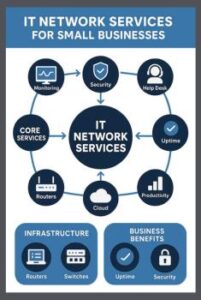
Managed IT services provide ongoing technology support through a dedicated IT partner. Instead of reacting after problems happen, a managed IT provider monitors systems continuously and addresses issues before they disrupt operations.
A typical managed IT partnership includes:
- Network monitoring and maintenance
- Cybersecurity protection
- Help desk support for employees
- Cloud and infrastructure management
- Data backup and disaster recovery
- Strategic IT planning
For growing companies, this approach provides access to an entire team of specialists rather than relying on one internal resource.
The goal is simple. Prevent problems, reduce downtime, and keep the business moving.
Why Houston Businesses Are Turning to Managed IT Services
Houston companies are expanding quickly across industries like healthcare, construction, energy, legal services, and manufacturing.
Growth creates opportunity. It also increases technology complexity.
More employees mean more devices.
More systems mean more integration challenges.
More data means more cybersecurity risk.
Without the right oversight, technology environments can become difficult to manage. That’s why many organizations are moving toward Houston managed IT services that provide proactive management and long term strategy.
1. Your IT Support Is Always Reactive
In many companies, IT support only appears when something breaks.
A server crashes.
Someone can’t access email.
The network suddenly slows down.
IT is called in to fix the problem, the system gets patched together, and everyone moves on until the next issue shows up.
This reactive cycle leads to recurring downtime and frustration.
Managed IT providers focus on monitoring systems continuously so issues can be resolved before they impact the business.
Reactive IT vs Managed IT Services
| Reactive IT Support | Managed IT Services |
| Problems addressed after failure | Problems prevented through monitoring |
| Frequent downtime | Systems monitored 24 hours |
| Limited security protection | Layered cybersecurity strategy |
| One technician responsible for everything | Full team of specialists |
| No long term technology planning | Strategic IT roadmap |
| Poor documentation | Structured documentation and processes |
When technology becomes proactive instead of reactive, the entire organization runs more smoothly.
2. Downtime Is Impacting Productivity
Even short outages can disrupt operations.
Employees can’t access files.
Orders stop processing.
Customer communication slows down.
For businesses that rely heavily on technology, downtime directly affects revenue.
Reliable IT support in Houston focuses on system stability. Monitoring tools identify potential issues early so they can be resolved before employees even notice.
3. Cybersecurity Risks Are Increasing
Cyber threats are growing rapidly. And small and mid sized businesses are increasingly targeted.
- Phishing emails
- Ransomware attacks
- Credential theft
- Unauthorized access attempts
Without dedicated security monitoring, businesses often discover these issues after damage has already occurred.
Managed IT providers typically implement layered security that includes endpoint protection, monitoring tools, and threat detection systems.
For many companies exploring Houston managed IT services, cybersecurity is the driving factor.
4. You Rely on a Single “IT Guy”
This is something we hear all the time.
“We have an IT guy.”
Early on, that arrangement works. A smaller company can often operate with one person handling basic technology needs.
But as the business grows, technology becomes more complex.
- More employees.
- More devices.
- More applications.
- More security risks.
Suddenly that one IT person is responsible for everything.
- User requests.
- Password resets.
- Network troubleshooting.
- Software updates.
- Security monitoring.
Before long they spend most of their time putting out fires just to keep the business operating.
Important tasks begin falling behind.
- Security updates get delayed.
- Systems aren’t documented.
- Backups aren’t tested.
- Long term planning disappears.
Eventually the pressure becomes unsustainable. The business becomes heavily dependent on one person, which creates significant operational risk.
5. No One Knows How Your IT Systems Work
A surprising number of companies operate without proper IT documentation.
Passwords are stored informally.
Network configurations are undocumented.
Vendor accounts are unclear.
System details exist only in someone’s memory.
We recently worked with a company that had relied on one internal IT employee for 15 years.
You might expect that kind of tenure to mean strong organization and documentation.
But when that employee left almost overnight, leadership quickly realized they didn’t have visibility into their own systems.
Questions started immediately.
- Where are all the passwords?
- Who manages our accounts and services?
- Why can’t employees access the network?
- Are our systems still processing orders?
- Is our data being backed up?
- Where are those backups stored?
No one had clear answers.
The company had to bring in outside help quickly just to stabilize operations. When businesses are forced to make technology decisions under pressure, the results rarely produce the best long term outcomes.
6. Technology Decisions Feel Random
Without clear oversight, technology decisions often happen in isolation.
Departments purchase software independently.
Hardware upgrades occur only when equipment fails.
Security improvements get postponed.
Over time the technology environment becomes fragmented.
A managed IT partner helps establish a long term technology roadmap aligned with business goals. Systems are upgraded intentionally, security improvements are planned, and infrastructure investments support growth.
7. Your Business Is Growing Faster Than Your IT
Growth brings opportunity. But it also increases demands on technology.
- More employees require support.
- More systems must integrate.
- More devices need to be secured.
- More data must be protected.
Without scalable infrastructure, growth can strain the technology environment.
Managed IT services provide the structure and resources needed to support expansion without sacrificing stability.
What Businesses Actually Need From IT
To properly support a modern organization, technology requires more than occasional troubleshooting.
Businesses need:
- Reliable monitoring tools
- Documented IT processes and procedures
- Frontline help desk support
- Strategic technology planning
- Cybersecurity monitoring
- Data backup and disaster recovery
- Shared oversight between leadership and IT professionals
IT Risk Self Assessment
| Question | Risk if Not Addressed |
| Have you experienced downtime in the last 90 days? | Productivity loss |
| Are backups tested regularly? | Data loss risk |
| Are IT systems documented? | Operational disruption |
| Is cybersecurity monitored continuously? | Security exposure |
| Can your IT support scale with growth? | Infrastructure strain |
If several of these areas raise concerns, it may be time to evaluate your IT strategy.
Can You Build an Internal IT Team Instead?
Yes. Many companies eventually build internal IT teams.
But doing so requires hiring multiple specialists, investing in management tools, and building structured processes.
Most businesses aren’t in the business of running IT departments.
They’re focused on delivering products, serving customers, and growing revenue.
Partnering with a provider of Houston managed IT services gives businesses access to experienced technicians, monitoring systems, and strategic guidance without building that entire infrastructure internally.
Why Houston Businesses Work With Uprite Services
Technology should support the business, not become a constant distraction.
At Uprite Services, our focus is helping Houston organizations build reliable and secure technology environments that support long term growth.
Our team provides:
- Proactive system monitoring
- Cybersecurity protection
- Responsive help desk support
- Cloud and infrastructure management
- Strategic IT consulting
As Stephen Sweeney often explains,
“Most companies don’t call us because they want better IT. They call because technology problems are getting in the way of running their business.”
When systems are stable and secure, leaders can focus on what they do best.
Takeaway
Most companies don’t suddenly decide they need managed IT services.
The need builds gradually.
Downtime becomes more frequent. Security concerns increase. Internal IT staff become overwhelmed. Technology complexity grows.
Recognizing the warning signs early allows businesses to take a proactive approach before problems disrupt operations.
For many organizations, partnering with a provider of Houston managed IT services brings the structure, expertise, and reliability needed to support long term business success.
Signs Houston Owners Ask Us to Confirm
Our IT only gets called when something breaks. Is that a problem?
That is the definition of reactive support, and it is the most common sign on this list. Nothing is being prevented, so you are paying for the same failures repeatedly. Reactive is expensive twice.
We rely on one IT guy. What actually goes wrong there?
Everything routes through a single person who cannot be sick, on holiday, or asleep. The bigger risk is not availability though, it is that the knowledge of how your systems fit together lives in one head and leaves with them, which turns an ordinary resignation into a months-long recovery project.
Nobody here knows how our systems work. Is that unusual?
Common, and fixable. Documentation of your network, credentials, vendor contacts, and configurations is the first thing a good provider builds, because nothing else can be done reliably without it. Undocumented is unmanageable.
How much downtime is normal before it counts as a real problem?
Any outage that repeats is a problem regardless of length. One hour lost every month to the same unresolved fault costs more over a year than a single bad day, and it is the pattern rather than the total that tells you nobody is fixing root causes.
Could we just build an internal IT team instead?
You can, and above a certain size you should. Below that, a single hire covers business hours and one skill set while the security, compliance, and after-hours load stays uncovered. Most land on a mix.
Which of these signs matters most?
Count how many apply to you, because the signs compound rather than sit independently. Unpredictable costs plus reactive support plus a single point of failure is a different situation than any one of them alone. Book a free IT assessment to find out which ones you have.