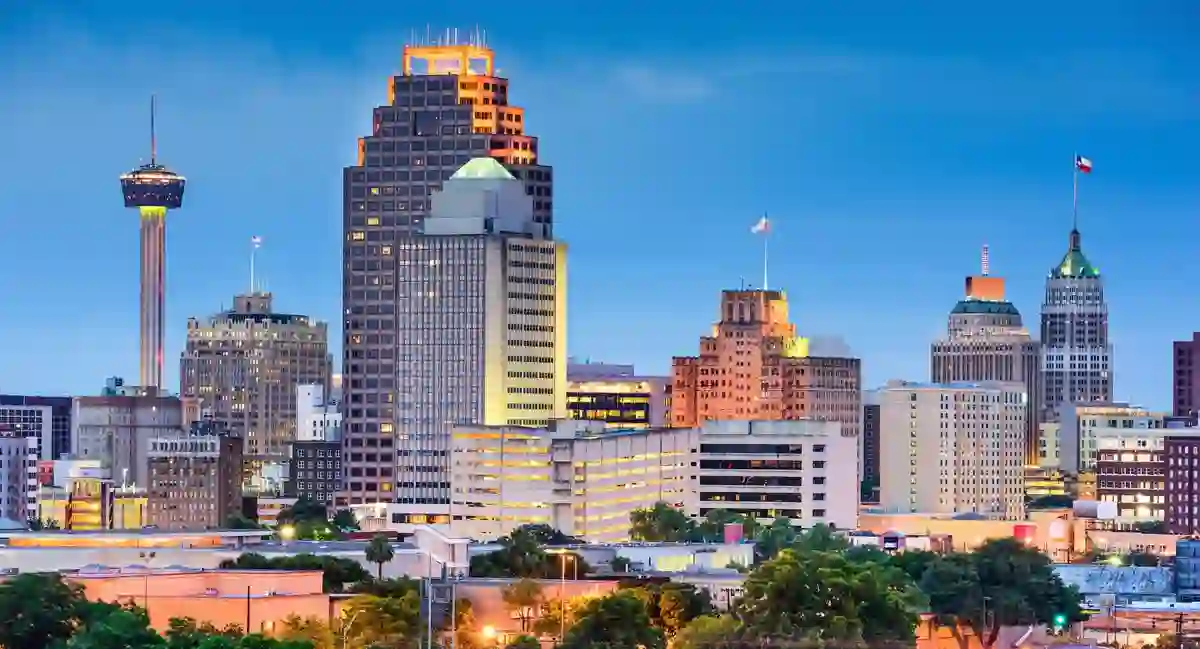
Backup and Disaster Recovery in San Antonio, TX
When systems go down, every hour is lost revenue, missed deadlines, and shaken client trust. Uprite gets San Antonio businesses back online fast, with backups that actually restore.
Uprite provides backup and disaster recovery services in San Antonio, TX, including automated cloud and on-site backup, immutable ransomware-resistant storage, defined RTO and RPO targets, rapid server and cloud failover, and regular restore testing. We serve healthcare practices, manufacturing firms, legal offices, financial services companies, and mid-market businesses across Bexar County and South Texas.
San Antonio Businesses Are One Outage Away From a Very Bad Week
The Alamo City runs on uptime. When the servers stop, the invoices stop, the schedule stops, and the phones start ringing with questions nobody wants to answer.
Most small and mid-sized companies here assume a real disaster is a rare, dramatic event. A fire. A flood. Something you would see on the news. In practice, the thing that takes a 50-person firm in Stone Oak or a healthcare group off Loop 1604 offline is far more ordinary: a ransomware hit, a failed server, a deleted database, or a power event that corrupts the last good backup.
According to FEMA, roughly 40% of small businesses never reopen after a disaster. The deciding factor is almost never how bad the event was. It is whether the business could recover its data and operations fast enough to keep customers.
Here is the uncomfortable part. Most San Antonio SMBs believe they are protected because a backup runs somewhere. They have a backup. What they do not have is a tested recovery. Those are not the same thing, and the difference only shows up on the worst day.
A backup that has never been restored is a hope, not a plan.
We have been working with Texas businesses for over 25 years. The pattern we see most is not bad luck. It is a backup that was set up once, left unchecked for years, and then failed silently right when it was needed. The good news is that this is one of the most fixable problems in IT.
See how backup and recovery fit into full managed IT support for San Antonio businesses →
What Disaster Recovery in San Antonio Actually Requires
Real disaster recovery for a San Antonio business is more than nightly backups. It is a documented plan built around two numbers: how much data you can afford to lose (your RPO) and how long you can afford to be down (your RTO). Everything else, the backup schedule, the storage design, the failover method, the test cadence, exists to hit those two targets. For most companies this works best as part of full-service San Antonio IT support, not a bolt-on product.
Not every provider delivers all of that.
Most run a backup job, point to a green checkmark in a dashboard, and call it disaster recovery. A green checkmark means the job finished. It does not mean the data is complete, the copy is off-site, the storage is safe from ransomware, or that anyone has ever restored from it. San Antonio’s healthcare practices, its logistics and manufacturing base, and its professional services firms each carry different recovery requirements and different tolerance for downtime. A one-size backup does not account for that.
Uprite designs the recovery plan around your environment, your industry, and your real downtime tolerance. Then we prove it works by restoring from it on a schedule, before you ever need to.
What’s Included in Uprite’s San Antonio BDR Stack
Automated Cloud and On-Site Backup
Continuous, monitored backups following the 3-2-1 rule: three copies, two media types, one off-site. Verified daily, not set and forgotten.
Immutable, Ransomware-Resistant Storage
Air-gapped and immutable copies that ransomware cannot encrypt or delete. When the production environment is hit, the recovery point is still clean.
Rapid Restore and Failover
Server and cloud replication that spins systems back up in hours, not days. We restore to hit the RTO your business actually needs.
Recovery Testing and Validation
Scheduled test restores that prove the backup works before a real incident does. A recovery you have never tested is a guess.
The Disaster Scenarios San Antonio Businesses Actually Face
Forget the movie version. Here is what actually takes San Antonio companies offline.
Ransomware encrypting a dental group’s records and its backups in the same stroke. A production server dying with no tested restore behind it. An employee deleting a shared folder that turns out to be the only copy. And Texas weather: the February 2021 grid failure knocked out power across the state for days, and South Texas still sees the flooding and storm outages that corrupt hardware and interrupt backup jobs mid-run.
These are not hypotheticals from a vendor slide deck. They are the calls we get from businesses in this city.
CISA now lists ransomware targeting small and mid-sized organizations among the most persistent threats to US business, and its guidance is blunt: the single most reliable defense is a tested, offline, immutable backup. Software alone does not save you. A recovery plan does.

What makes San Antonio businesses vulnerable is rarely the disaster itself. It is the gap between a backup that runs and a recovery that has been proven. That gap is where companies lose days, data, and customers. It is also completely closable.
Our Disaster Recovery Capabilities
Automated Backup Built to the 3-2-1 Rule
A single backup on a single device is a single point of failure. When that drive dies or that server is the one that gets encrypted, the backup goes down with it.
We build to the 3-2-1 standard: three copies of your data, on two different media types, with at least one copy stored off-site. Backups run continuously for the systems that change constantly and on a set schedule for everything else. Every job is monitored, and failures raise an alert the same day, not at the next quarterly review.
You get one backup strategy covering servers, workstations, Microsoft 365, and cloud workloads, not four disconnected tools nobody is watching.
Immutable and Air-Gapped Backups for Ransomware Recovery
Modern ransomware hunts for your backups first. It knows that a business with clean backups will not pay, so it encrypts or deletes every recovery point it can reach before it triggers.
Immutable storage stops that. Once a backup is written, it cannot be altered or deleted for a defined retention window, not by an attacker, not by compromised admin credentials, not by accident. We pair immutable copies with air-gapped storage so at least one recovery point is always beyond the reach of your production network. When ransomware hits a San Antonio business we protect, the answer is a restore, not a ransom negotiation.
RTO and RPO Planning
Two numbers define every recovery. Your Recovery Time Objective (RTO) is how long you can be down before the damage is serious. Your Recovery Point Objective (RPO) is how much data you can afford to lose, measured in time since the last good backup. A law firm might tolerate four hours down but not a single lost billing entry. A manufacturer might survive some data loss but not a day of stopped production.
We set those targets with you, per system, then engineer the backup frequency, storage, and failover method to actually meet them. This is the step almost everyone skips, and it is the difference between a plan and a pile of backup jobs. The framework follows NIST SP 800-34, the federal standard for contingency planning.
Server and Cloud Failover
Restoring files is one thing. Restoring a running business is another. If your line-of-business server is down, copying data back does not help until there is somewhere for it to run.
We use image-based backup and replication so critical systems can be spun up as virtual machines, on-site or in the cloud, while the original hardware is repaired or replaced. Your team keeps working from the failover copy instead of waiting on a rebuild. For businesses that cannot absorb a full day offline, this is the layer that turns a multi-day outage into a few hours. It pairs naturally with managed cloud services when workloads already live in Azure or Microsoft 365.
Disaster Recovery Testing
This is the capability that separates real disaster recovery from wishful thinking. An untested backup fails at the worst possible moment, and you find out about corruption, missing databases, or broken retention only when you try to restore under pressure.
We run scheduled test restores, verify the recovered data actually opens and runs, and measure the real recovery time against your RTO. You get a plain-language report showing what was restored, how long it took, and anything that needs fixing. When a genuine disaster hits, your team is not restoring for the first time at 11pm. They are running a process they have already watched succeed.
Business Continuity and Compliance for San Antonio’s Regulated Industries
San Antonio’s economy runs through healthcare, legal, financial services, and government-adjacent businesses. Every one of those sectors treats data availability as a compliance obligation, not just an IT preference.
HIPAA requires a data backup plan, a disaster recovery plan, and an emergency mode operation plan as explicit contingency safeguards. GLBA and PCI-DSS carry comparable expectations for financial services and any business handling cardholder data. We build the backup and recovery layer to satisfy those requirements and document it, so the plan holds up in an audit as well as in an outage. For medical practices, this connects directly to our HIPAA cybersecurity work in San Antonio. The continuity plan and the compliance requirement are the same conversation.
What the Numbers Say
Serving Texas businesses, with active backup and recovery clients across San Antonio, Houston, and Dallas.
Three copies, two media types, one off-site and immutable. The rule we build every plan around.
If you are not satisfied within 120 days, you can exit with no penalty. No competitor in San Antonio publishes an equivalent.
How Uprite Builds Your Recovery Program
Recovery Assessment
We start with a no-cost assessment of your current backups, servers, cloud workloads, and the last time anyone actually restored from them. No proposals until we know what you are really working with.
RTO and RPO Targets
We set your recovery time and recovery point objectives per system, based on what downtime and data loss actually cost your business. This drives every design decision that follows.
Backup and Replication Deployment
We deploy the 3-2-1 backup design, immutable and air-gapped storage, and failover replication for the systems that cannot go down. Each layer built to hit the targets from step two.
First Restore Test
Before we call it done, we run a full test restore and measure the real recovery time against your RTO. You watch the plan work once before you ever have to trust it under pressure.
Ongoing Monitoring and Testing
Daily backup verification. Scheduled test restores. Quarterly plan reviews as your systems and compliance requirements change. Recovery is a program, not a one-time install.
Is Uprite the Right Fit?
Full disclosure. We are not the right fit for every business in San Antonio. If you are a 4-person shop with nothing on a server and no real downtime cost, a full managed recovery program may be more than you need right now. We would rather say that upfront than sell you something you do not.
Businesses with an existing internal IT team may be a better fit for a co-managed IT arrangement, where we run backup and recovery while your team keeps everything else.
But We Already Have Backups
Real objections, real answers.
“Our IT provider already handles backups.” Maybe. Ask them three questions. When did you last complete a full test restore of my systems? Is at least one copy immutable and off-site? What is my RTO and RPO per system? If the answers are vague, you have backups, not disaster recovery. The gap usually lives exactly there.
“We use Microsoft 365, so our data is safe.” This one catches a lot of San Antonio businesses. Microsoft operates on a shared responsibility model: they keep the service running, but protecting your data inside it is your job. Retention is limited, and a deleted or ransomware-encrypted mailbox or SharePoint site can pass the retention window before you notice. Microsoft 365 needs its own backup. It is not one.
“Disaster recovery is too expensive.” Compared to what? FEMA data shows roughly 40% of small businesses never reopen after a disaster, and the cost of recreating lost records, sitting idle for days, and losing customers dwarfs the monthly cost of a managed recovery plan. Uprite’s service rates are also guaranteed not to increase during your first year. The real question is not whether you can afford recovery. It is whether you can afford the outage without it.
“We have never lost data, so we are probably fine.” That is the sentence we hear right before we hear the other one. Hardware fails without warning, ransomware arrives in a single click, and the backup you have never tested is the one most likely to fail. Recovery is cheap insurance until the day it is the only thing standing between you and a permanent closure.
What People Ask Before They Call
What’s the difference between backup and disaster recovery?
Backup is making copies of your data. Disaster recovery is the tested plan for getting your whole business running again after an outage, within a defined time. Backup is one ingredient. Disaster recovery includes the recovery targets, the failover method, and proof through regular restore tests that it all actually works.
Does Uprite serve businesses outside downtown San Antonio?
We operate throughout Bexar County and the surrounding South Texas market, including Stone Oak, Leon Valley, Schertz, Converse, Universal City, and New Braunfels. Most backup and recovery work is remote. Our San Antonio office at 11831 Radium Street handles onsite needs when they come up.
What are RTO and RPO, and why do they matter?
RTO is how long you can be down before it hurts. RPO is how much data you can afford to lose, measured in time since the last backup. They matter because they define what your recovery actually has to achieve. We set both with you per system, then engineer the backup and failover to meet them.
Do we need backup if we already use Microsoft 365?
Yes. Microsoft runs on a shared responsibility model: they keep the platform available, but protecting the data inside it is your responsibility. Native retention is limited, and deleted or ransomware-hit data can age out before you catch it. Microsoft 365 needs a dedicated backup, and we provide one.
How fast can you get a recovery plan in place?
It depends on your environment and what is already running. We have deployed monitored backup and immutable storage in under two weeks when timelines required it. A full plan with failover replication, RTO and RPO targets, and a first tested restore typically runs 30 to 60 days.
What happens if we get hit by ransomware while under Uprite’s protection?
We recover from a clean, immutable copy rather than negotiating a ransom. Because at least one backup is air-gapped and cannot be encrypted, we isolate the affected systems, restore to your recovery point, and validate the data before bringing you back online. That is the entire reason immutable backups exist.
Is disaster recovery included in managed IT or is it separate?
Our managed IT services include baseline backup. The full disaster recovery layer, with immutable storage, failover replication, RTO and RPO planning, and scheduled restore testing, is a distinct program. Some clients carry both. We will tell you clearly what is covered under which engagement.
What Our San Antonio Clients Say
Awards & Industry Recognition











Start With a Free Recovery Assessment
Most businesses in San Antonio do not know whether their backups actually restore until it is too late. We start with an assessment, not a pitch. What you are backing up. What is exposed. Whether it would come back when it counts. From there, you decide. If your recovery is genuinely solid, we will tell you that too.
If you are comparing recovery options, see our San Antonio cybersecurity services and our managed IT for San Antonio businesses as well.
Or call our San Antonio office directly at (210) 942-8466.
What San Antonio Clients Say About Uprite
I’ve been extremely satisfied with Uprite Services and would recommend them without hesitation. They consistently deliver reliable, high-quality work and truly feel like a true partner rather than just another vendor. A special thank you goes to Arvin Ebueng, he is always quick to respond to our needs and incredibly easy to communicate with. No matter how busy things get, Arvin makes sure we’re taken care of promptly and with a smile. His responsiveness and clear communication have made every interaction smooth and stress-free. Thank you, Arvin and the entire Uprite team, Peerless Equipment is a customer for life!
Gerardo Sanchez was very helpful & professional. Uprite Services has great customer service and outstanding technicians. We have used them for several years and will continue our business with them.
Great service by Juan and Jacob. Always helping us out at Alamo City Trailer Sales. We have been using this company for over 10 years and always happy with the work they do.
Jacob Sandoval has helped me a few times with my various IT issues and each time he's been very friendly and thorough ensuring the issue is fully resolved. Thanks so much for all your help!
Jared was fast and efficient!!! He showed up on time and installed our new pc, set up was easy. We have always had a good expierience with Uprite!!