
IT support response time is how long your provider takes to start working your issue, not how long it takes to fix it. Strong San Antonio providers respond to critical outages in 15 to 30 minutes and put that number in writing, broken out by priority level, rather than quoting one blended average that hides the emergencies inside it.
Response time measures how fast someone starts on your problem. Resolution time measures how fast you are actually working again. One average number tells you almost nothing, because it blends a password reset with a ransomware event. Ask any San Antonio provider for response and resolution targets by priority level, written into the contract, with automatic credits when they miss. Uprite commits to a sub-10-minute triage SLA and staffs its help desk with technicians rather than a national call center.
When your point-of-sale system freezes on a Friday afternoon near the Pearl, or a scheduling platform goes dark at a clinic off 281, the only number that matters is how fast someone who can actually help picks up the problem. Most San Antonio businesses shopping for IT support in San Antonio ask “what is your response time” and accept whatever figure they hear. That question is too blunt to protect you. A provider can quote a fast average and still leave your critical outage sitting in a queue for an hour, because an average buries the emergencies inside it.
What IT support response time actually means
Response time is the gap between the moment you report a problem and the moment your provider takes its first meaningful action on it. That action might be a technician acknowledging the ticket, asking a diagnostic question, or starting remote work. It is not the moment your problem is solved.
Freshworks defines response time as the first genuine response to a service request, which sets the tone for everything that follows. The trap is that “first response” can be defined weakly. An automated email that says “we received your ticket” technically counts as a response at some providers. That is not the same as a person starting to work your issue, and the difference shows up at 2 AM when a server is down and the only thing responding is a robot.

Response time vs resolution time, and why the gap matters
Here is the distinction most providers gloss over. Response time is how fast someone starts. Resolution time is how long until you are actually working again. A good contract commits to both, because a fast pickup followed by an open-ended fix is not really a commitment at all.
You want speed on each, but they are not interchangeable. A provider can respond in 3 minutes and still take 6 hours to resolve, because resolution depends on the complexity of the problem and the skill of the person assigned. Answering a ticket rarely takes advanced training. Rebuilding a failed Microsoft 365 migration does. When a San Antonio MSP advertises only its response number, ask what its resolution numbers look like by priority. If it cannot answer, the fast response was marketing.
IT support response time benchmarks by priority
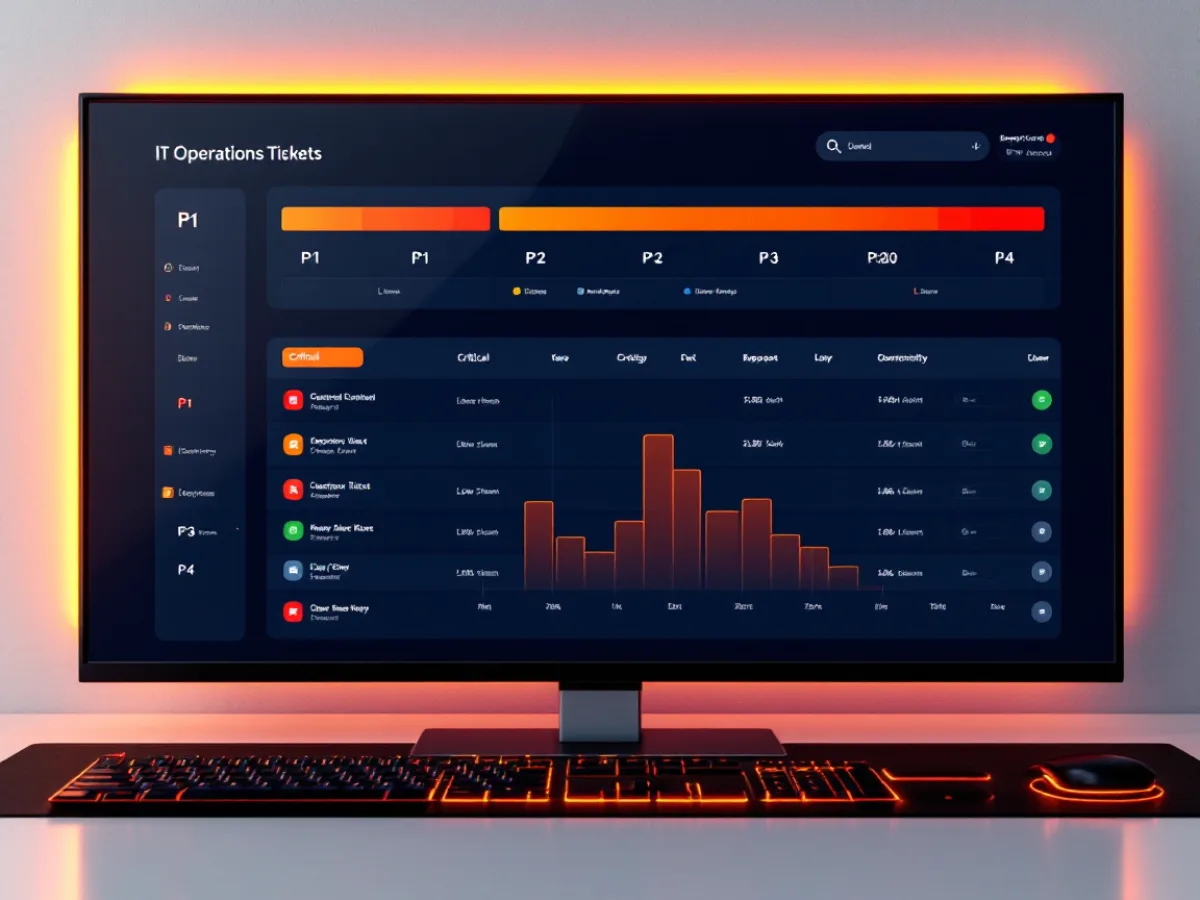
A single average tells you almost nothing, because it blends your billing question with your ransomware event. Real service agreements set separate targets by how badly the issue hurts your business. These are the benchmarks that show up consistently across MSP response-time guides and contract-review checklists. Treat them as the industry baseline you measure any San Antonio provider against, and our statewide response time benchmark comparison shows the full ticket-level data behind them, not as one company’s marketing promise.
| Priority | What it means | Industry-standard response | Typical resolution target |
|---|---|---|---|
| P1 Critical | Full outage, active breach, or data loss with no workaround | 15 to 30 minutes | 1 to 4 hours |
| P2 High | Major function impaired, partial workaround exists | 30 to 60 minutes | 4 to 8 hours |
| P3 Medium | Single user or non-critical system affected | 1 to 4 hours | Next business day |
| P4 Low | Software install, routine request, general question | 4 to 8 hours | 72 hours |
Two rules make these numbers trustworthy. For how those targets get written into an agreement, see what the contracts actually say. P1 and P2 issues should carry 24/7 coverage, because outages do not wait for business hours. And every tier should list both a response and a resolution target, in the contract itself, not in a separate document the provider can quietly edit later.
The business-hours trap that hides slow response
A standard weekday, 8-to-5 support plan covers about 40 hours a week. That leaves roughly 128 hours, about three-quarters of the week, with no coverage. If your server fails Saturday morning under a business-hours plan, nobody touches it until Monday. The most common trick in a weak agreement, as MSP SLA guides warn, is a response target that looks fast in the headline and is quietly qualified to business hours in the fine print.
Picture a critical failure that starts at 4:55 PM on a Friday. If the SLA clock only runs during business hours, you have no contractual response until 8 AM Monday. That is more than 60 hours of exposure with a “30-minute response time” printed on the contract. Not every San Antonio business needs round-the-clock support, and paying for it when you do not is waste. A weekday-only accounting office with no evening operations may be fine. A medical practice near the South Texas Medical Center, a distribution operation, or any firm where a weekend outage means lost revenue should not settle for less than 24/7 on critical issues.
What a slow response actually costs

Response speed is not a comfort feature. It is a cost-control feature. 2026 downtime research found that most small and mid-size businesses lose somewhere between $8,000 and $50,000 for every hour they sit offline, and Datto has reported that 78% of SMBs say a single hour of downtime costs them more than $10,000.
Run your own math instead of trusting the averages. A 40-person San Antonio firm doing $8 million in revenue loses meaningful money for every hour it is dark, and that is before you count the overtime, the missed deadlines, and the customers who quietly move on. If a slow provider turns a 20-minute fix into a 2-hour ordeal, that single delay can cost more than a month of good managed IT. Full disclosure, we sell IT support and we benefit when you buy it. The downtime math holds up regardless of who you hire.
How to verify an MSP actually hits its numbers
Response promises are easy to make and easy to break. Before you sign with any San Antonio provider, make them prove the number is real. If you are still weighing firms, our guide on vetting a San Antonio IT company covers the questions, red flags, and references to check. These five checks separate a genuine commitment from a sales line, and they line up with how help desk performance is measured in the first place.
- Ask for targets by priority, not a blended average. “We respond in under an hour” is meaningless if it includes every low-priority request. Get the P1 number specifically.
- Confirm the hours the SLA applies. A 30-minute target that only runs 8 to 5 is a different product than one that runs 24/7. Read the definitions section, not just the headline.
- Pin down how “response” is defined. Require that it means a qualified technician contacting you with an initial diagnosis, not an auto-reply or a ticket number.
- Require monthly SLA reporting. You should receive a report showing response and resolution performance against target automatically, not only when you ask for it.
- Ask what happens when they miss. A real agreement includes automatic service credits for a missed target. If credits only apply on request, expect to fight for them.
One more habit worth building. Track your own tickets for the first 90 days, noting when each was opened, when a technician first made contact, and when it was resolved. At the end of the quarter you will have hard data on actual performance versus the contract, which beats any promise made during the sales process. If you want a fuller side-by-side of local options, our breakdown of the best IT support providers in San Antonio walks through how the field compares.
How Uprite handles response times in San Antonio

We run a physical office in San Antonio at 11831 Radium St., so on-site work does not depend on someone driving in from Austin or Houston. Our help desk in San Antonio is staffed by technicians, not a national call center, which means the person who answers can usually start solving the problem on first contact instead of just taking a message. We commit to a sub-10-minute triage SLA, so when a ticket comes in, triage starts within 10 minutes rather than sitting in a queue. That is a service level we manage to and measure, not a slogan.
That speed comes from proactive monitoring that runs continuously in the background, combining remote management tooling, automated patch management, endpoint detection and response, and real-time alerting routed straight to our team. A lot of issues get caught and resolved before anyone at your office notices. Every engagement is backed by a 120-day satisfaction guarantee, and we lock your service rate for the first year so a fast response never turns into a surprise invoice. Uprite has supported Texas businesses since 1999, holds an MSP 501 award, and serves San Antonio companies from roughly 20 to 300 employees across manufacturing, healthcare, legal, and financial services.
If you want to compare that against your current provider, our managed IT services in San Antonio page lays out what is included at each tier, and the San Antonio managed IT cost breakdown shows where the pricing lands. Already have an internal IT person and just need coverage around them? Our co-managed IT in San Antonio option is built for exactly that. Or call our San Antonio team at (210) 366-4811.
Not sure how fast your current provider really responds?
We will review your current response and resolution times against real benchmarks and give you an honest read, whether or not you end up working with us. Call (866) 570-3065 or request an assessment.
Questions San Antonio businesses ask about response times
What is a good response time for IT support in San Antonio?
An average response under 15 minutes during business hours is considered excellent, and San Antonio providers advertise everything from sub-15-minute to same-business-day service. What matters most is the response target for critical P1 outages specifically, so ask for the number by priority level, not just the blended average.
Does a fast response mean my problem gets fixed fast?
No. Response time only measures how quickly someone starts working your issue. Resolution time measures how long until it is actually fixed, and that depends on complexity. A good provider commits to both numbers in writing, not just the response one.
Does a sub-15-minute response time apply after hours?
Only if the contract says so. Many agreements quote a fast response in the headline, then limit it to business hours in the fine print. Confirm that critical P1 and P2 issues carry 24/7 coverage, or a Friday-evening outage could sit untouched until Monday.
How do I verify an MSP is actually meeting its response SLA?
Require monthly SLA reporting that shows response and resolution performance against target, with automatic service credits when they miss. For the first 90 days, track your own tickets too, noting when each was opened and when a technician first made contact.
What is Uprite’s response time for San Antonio businesses?
Uprite commits to a sub-10-minute triage SLA, meaning triage on a new ticket starts within 10 minutes. The San Antonio help desk is staffed by technicians rather than a national call center, so first contact usually moves straight into solving the problem.
How much does IT support in San Antonio cost?
Fully managed IT in San Antonio generally runs about $125 to $175 per user per month, depending on company size, security needs, and compliance requirements. Our San Antonio managed IT cost breakdown walks through what drives the number at each tier.