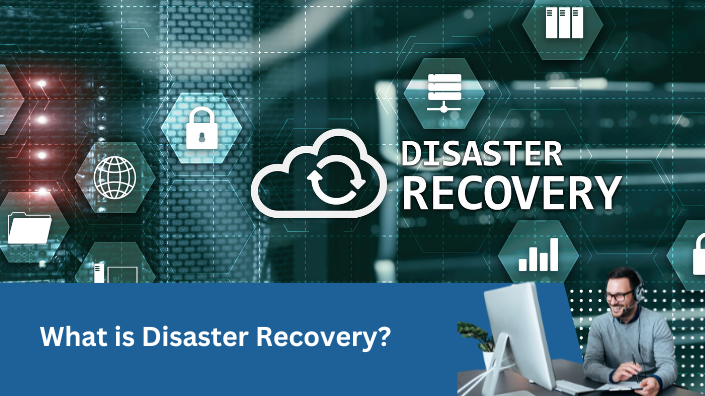
Disaster recovery is the set of policies, tools, and procedures a business uses to restore IT systems, data, and operations after a disruptive event such as a cyberattack, hardware failure, or natural disaster. The goal is to minimize downtime and data loss so the organization can resume normal operations quickly.
Disaster recovery is one piece of a broader business continuity planning effort. Where business continuity keeps the whole organization running, disaster recovery focuses on the IT systems, applications, and data that everything else depends on.
Key components of a disaster recovery plan
- Risk assessment. Identifying the threats and single points of failure most likely to take systems offline.
- Recovery strategy. Defining how systems, applications, and data will be restored, and in what order.
- Backup and replication. Keeping current copies of data offsite or in the cloud so nothing critical is lost. See data backup and recovery for how this works.
- Testing. Running the plan on a schedule so you find gaps before a real outage does.
RTO and RPO, the two numbers that define your plan
Every disaster recovery decision comes down to 2 numbers. The recovery time objective (RTO) is how quickly you need systems back online. The recovery point objective (RPO) is how much data, measured in time, you can afford to lose. A 2-hour RPO means you need backups at least every 2 hours. Both terms come from the disaster recovery framework defined in NIST Special Publication 800-34. Our guide to how to set RTO and RPO works through both numbers system by system.
Disaster recovery vs. backup
A backup is a copy of your data. Disaster recovery is the full plan that puts those backups to work, along with replacement infrastructure and a defined sequence of steps, to get a business fully operational again.
| Backup | Disaster recovery | |
|---|---|---|
| What it is | A copy of your data | A full plan to restore systems and operations |
| Scope | Files and databases | Servers, applications, data, and people |
| Answers | “Do we still have the data?” | “How fast can we run the business again?” |
| On its own | Cannot run your business | Uses backups plus infrastructure to recover |
Why disaster recovery matters
Downtime is expensive, and it hits smaller companies hardest because they have fewer cash reserves and fewer redundant systems to absorb it. A tested recovery plan is often the difference between a few hours of disruption and a permanent closure. Federal preparedness guidance at Ready.gov treats IT recovery as a core part of any business emergency plan, and agencies like CISA now rank recoverable backups among the top defenses against ransomware. You can see the dollar impact in the true cost of IT downtime.
Here is the honest part. Most recovery plans we audit fail their first real test, because they were written once and never run again. We saw the opposite work when we helped a nonprofit recover its data and keep operating after a disruption, where the plan, not the backup alone, is what got them running again.
For a step-by-step walkthrough, read how to create a disaster recovery plan, or talk to Uprite about disaster recovery and data backup services for your business.
Disaster recovery questions, answered
What is the difference between disaster recovery and a backup?
A backup is a copy of your data; disaster recovery is the full plan for restoring systems, applications, and operations after a disruption. You can have backups and still have no way to run the business if there is no recovery plan around them.
What are RTO and RPO in disaster recovery?
RTO, the recovery time objective, is how fast you must be back online. RPO, the recovery point objective, is how much data you can afford to lose, measured in time. Both are set per system based on how critical it is.
How often should a disaster recovery plan be tested?
Most businesses test at least once or twice a year, plus after any major IT change. Untested plans are the most common reason recovery fails during a real event, because gaps only surface under pressure.
What events does disaster recovery protect against?
Cyberattacks like ransomware, hardware and server failures, power and internet outages, human error, and natural disasters such as floods or hurricanes all fall under disaster recovery. Any event that interrupts access to systems or data qualifies.
Does a small business really need disaster recovery?
Yes. Smaller companies often feel downtime hardest because they lack the cash reserves and redundant systems larger firms rely on to ride out an outage. A right-sized plan keeps a single incident from becoming a closure. Run the numbers first with our guide to the cost of IT downtime.
Worried your business could not recover from an outage?
Uprite designs, hosts, and tests disaster recovery and backup systems for Texas businesses, so when something goes wrong you are back online fast instead of scrambling. Get a clear picture of your current recovery readiness and the gaps worth fixing.
Get a Disaster Recovery Assessment or call (866) 570-3065 to talk through your plan.